I was recently asked to present at the NSW Branch Conference for the Australian Diabetes Educators Association (ADEA) on Looping/Automated Insulin Delivery and what it means for Diabetes Educators.

One of the perks of these conferences are the sponsor stands where various companies set up and offer freebies. One such stand was Pharmaco Diabetes with the CareSens Dual.

They actually had a range of glucometers but the Dual piqued my interest as it measures glucose and ketones. I have an Abbott Freestyle Optium Neo which was literally the first glucometer given to me seven years ago at diagnosis so, given its age, I thought road-testing a backup would be a good option.
The folks at Pharmaco were generous enough to send me one to try out so this is how it went.
What I Received

In the package was the meter box, a box of ketone strips, a guide for ketones, and some brochure-ware on the full range of meters and consumables.
One of the meters in the brochure which I thought was great was the CareSens N Voice which can speak the reading and a larger screen for people with visual impairment. This consideration of the user really impressed me.

The meter box came with the usual suspects (see image below). The one thing which surprised me was the logbook. Do PWDs still use a physical logbook? I was using the MySugr app almost from day one. These days I have Nightscout.
The warranty registration was interesting in that it was dual-country. The New Zealand one promised a free gift whereas the Australian one did not. The CareSens is essentially the only fully subsidised glucometer in New Zealand so New Zealand PWDs are very familiar with it. In Australia, if you are registered with the NDSS, you can get a free meter from a variety of manufacturers, including CareSens.

The instructions are pretty much the same for all these kinds of devices so nothing too unusual here. I did get a giggle out of the ‘do not insert the strip the wrong way round’ image. Rather than the lancet which comes with CareSens, if you fingerprick regularly, I recommend a Genteel which allows you to use any part of your palm, rather than the sensitive fingertips. This advice is not specific to CareSens; I am just not a fan of jamming a needle into one of the most sensitive parts of my fingers.
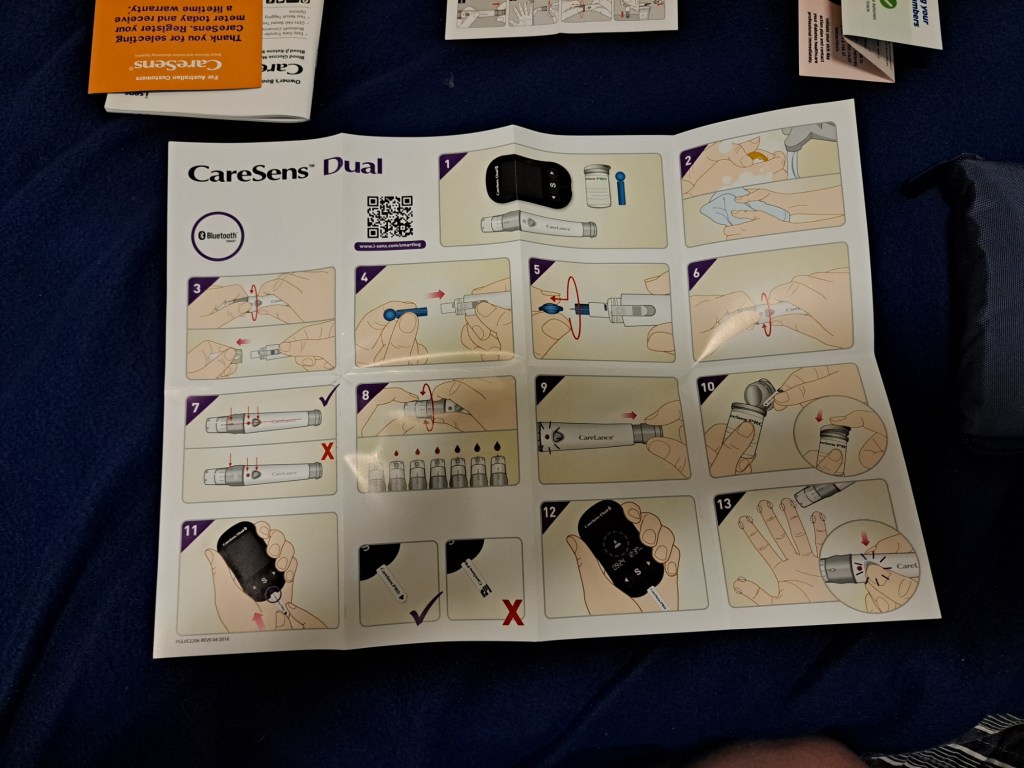
While it is not an issue for me, the glucometer allows you to press a button to eject the strip without touching it, and the same for the lancet in the finger-pricker. I guess there are people out there who feel squeamish about touching their own blood and, in these cases, the meter would be a great choice.
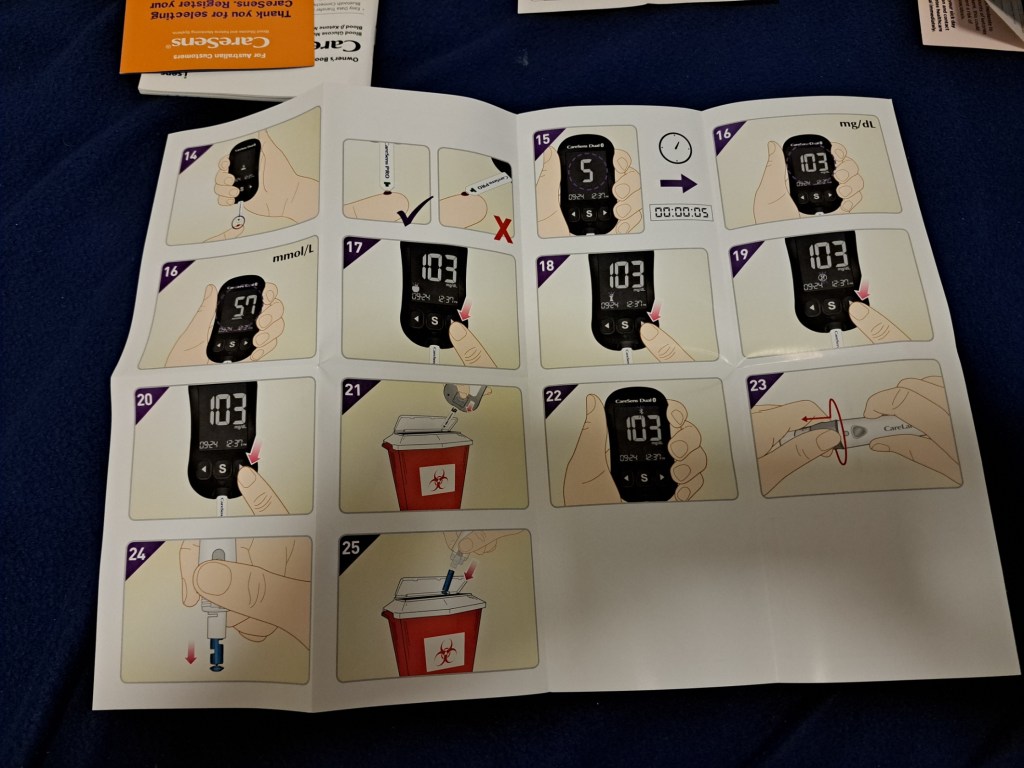
I have not had an opportunity to test for ketones (I do not run ketogenic and have not been near DKA since diagnosis) but the blood testing was within 10% of my CGM, which is good enough for me. I did look for online sources to validate the accuracy of the meter but could find nothing recent.

Conclusions
The meter will be a solid addition to my collection and provide me more than one device which can test for ketones. I am tempted to put one of my dual-sensor meters in my travel luggage so I can ketone test easily while away from home and have the other one easily available for home testing.
 The Practical Diabetic