For my previous cooling battles see:
- Insulin Cooling Battles: Frio vs Gel – The Practical Diabetic
- Insulin Cooling Battles: Frio vs Breezy Packs – The Practical Diabetic
- Insulin Cooling Battles: Breast Pads vs Breezy Packs – The Practical Diabetic
- Insulin Cooling Battles: BreezyPacks vs InsulinSaver – The Practical Diabetic
This time I am testing the VIVI Cap which TempraMed kindly sent me in exchange for a review. Their only guidance for the review was, given they have sent me the VIVI Cap, the VIVI Cap Smart, and the VIVI Med, they asked I do one article per device. Other than being able to keep the devices, no other incentives were given.
What is the VIVI Cap?
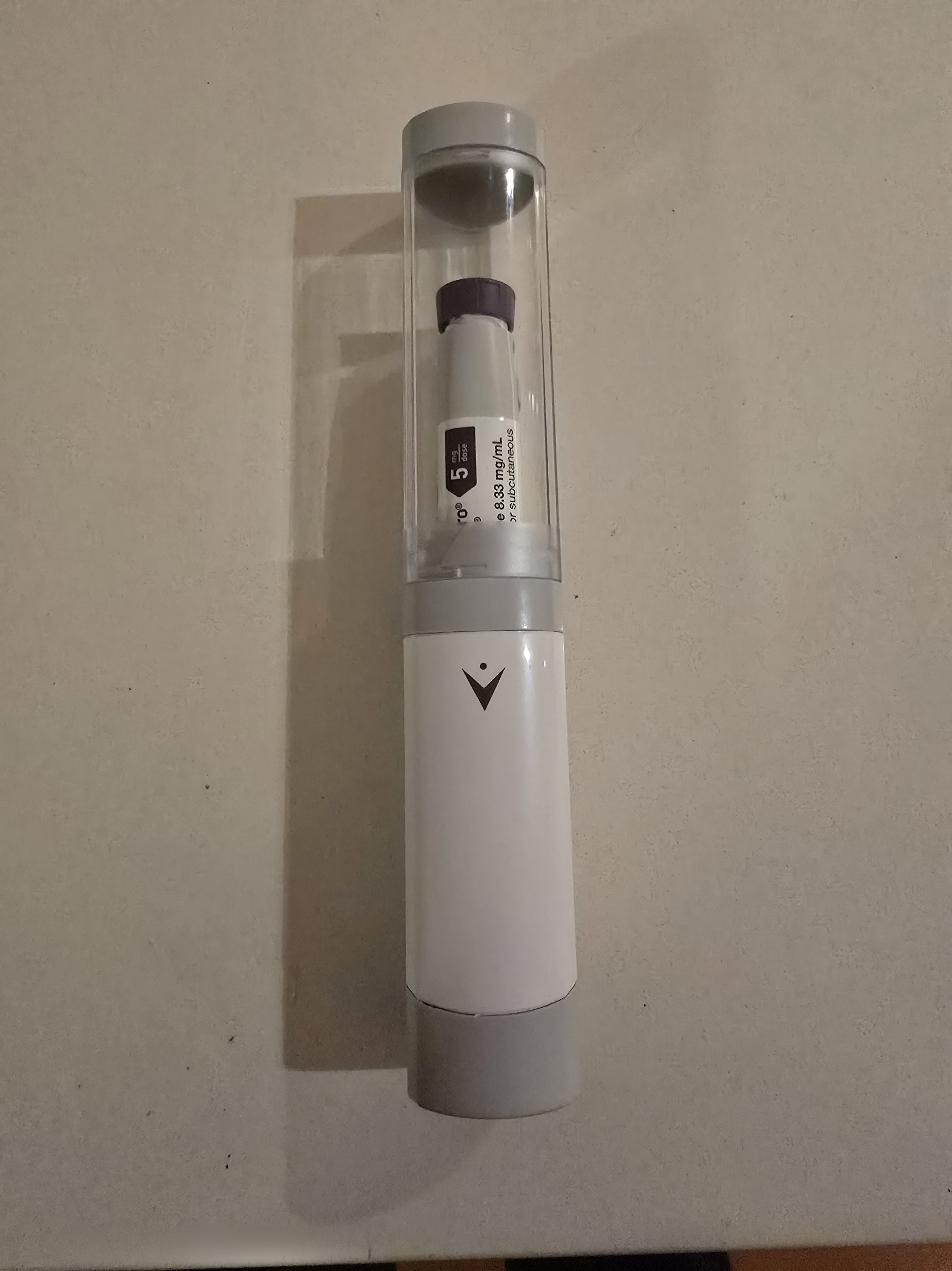
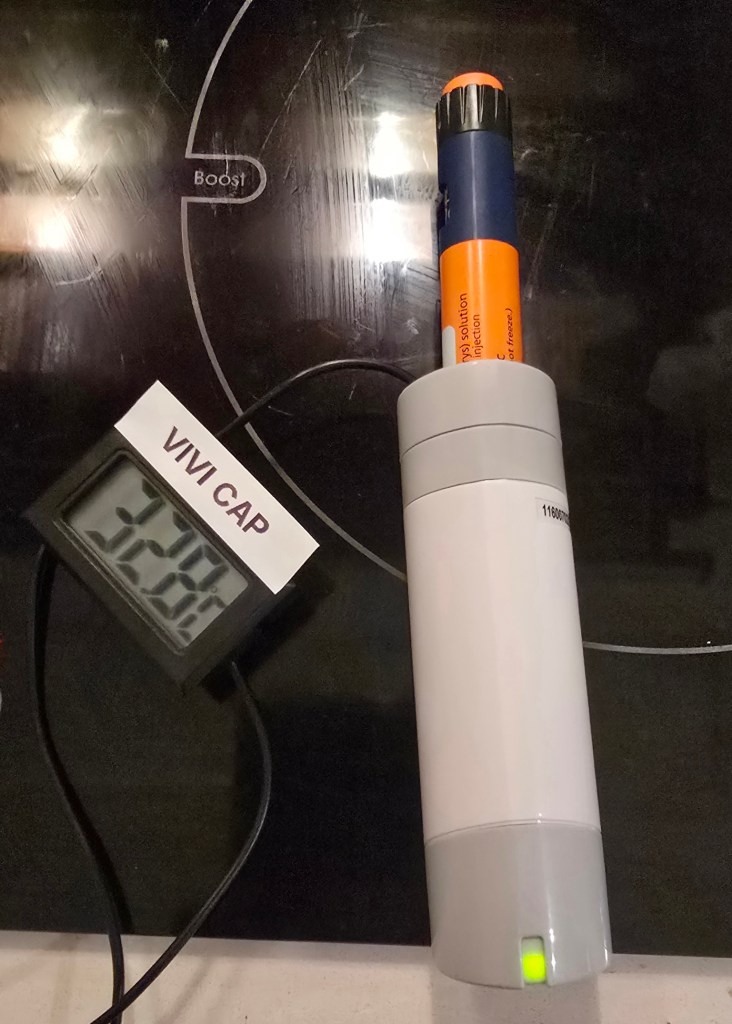
This is the VIVI Cap:
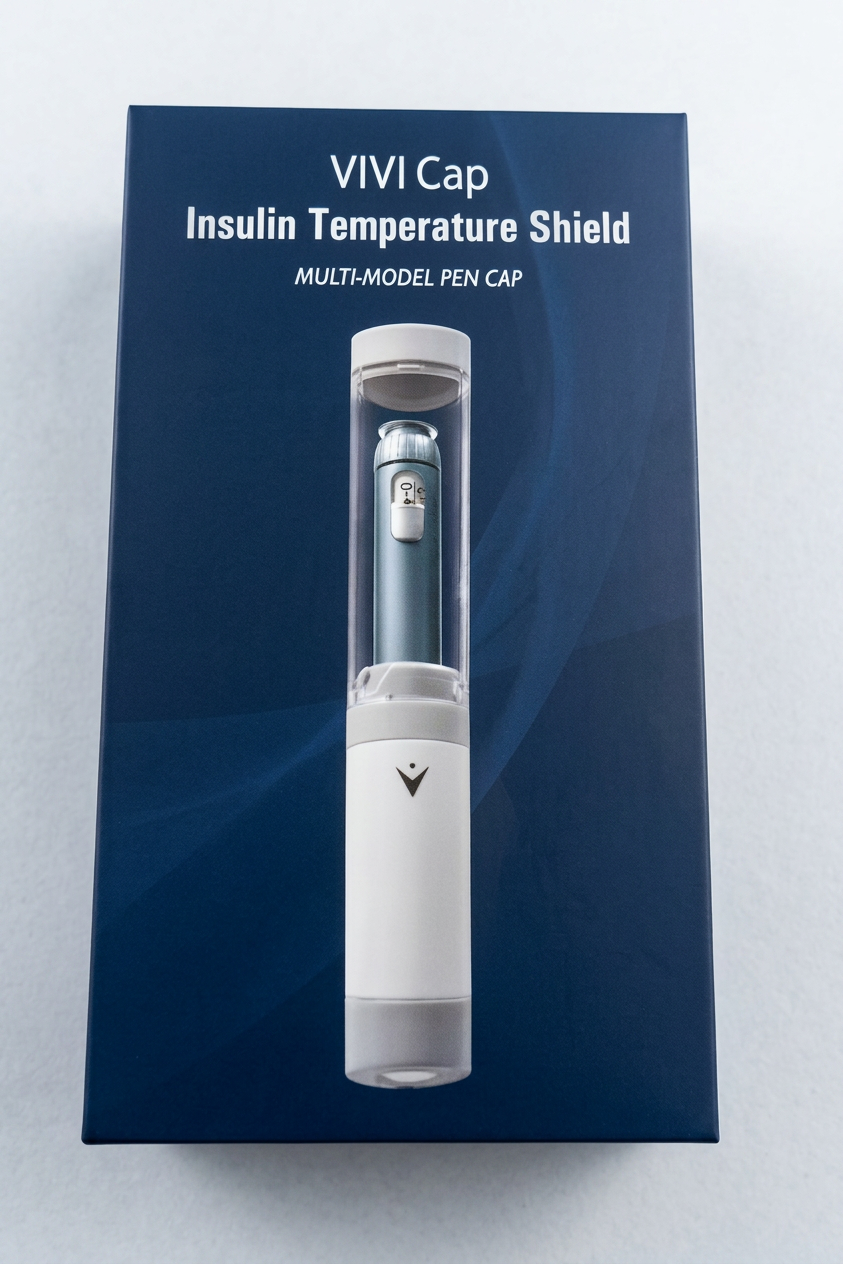
Inside you get an instruction card, an offer for a free discount on your next TempraMed purchase, the cap and a transparent case or collar for the top.
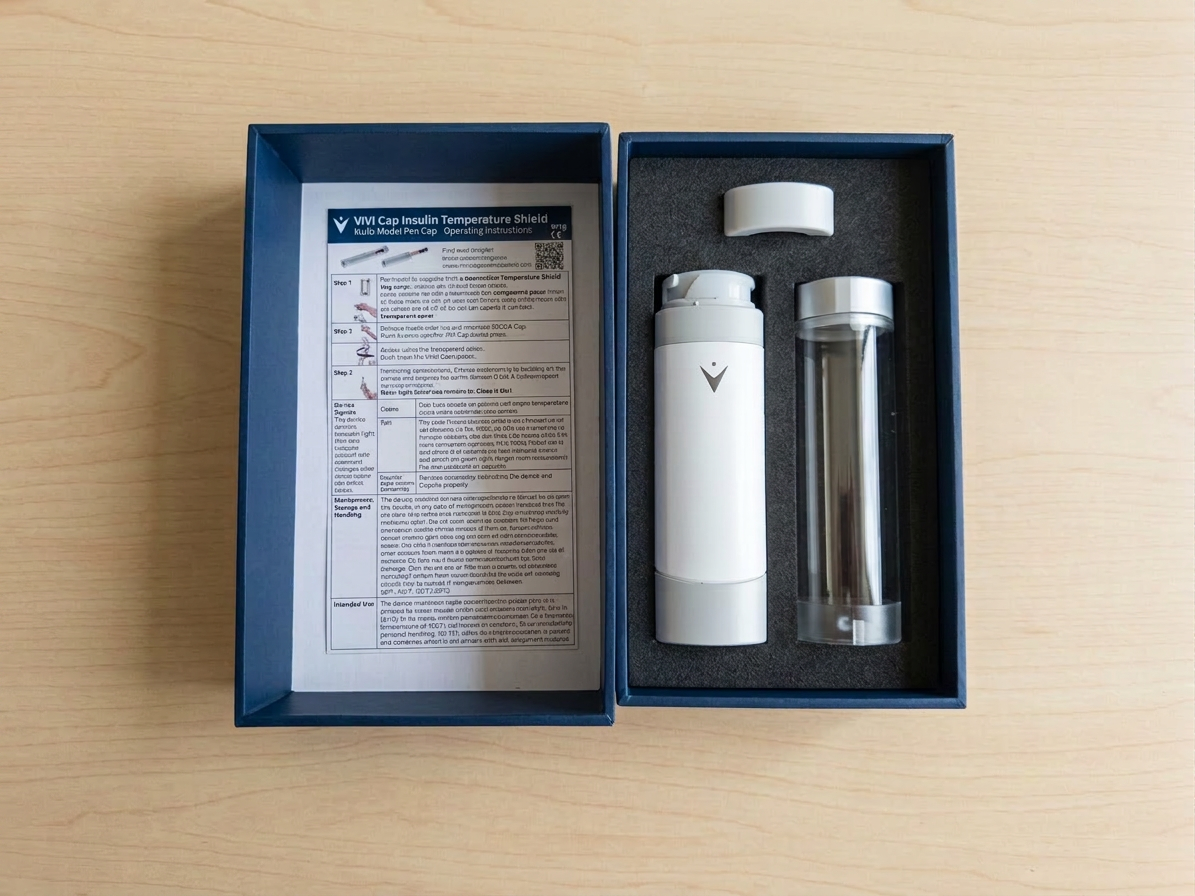
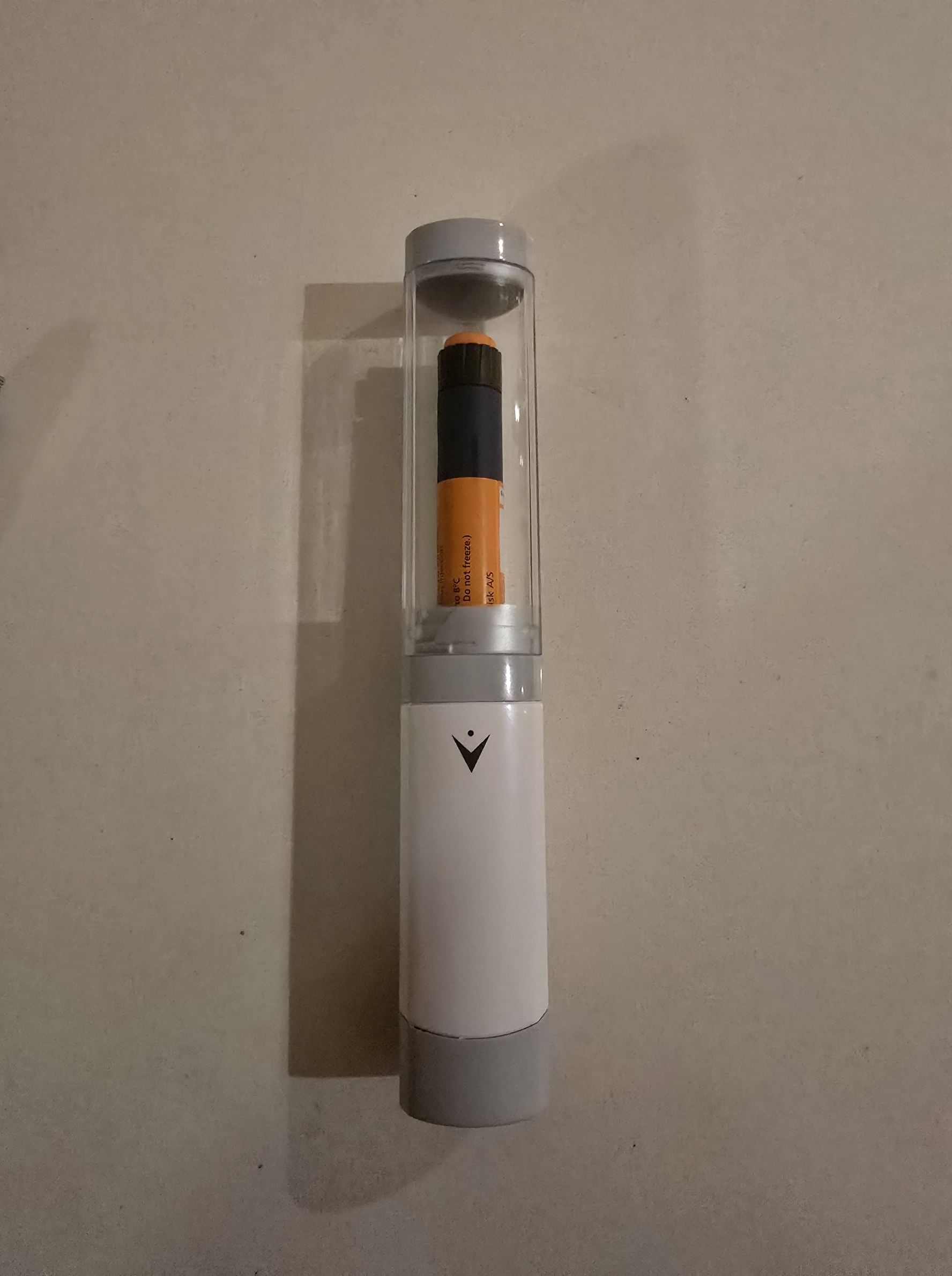
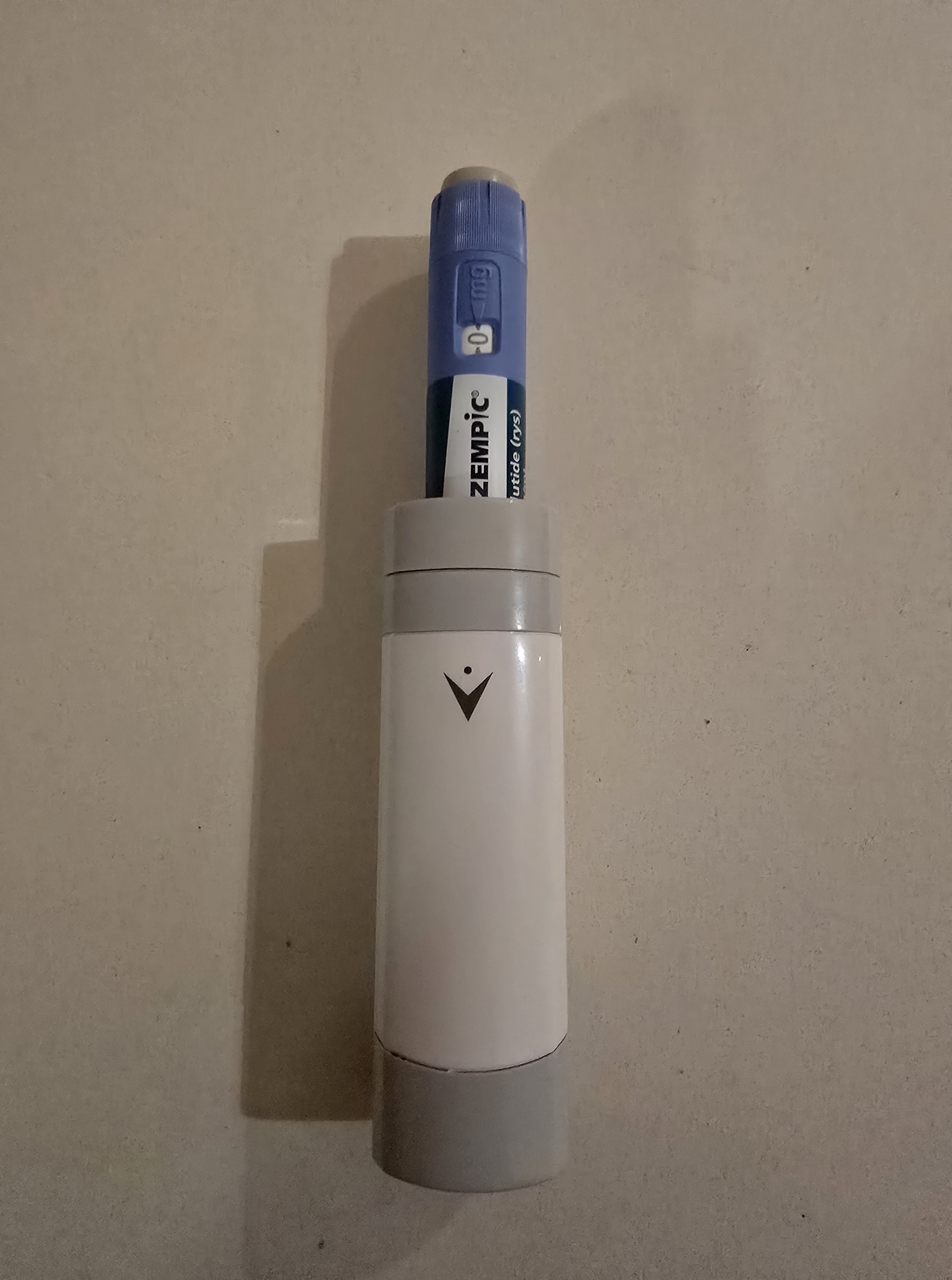
Essentially, it is a device which replaces your pen cap and attempts to keep the insulin below 30C (86F). The devices fits a variety of pens. I tried it with a FlexPen (NovoRapid), FlexTouch (Ozempic) and a KiwkPen (Mounjaro) and all three worked fine. It also has a button on the bottom you can press to confirm “insulin temperature below limit” with a green LED light giving the all-clear.
How Does it Work?
Like the InsulinSaver Bag and BreezyPack bags, it uses a Phase Change Material (PCM) to absorb excess heat and keep the insulin at a safe temperature. On the instruction card it says the threshold temperature is 26C (79F). This does not directly match the melting point of paraffin waxes such as octadecane so I am unsure what PCM is being used.
To understand why the PCM is so useful in this application, we need to recap a bit of science. As you may remember from high school science, matter has three common phases (gas, liquid, and solid). What you may not have been taught is that as you heat something, when it reaches the boundary between two phases, the heat is still absorbed by the material but the temperature stays the same. If we think of boiling water, it does not matter how much heat we apply, it will never go above 100C (212F). Instead the excess heat is turned into steam. More interestingly, it takes more than 5 times the heat energy to move the water from 100C to 100C and boiling, than it takes to get it from 1C (34F) to 100C.
PCMs work the same way. At their threshold temperature, they stop getting hotter and start melting, until they are completely liquified.
As a side, note, the Frio uses the same principle, but, in its case, the phase change is water going from liquid to gas i.e. evaporation. The advantage PCM-based solutions have is no need for soaking with the material ‘recharging’ when the temperature gets low enough for the material to re-solidify.
How Does it Compare to the InsulinSaver?
Unfortunately, it did not do so well. I used my usual set up of temperature probes embedded in the insulin reservoir on an insulin pen.
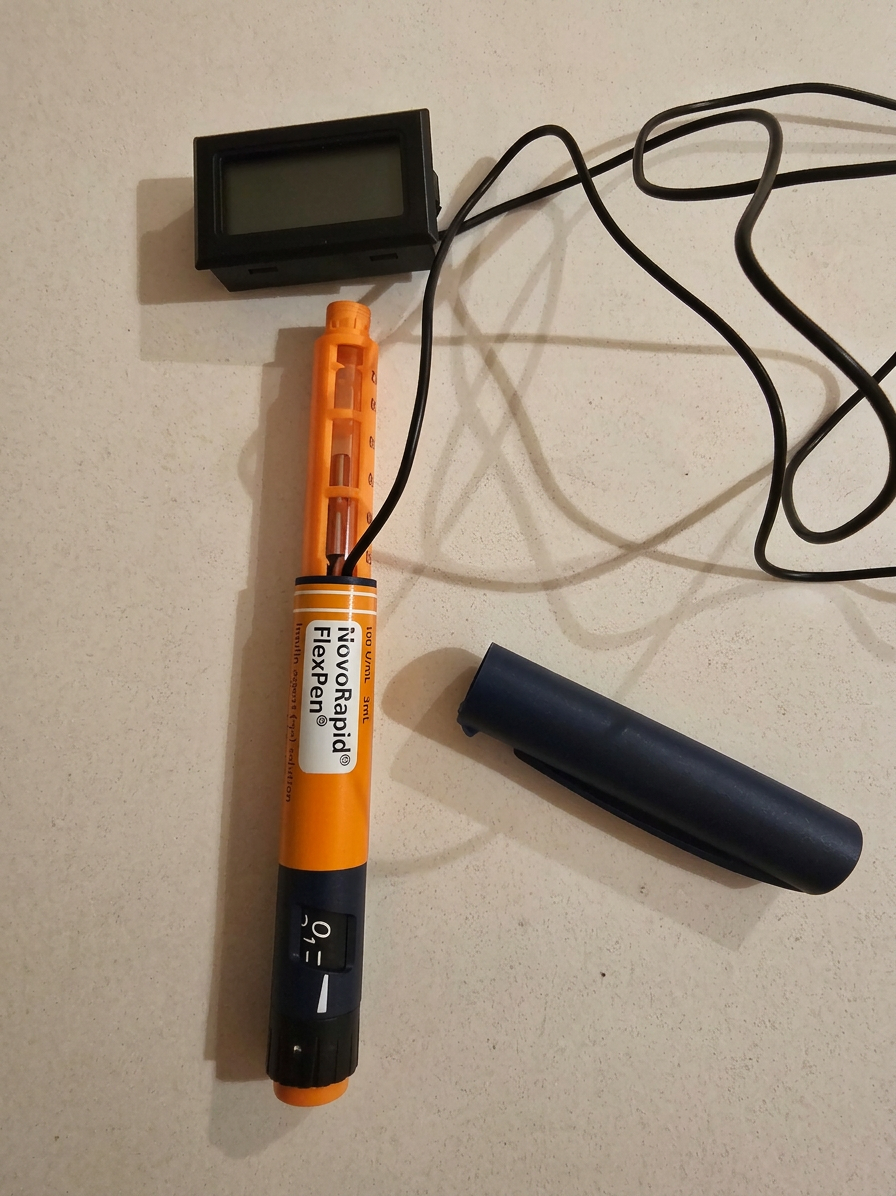
Two of these were put in a VIVI Cap and Insulin Saver and a third probe was used to measure the temperature of the oven.
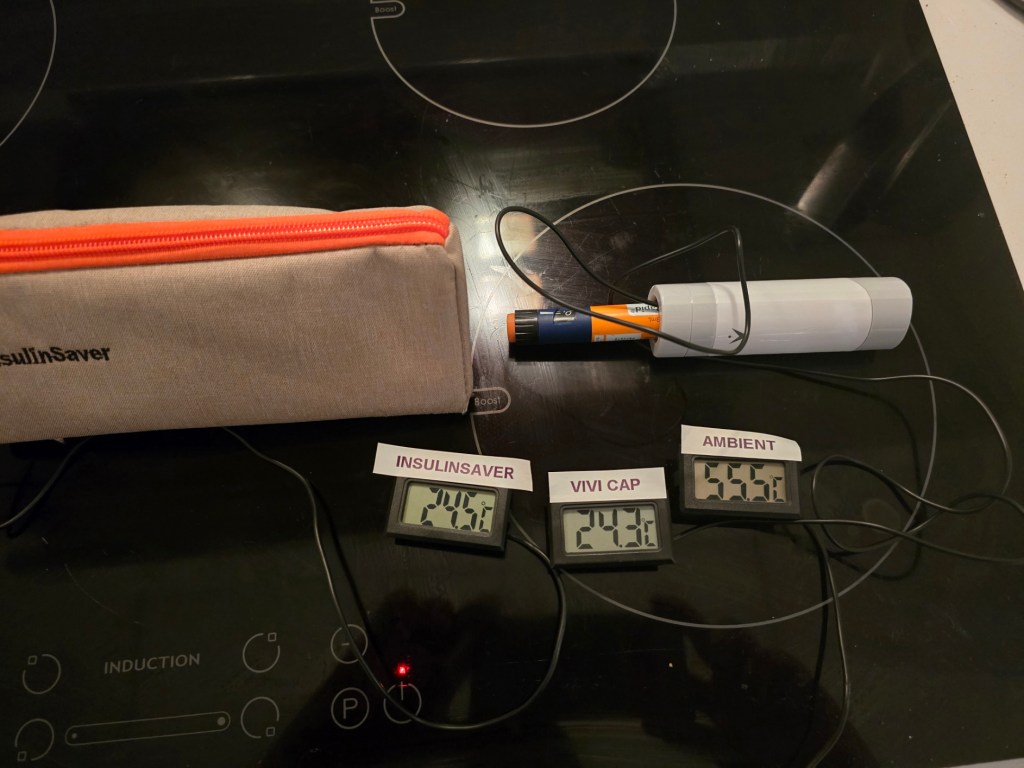
Placing the two items in the oven we get the following temperature movement.
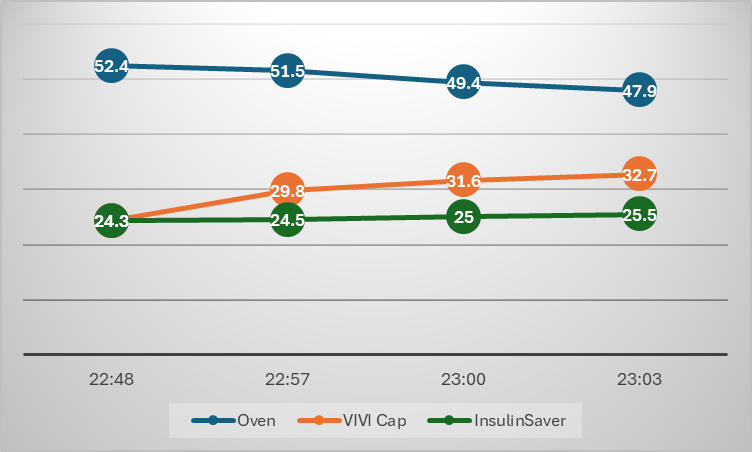
In short, the VIVI Cap struggled at 50-ish C (122F). More worryingly, even when the probe temperature was beyond 30C, the light was still registering green.
Now, to be fair to the VIVI Cap the instruction card does say “it is intended to keep insulin within safe temperatures below 84.2F (29C) for minimum 12 hours even in a constant environmental temperature of 100F (37.8C), when the device is placed inside a personal handbag.” Clearly, putting it in an oven running at 50C was outside this range. My guess is the temperature sensor is in the bottom part of the VIVI Cap and the rapid heating had not allowed for the increased temperature to reach the green light sensor.
Also, as we learned from the InsulinSaver vs BreezyPack comparison, the amount of PCM material has some correlation to the device’s ability to resist temperature change (more material to melt means longer protection so this makes sense). There is not a lot of PCM material in the VIVI Cap (Cap weight is 70g vs InsulinSaver’s 368g) so it was unlikely to keep up under these conditions.
At US$140 for one VIVI Cap vs US$43 for the InsulinSaver Bag/Breezy Extra it is worth considering whether you want to spend the extra for some protection and a slimmer profile or buy the chunkier bag (which can hold multiple pens).
For me, I can see someone using it when they need to carry an insulin pen but space is of a premium or they simply cannot carry a bag with them and they are going to be exposed to high temperatures e.g. swimming or diving, rock climbing, cross-country or long distance running, construction workers, factory workers, or kitchen hands.
My next review will be for the VIVI Cap Smart which is a similar device but pairs with an app to track injections.


One thought on “Insulin Cooling Battles: VIVI Cap vs InsulinSaver”