Literary Review: Low Carb Diets and Type 1 Diabetes

My first review was on Very Low Carbohydrate Diets (<50g carbohydrate/day) so if you are interested in ketogenic diets that is the literary (literature?) review for you. This review looks at academic papers researching Low Carbohydrate Diets (LCD, 50-130g carbohydrate/day). This is the area I generally aim for and, with looping, I have had success, bringing my HbA1c down to 5.6% i.e. within the non-diabetic reference range.

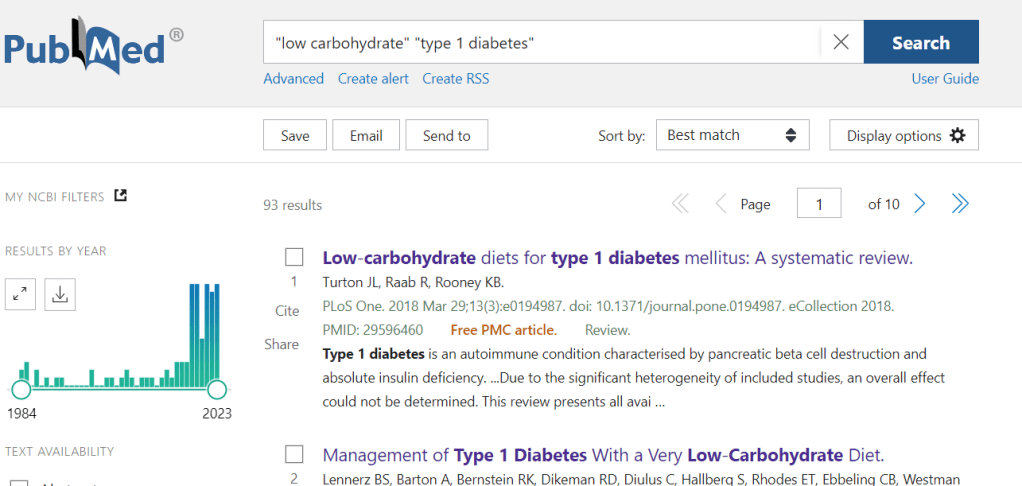
As before, I used PubMed and exactly the same search string as before. The difference was, in this case, I reviewed the 93 returned results, looking specifically for Low Carbohydrate Diets, not Very Low Carbohydrate Diets. As before, I only selected papers where the full publication was available and a quantitative group study of some kind was involved. The subjects also had to be human, not rodents etc.
Want to cut to the chase? Go straight to the tl;dr section at the end.

I plan to do a third review of plant-based diets for managing type 1 as well after this one. If there is a specific diet you would like me to trawl the literature for, let me know in the comments.

Brief Recap: Very Low Carbohydrate Diets (VLCDs)

In the previous review, there was no doubt that a VLCD can bring an average person’s HbA1c below 7% and, in some cases in the low 5% range. Whether going significantly below 7% was of benefit was not clear in the data provided by the search but, previously, I have shown that, if the occurrence of hypoglycemia can be controlled, getting below 6.4% will reduce the risk of long term complications.

To counter the clearly positive reduction in HbA1c, a few consequences/risks were also shown in the data which may need to be mitigated/monitored:

  • “Oxidative stress” leading to possible organ damage and heart disease
  • Glucagon response impairment
  • Increased risk of eDKA (euglycemic diabetic ketoacidosis)

and the following table was also provided in one paper in regard to a ketogenic diet (KD).

As mentioned at the time, these aspects do not necessarily outweigh the benefits of a lower HbA1c and many of them can be monitored through regular checks and managed very effectively through the use of things like multivitamins, laxatives, and cholesterol medications.

The question I hope to address in this article is whether an LCD can provide a comparable benefit and whether it still incurs the same risks.

What HbA1c can we expect from an LCD?

For the VLCD, the HbA1c range from the studies was between 5.3% through to 6.8%. The best result I found for an LCD was 6.0% in “Low carbohydrate diet in type 1 diabetes, long-term improvement and adherence: A clinical audit”. This trial looked at 48 people with type 1 diabetes over four years. The average HbA1c change was from 7.6% down to 6.9% but strong ‘adherence’ to the <75g/day (participant decided exactly how much below this level) led to the 6.0% outcome.

Contrary to the VLCD results, this paper reported that cholesterol levels improved on this regimen. However, similar to what we saw in the VLCD diets, after 2 years, half had stopped adhering to the carbohydrate levels specified.

The study also suggested on-going education was vital to keep people on the plan and estimated the LCD was only applicable to about 20% of people with type 1 diabetes, presumably based on the drop-out rate.

The study with the highest HbA1c end point was “A randomised trial of the feasibility of a low carbohydrate diet vs standard carbohydrate counting in adults with type 1 diabetes taking body weight into account”. This study kept the carbohydrates to a strict 75g/day and went over 12 weeks with 10 people with type 1 diabetes. Insulin use went down (which I saw in other LCDs and VLCDs) and HbA1c went from 8.9% to 8.2%, which puts it on a level where the mortality rate is similar to the general population’s but well above the 7.0% and 6.4% targets mentioned earlier. There were no changes to the lipid profile over this time.

Other papers fell between these two extremes. In “A low carbohydrate diet in type 1 diabetes: clinical experience–a brief report”, 24 people with type 1 diabetes were given a diet with 70-90g of carbohydrate/day for 12 months and taught how to bolus for the meals. Hypoglycemia episodes went from around 3 per week to once per fortnight, their HbA1c went down from 7.5% to 6.4%, and cholesterol was mostly unchanged, except for an improvement in triglycerides.

One patient was reported with a final Hba1c of 4.7%, which is extraordinary and, given this is below even what the most dedicated VLCD folks got in the studies reviewed, I am not convinced this was representative of what can be achieved with an LCD.

One other paper reported an improved cholesterol profile on an LCD, specifically, “Changes in the lipidome in type 1 diabetes following low carbohydrate diet: Post‐hoc analysis of a randomized crossover trial”. In this study 10 adults with type 1 diabetes went through either an LCD of <100g of carbohydrates per day or a diet of >250g of carbohydrates per day over 12 weeks. In this case they reported “total cholesterol, LDL and triglycerides had not changed significantly in this trial and only HDL cholesterol was significantly elevated in the LCD arm”

In “The Impact of a Low-Carbohydrate Diet on Micronutrient Intake and Status in Adolescents with Type 1 Diabetes”, 20 adolescents with type 1 diabetes were given 50-80g of carbohydrate per day for 6 months. HbA1c averages went from 8.1% to 7.7%. Not a huge drop and, again, above our mentioned targets of 7% and 6.4%. The paper also recognised the issue of nutrition in adopting a reduced carbohydrate diet saying “The dietician should plan a diet enriched with foods containing soluble vitamins (in particular folate and thiamin), selenium, magnesium, calcium, and iron. Furthermore, we recommend supplementation in a specific quantity, such as yeast extract, Brazil nuts, and Wolffia globose daily. Finally, we advise checking vitamin and mineral blood levels every six months and, if necessary, supplementing daily intake with vitamins and minerals.”

Corroborating this was a paper mentioned in the VLCD review, “The Impact of a Low-Carbohydrate Diet on Micronutrient Intake and Status in Adolescents with Type 1 Diabetes”, which looked at the micronutrient impact of a diet with 50-80g of carbohydrate per day and concluded the diet had the risk of not being nutritionally complete. As suggested before, this could be easily mitigated with a multi-vitamin, supplements, and regular reviews.

Have There Been Studies Directly Comparing VLCDs and LCDs?

It could be argued that, while a list of risks have been identified in VLCDs, a lack of studies looking at these same factors in LCDs does not mean they are not applicable e.g. we do not know if there is an impaired glucagon response on an LCD. There have been some studies directly comparing VLCDs and LCDs to see where the differences are.

In “Low-Carbohydrate Diet among Children with Type 1 Diabetes: A Multi-Center Study”, carers of 624 children completed surveys about the carbohydrate intake of their children with type 1 diabetes. Of these, 36 were following an LCD, and, of these, 5 were following a VLCD. No significant differences were found in the HbA1c levels of the two groups but, again, the VLCD group showed abnormal lipid profiles, specifically, higher total cholesterol and lower HDLs.

In “Physical Activity, Dietary Patterns, and Glycemic Management in Active Individuals with Type 1 Diabetes: An Online Survey”, they deviated from the American Diabetes Association definitions we have been using so far and came up with their own,

  • Normal (unrestricted): >200 g/day;
  • Moderate: 100-200 g/day;
  • Low-carbohydrate: 40–99 g/day;
  • Very low-carbohydrate: <40 g/day.

The Low-carbohydrate and Very low-carbohydrate ranges are similar to our LCD and VLCD ranges so I have kept used these for broad comparison. In this case the survey was of 220 people with type 1 diabetes and, of these, around 41 were on a Low-carbohydrate diet and around 27 were on a Very low-carbohydrate diet. As with the previous study, there was no significant difference in HcA1c between participants engaging in Low and Very low-carbohydrate diets. However, of the diets, the Very low-carbohydrate diet was the most predicative of achieving an HbA1c below 7%.

tl;dr

In the literature, LCDs deliver a reduction in HbA1c to somewhere between 6.0% and 8.2%. This compares to around 5.3% to 6.8% for the VLCD. The spread within the range appears to relate to how strictly the diet is followed. In the original review, one paper suggested HbA1c increases by 0.1% for every additional 10g of carbohydrate consumed daily. If we assume a VLCD is roughly 40g/day and an LCD is 100g/day this predicts a range difference of 0.6%. While this roughly matches the results for the lower end i.e. “highly motivated individuals”, it is less predictive for the average participant.

In contrast to VLCDs, lipid profiles (cholesterol) either remained the same or improved under an LCD. However, like the VLCDs, there is a risk that micronutrient needs are not being met with the diet.

When studies directly compared VLCDs and LCDs, there was no significant difference in the achieved HbA1c but, on balance, the evidence suggests, a VLCD has the potential to result in a lower HbA1c than an LCD.

One study suggested on-going education/coaching was important for participants to stay with the diet and I think this applies equally to LCDs and VLCDs.

As we can see there is a mixed bag here. Depending on the HbA1c targets we are pursuing, our concern for our cholesterol levels, and the level of carbohydrate restriction we are willing to tolerate, one approach may be preferable to the other. As mentioned in the introduction I have found success which compares favourably to the VLCD studies with an LCD and technology (looping). I do not see the need to restrict my diet further but, if I saw my HbA1c beginning to rise, a VLCD would certainly be an option. To mitigate the risks of a VLCD/LCD diet I also take supplements and get myself checked to mitigate the risks identified for these kinds of diets e.g. vitamin levels checked regularly.

To this end, my conclusion is, probably unsurprisingly, to follow a similar approach to me. Determine the HbA1c you are looking to achieve and, if you are not achieving it, consider reducing carbohydrate intake as part of your management plan. Small changes can bring you easily into the LCD range and, with the risks identified in this and the previous review, steps put in place to manage them. If you achieve your goals you will, hopefully, have a sustainable plan. If you do not achieve your goals, you can always consider moving to a VLCD although, as identified above, building a supportive team around you to keep you on plan is key because of the high dropout rates for both LCDs and VLCDs.
Literary Review: Very Low Carb Diets and Type 1 Diabetes

As this is quite a long article, for those who prefer the destination than the journey, we have a tl;dr section at the end which summarises the findings.

For a review of Low Carbohydrate Diets (50-130g carbs/day) go here.

Questions covered in this review are:

Why Do a Review?

There are a lot of suggestions on social media about how to live well with type 1 diabetes. Some of them directly contradict each other. At one end of the dietary spectrum we have the ‘Mastering Diabetes‘ folks who promote a plant-based diet with minimal animal products, reducing insulin resistance (which even type 1s have) and, therefore, the amount of daily insulin required (bolus and basal).

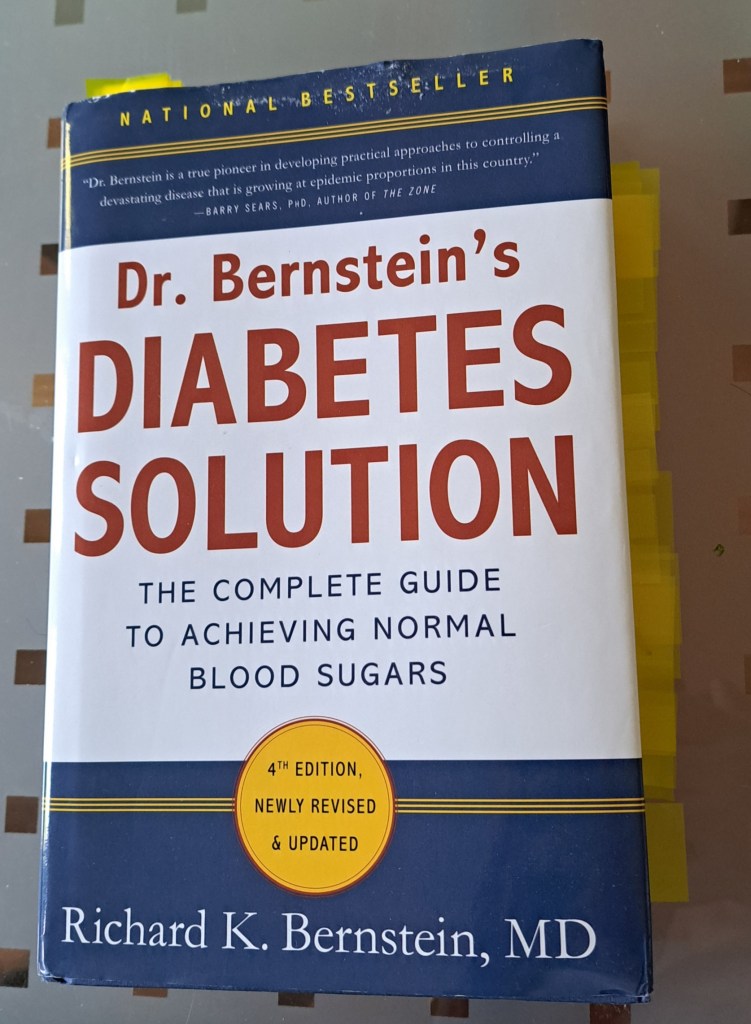
At the other end of the spectrum, we have the folks like the Type 1 Gritters. They strictly follow the teachings of Doctor Richard Bernstein who promotes a very low carbohydrate diet (30g/day) with intense exercise to manage diabetes. The thinking here is that while insulin resistance may temporarily rise with the additional fats in the blood (possibly offset by the exercise), the sheer lack of carbohydrate in the diet means bolus insulin requirements are significantly reduced. Doctor Bernstein, who has lived with type 1 diabetes most of his life, has had tremendous success with his approach and is now coming up to 90 years old.

Doctor Bernstein documented his approach in a book called Dr. Bernstein’s Diabetes Solution. While excellent at describing the fundamentals of what type 1 diabetes is, unfortunately the book is now over ten years old and, in regard to technology, is quite out of date. The book dismisses continuous glucose monitors (although Dr. Bernstein now verbally supports them), insulin pumps, and flatly denies the existence of looping technology. For more contemporary wisdom from Dr. Bernstein, he has his YouTube channel, Dr. Bernstein’s Diabetes University. When I was first diagnosed, I watched practically every video on the channel and read the book (except the chapters on using insulin which, at the time, were not relevant to me). I took from it what made sense and parked the rest. It was an excellent foundation.

In the case of Dr. Bernstein, his diabetes management, informed by his health care team, was not working for him. Rather than be a passenger in his diabetes care, he started monitoring his blood glucose levels, determining what foods worked for him (low carb ones) and found a path which gave him success; the path he documented in his book so others could learn from his knowledge and experience. He ignored the zealots, did his own research, and adopted what worked for him. Every person with type 1 diabetes should be their own advocate, ignore the zealots, take control, determine the goals they wish to pursue, and find their path, just like Dr. Bernstein did.

Sadly, as if often the way with old texts, they are interpreted differently by different people. For me, the book was informative and gave me an approach to find my own diabetes management plan. It gave me permission to give critical thought to the advice of outsiders (including Dr. Bernstein) and make my own mind up. For others, like the Type 1 Gritters, it is a text which should be followed to the letter. I often bump my head against folk on Twitter who believe their goal (normal blood sugars) is the only goal which should be pursued and their approach (Dr. Bernstein’s Diabetes Solution) is the only approach to follow. Even when I have shown you can achieve superior results by embracing technology and NOT following Bernstein’s strict dietary plan, they continue with their dogmatism, the same kind of zealotry Dr. Bernstein fought all those years ago.

I am happy to give them the benefit of the doubt though as part of having critical thought is to listen to your detractors, consider their position and examine the evidence. This is what this article seeks to address. What evidence in the literature is there supporting a very low carbohydrate diet?

What is a Very Low Carbohydrate Diet?

In researching for this article I found academic literature, to allow for comparison, has broadly settled on the following definitions:

  • Very Low Carbohydrate Diet (VLCD): <50g/day carbohydrate
  • Low Carbohydrate Diet (LCD): 50-130g/day carbohydrate

Dr. Bernstein’s Diabetes Solution sits within the VLCD camp. I generally aim for LCD augmented with closed looping, which works for me in achieving my goals of having a sustainable/manageable approach and reducing my risk of long-term complications.

The Search Criteria

To find the articles, I used PubMed. PubMed is an online database for peer-reviewed medical articles and an excellent source for the latest research in diabetes. I try to review the latest findings once a month, collate questions, and discuss them with my endo when we meet.

My search was for the key phrases: “low carbohydrate” and “type 1 diabetes”. I had no interest in individual cases; if I wanted to hear about one person who got amazing results, I would go to Twitter and listen to the grifters selling their ‘services’. Group studies which show how the average person with type 1 achieves success with a VLCD was my target. I also wanted the full text of the paper to be available, so it could be debated openly, and a focus on quantitative information, not qualitative. The regimen being studied had to be VLCD with a focus on 30g or less/day diets, if available.

All up, the search returned a little over 90 papers. Where a paper made reference to another paper which could be of interest, I also followed the link and applied the same rules as above.

Does a VLCD lead to a lower HbA1c?

Yes it does! We have a few proof points of this. The first is “The glycaemic benefits of a very-low-carbohydrate ketogenic diet in adults with Type 1 diabetes mellitus may be opposed by increased hypoglycaemia risk and dyslipidaemia“. In this study 11 adults, who had been on a ketogenic diet (<55g/day) for an average of 2.6 years were studied and the following results found:

  • Average HbA1c was 5.3%
  • 0.9 hypoglycemia episodes per day
  • “Total cholesterol, LDL cholesterol, total cholesterol/HDL cholesterol ratio, and triglycerides were above the recommended range in 82%, 82%, 64% and 27% of participants, respectively”

The second study which talked at the average HbA1c I have mentioned in previous blogs: “Management of Type 1 Diabetes With a Very Low-Carbohydrate Diet“. This was a survey of the Type 1 Grit Facebook group. Of the 1,900 members of the group at the time, 316 responded with around half of these providing medical data. The following results were found:

  • Average time following a VLCD: 2.2 years
  • Average HbA1c was 5.67%
  • Average daily carbohydrate intake was 36g/day
  • 1 in 50 reported being hospitalised for hypoglycemia
  • Noted a correlation between HbA1c and carbohydrate consumed i.e. an increase in HbA1c of 0.1% for every additional 10g of carbohydrate consumed daily
  • Majority of respondents had dyslipidemia (abnormal cholesterol)

The two studies confirm that it is possible to get into the low 5% range with a VLCD. However, if someone is trying to convince you that a VLCD can consistently generate sub-5% HbA1c’s the odds are they are trying to sell you something because the evidence is simply not in PubMed.

There are two other commonalities between the studies. The first is dyslipidemia (abnormal cholesterol). If we believe these two studies are typical of VLCDs then it is reasonable to expect cholesterol results which will make your doctor frown. If cholesterol levels are important to you then a VLCD may work against you or will need to be managed.

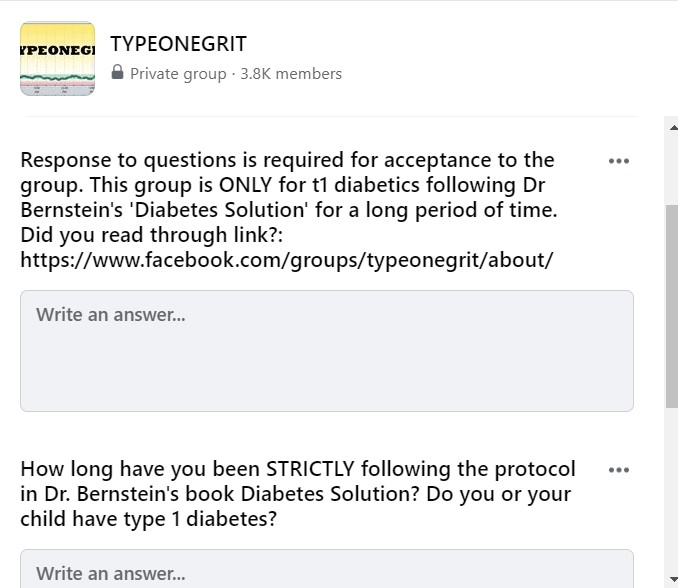
The second commonality is the groups studied were not necessarily a random sample. In the case of the first paper, it is simply not stated where the participants came from; all we know is they were on a ketogenic diet for a number of years. In the case of the second, they came from a group dedicated to strictly following Dr. Bernstein’s approach. To join the group, participants have to pledge they follow Bernstein to the letter and have done for a “long period of time”. Here is an image of the application form to join the group.

Of those who make this commitment we have those who took the time to respond to the survey. In my mind this will also be a biased sample of those willing to share their success. It makes no sense to me that a group so committed to the cause would admit significant failure. Therefore, I see these results as the best an average person could hope for in adopting a VLCD, rather than an average or below-average measure.

A third study, “Safety and Efficacy of Eucaloric Very Low-Carb Diet (EVLCD) in Type 1 Diabetes: A One-Year Real-Life Retrospective Experience“v took 33 people with type 1 diabetes from an Italian clinic and switched them to a VLCD (<50g/day) for 12 months. Not surprisingly, in this case, the results were not as spectacular. The average HbA1c went from 8.3% at the start to 6.8% at the end.

Comparing to my own results, my HbA1c was last measured at 5.6%. This is better than the Type 1 Grit average without the need for a strict diet OR the exercise. However, for someone struggling to get their HbA1c below 7%, choosing a lower HbA1c as a goal to pursue, and indifferent to abnormal cholesterol levels, the VLCD may make sense.

Is the Lowest Possible HbA1c a Good Thing for Type 1 Diabetes?

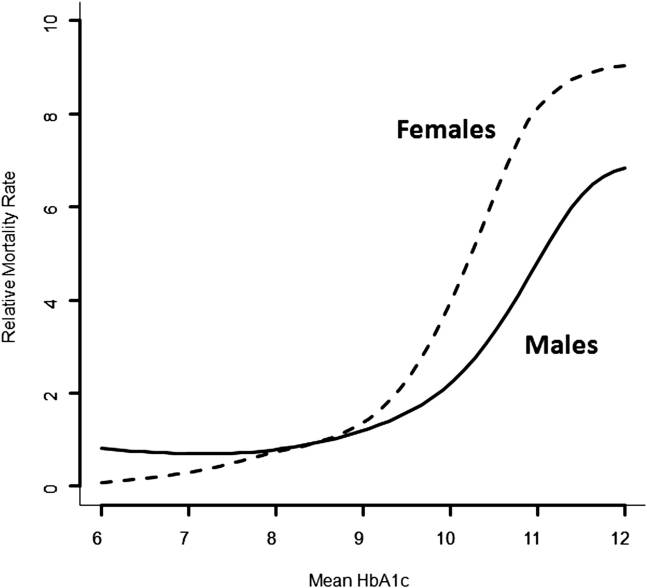
Of the papers found through this process, some talked at the correlation between mortality rates and HbA1c. The first: “Mortality in Type 1 Diabetes in the DCCT/EDIC Versus the General Population” took a group of just over 1,400 people with type 1 diabetes and compared them to the general US population. They found that an HbA1c below 8.5% meant a lower mortality rate than the general population and, as can be seen on the graph below, below 7% the mortality rate was almost flat.

When the results were split by gender, a slightly different result emerged.

For males, while still quite flat, the mortality rate actually increased below 7% and started to be higher than the general population around 6%. This was not the case for women where an HbA1c continued to drop as the HbA1c went lower and become effectively unmeasurable at 6%.

Why would males have a higher mortality rate below an HbA1c of 7%? The speculation is the increase of hypos leads to an increased risk of death.

Backing up this surprising result was a second study: “Glycemic control and all-cause mortality risk in type 1 diabetes patients: the EURODIAB prospective complications study” Examining a little over 2,700 European people with type 1 diabetes it was found the all-cause mortality rate at an HbA1c of 11.8% and 5.6% was higher than at 8.1%.

The dotted lines are for a 95% confidence interval (think of these as error bars). Again, we see a crossover point with the general population between 8-9% and a more pronounced rising of mortality risk below 7%. In the discussion, the proposed reason for the increased mortality rate at lower HbA1cs was the increased risk of severe hypoglcemia.

Given the reference range for the HbA1c in a person without diabetes tops out at 5.6%, people with type 1 diabetes face a dilemma. If they chase normal blood sugars this means, on average, an increased risk of severe hypoglycemia and an increased risk of death. Thankfully, like many complications of diabetes, they are preventable if monitored closely. In the case of hypos, a continuous glucose monitor (CGM) would help keep track of lows before they become a problem. Similarly, a looping system would automatically intervene to prevent the hypo. It is possible, as these technologies become more widespread, the HbA1c to mortality rate curve will change allowing people with type 1 diabetes to safely pursue a normal range HbA1c without concerns of a hypo. Given the data behind these curves is over 30 years old, it is possible that modern insulins have already addressed the increased hypo risk and the curve, as HbA1c goes down, is flattened today. It will be good to get new data to confirm this is the case at some point.

What are the Complications Associated With a VLCD?

We mentioned the abnormal cholesterol results earlier but some papers did mention other complications as well. “Hyperketonemia and ketosis increase the risk of complications in type 1 diabetes” speaks at the health complications of a ketogenic diet (KD) which, arguably, a VLCD is. The main focus of the paper was “oxidative stress” leading to organ damage and heart disease but it also mentioned a raft of papers discussing other complications with a KD.

Again, how important these aspects are will depend on the individual and the goals they are pursuing. Also, some of these, such as constipation, can be addressed through medicinal interventions (laxatives).

Another paper, “Low-Carbohydrate Diet Impairs the Effect of Glucagon in the Treatment of Insulin-Induced Mild Hypoglycemia: A Randomized Crossover Study” sought to compare how a person responds to glucagon, based on whether they were on a VLCD (<50g/day) or a high carbohydrate diet (>250g/day). Presumably, due to the glycogen depletion in the liver, the response to glucagon in the VLCD cohort was impaired. Again, armed with this knowledge, a person pursuing a VLCD, who intends to use glucagon to manage severe hypos, can approach the situation prepared and perhaps change their plan to manage hypos with carbohydrates instead. Another consequence, mentioned in a few papers, was the risk of eDKA because of the significantly lower insulin requirements affecting basal control of the liver, and depleted glycogen stores.

Does a VLCD Give Me All the Vitamins and Minerals I Need?

Unless appropriately managed, the evidence suggests it does not. In “Prevalence of micronutrient deficiency in popular diet plans“, a VLCD, the “Atkins for Life” diet was examined in terms of its delivery of micronutrients (vitamins and minerals). It was significantly short in providing Vitamin B7 and Vitamin E.

Similarly, in “The Impact of a Low-Carbohydrate Diet on Micronutrient Intake and Status in Adolescents with Type 1 Diabetes” which considered a LCD of 50-80g/day it stated “LCD may result in nutritional deficiencies, as decreased carbohydrate consumption was positively correlated with decreases in vitamin and mineral intake that were not due to calorie reduction. Thus, these decreases resulted from the LCD content rather than from reduction in calories.”

This suggests that for both a VLCD and an LCD, a multivitamin may be needed to ensure micronutrient requirements are covered, with the possible consultation of a nutritionist.

Is a VLCD Sustainable?

I am sure there are individuals who have successfully maintained a VLCD for a very long time. However, if we are talking in general terms, the evidence is not strong that this is easy to do. Even in the Type 1 Grit study, after an average of 2.2 years, the majority of the participants were failing to meet the Bernstein guideline of no more than 30g/day of carbohydrate. Other studies also believed a VLCD had troubles being maintained. “Low-Carb and Ketogenic Diets in Type 1 and Type 2 Diabetes” states “An issue about the use of LCD (less than 100g/day) can be the long-term tolerability. In many cases LCD was stopped before 1–2 years for a variety of reasons, often because intolerable and with a limited choice of foods” and “A clinical audit performed to assess the long-term adherence to LCD in people with T1D showed that after two years about half of the people ceased adhering…”

Even in our HbA1c studies at the start of this review the average time spent on a VLCD was no more than three years. This suggests if a person’s plan is to adopt a VLCD beyond a couple of years, they will need to ensure it is aligned to their lifestyle and has sufficient variety of food to keep it interesting. The food variety may also help address the nutritional deficiencies mentioned earlier.

tl;dr

Given the claims often made about very low carbohydrate diets (VLCDs) and the contradictory messaging about the best way to live with type 1 diabetes, it is worth examining the available evidence to see what an average person with type 1 diabetes can expect. To do this a review of the PubMed literature was performed.

While there is no doubt that a VLCD can reduce the HbA1c of a person with type 1 diabetes to below 7%, there is a need to manage the resulting risks/complications. If the person adopting the diet is experiencing an increase in hypos, these will need to be managed, mindful that glucagon is often not as effective for people on a VLCD. Cholesterol levels are often out of the recommended ranges on a VLCD and this should be managed, ideally in consultation with the person’s health care team. If it is a concern then, in the case of LDL, cholesterol-lowering medications may be recommended. Other complications, such as constipation, diarrhea, kidney stones and the more serious organ damage and heart disease, should also be monitored for and, if they arise, addressed through other interventions e.g. medication and/or diet. To ensure the diet being adhered to is nutritionally complete, either a multivitamin should be taken and/or the advice of a nutritionist should be sought. Finally, the shift to a VLCD will be, for most people a significant change in lifestyle. With many people not sticking with a VLCD beyond 2-3 years, steps should be taken to make the diet both interesting (a variety of food) and practical for one’s life to maximise the chances of success.

Based on the above evidence, I can see why healthcare professionals are often cautious to recommend a VLCD for their clients as the picture painted above is not completely glowing and, given I am already achieving better management of type 1 diabetes without adopting a VLCD, I will stick to what works for me. My next step will be to assess the literature for an LCD (50-130g/day) to see if this can achieve similar results without the severity of impact or the same complications.

DIY Loop-Curious? Here is a Way to Ease in

These days I use a commercial looping system (Ypsopump + Dexcom + CamAPS) but, before this was an option for me, I was using AndroidAPS (with Omnipod and Dexcom). The idea of a DIY loop can be a bit overwhelming: there are many tools and terms and it is not always easy to know where to start. To help make things clearer, I thought I would give a path, and some explanations of the tools which can, if you choose, eventually lead to a fully looping system. I am describing a path using an Android phone but there are similar paths for Apple phones as well.

Why Go With a DIY Loop When Commercial Systems Are Available?

I recently helped a young lady with type 1 diabetes and her family go in the opposite direction to me. She was using CamAPS with Ypsopump but wanted to move to AndroidAPS with Omnipod. In her case, she simply was not a fan of having tubes when the Omnipod had none. Unfortunately, in Australia, the Omnipod 5 is not available, so the obvious choice for looping was AndroidAPS. The process I am about to describe she completed in a couple of days but you can go as slow as you like. You can adopt some of the tools and then stop. There is very little by way of commitment throughout the entire process. Let us start with xDrip+.

Another reason to go down the DIY Loop path is cost. All the tools I am describing today are free.

xDrip+

xDrip+ is a tool you can download right now. No technical knowledge required. xDrip+ is an application for managing a Continuous Glucose Monitor (CGM). In my setups that CGM is Dexcom but xDrip+ is compatible with Libre as well. What is great about xDrip+ is it comes with so many more features than the standard Dexcom app and is compatible with so many more phones. No more will you have to compromise your phone choice to adhere to Dexcom’s poorly maintained compatibility list. In the case of the family I was assisting, the phone they were going to was a Samsung Flip which, despite its popularity, is still not supported by Dexcom. xDrip+ worked straight away, no problems.

Some of the features of xDrip+ include:

  • Ability to ‘piggy-back’ onto another application managing your sensor e.g. CamAPS
  • Ability to show CGM numbers on a Wear OS watch
  • Ability to capture finger pricks from Bluetooth compatible glucose meters for calibration
  • Speak readings for the visually impaired
  • Upload to Nightscout (I will talk about this in a bit), the Dexcom servers, and Tidepool

There are also follower apps for both Android and Apple so parents can follow along.

There really is a lot in there and the price is right (free).

To get it on your phone, click on the link above, download the latest release, open it on your phone, install it and use it to start your next sensor instead of the Dexcom app. Getting it on the phone should take no more than a few minutes. If you hate it, return to the Dexcom app when the sensor expires.

I still have xDrip+ on my phone as a “companion App” to CamAPS. This allows me to display my glucose level on the lock screen of my phone, down to my cheap Wear OS watch, and even connect it to Alexa.

Nightscout

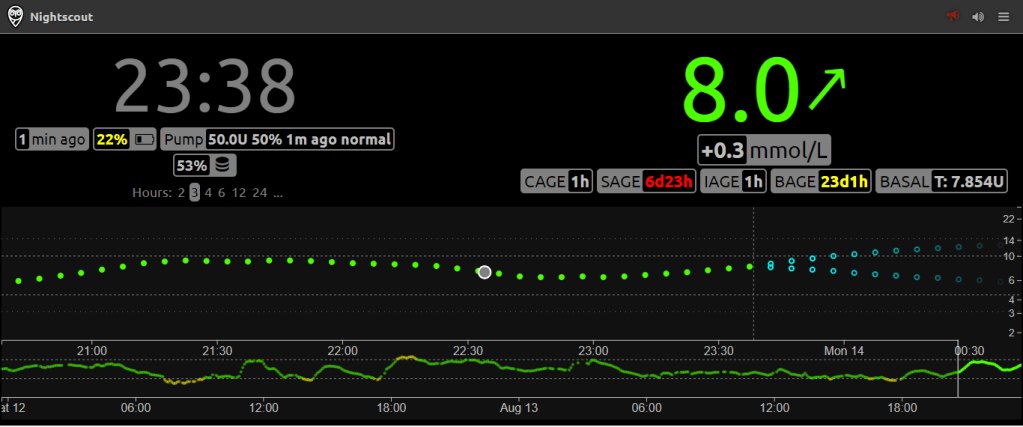
With xDrip+ installed, you can upload your data to the cloud. This means you can display your glucose level on a web browser along with other key data such as how old the sensor is (and pump information but we will get to that later). This is another way to allow followers to track your levels and receive alarms.

I find Nightscout to be a great way to see all my d-tech information in the one place.

Here, for example, I can see the CGM trace for the last 24 hours, how much insulin my pump has left (>50U), the charge level of my phone (22%), how old my pump cannula and insulin is (1 hour), how old my sensor is (6 days 23 hours), the age of my pump battery (23 days 1 hour) and my current basal rate (7.854 units/hour).

Every morning I open this up to check whether there are likely to be any interruptions during the day so I can plan for them.

Another nice feature or add-on, if you like, to Nightscout is Autotune.

By giving it access to your data in Nightscout, it can analyse the data and give recommendations for adjustments to your basal profile and IC ratio. Running this to help tune your loop or before you start looping to ensure your fall-back profile is reliable gives a lot of peace of mind. I spoke about how I do this tuning here.

To get Nightscout going, follow this excellent video by Scott Hanselman. This will get you up and running in 30 minutes to 1 hour.

AndroidAPS

Once you have the previous two going, you can start down the path of AndroidAPS. AndroidAPS is an app which allows for looping i.e. it bridges the gap between your CGM and pump so they talk to each other and automatically manage your blood glucose levels. The full documentation can be found here. If it seems overwhelming, my suggestion is read the ‘Getting Started’ and ‘What Do I Need’ sections in full and then walk through the step-by-step build instructions. Building the APK file may take an hour or two and then you can add it to your phone, as you did with xDrip+. As with everything else, this will cost you nothing but a little time.

Please note that, even with the app installed, there is still much to do before the app will allow you to loop. Before key features are enabled, you must complete the ‘Objectives’. The Objectives are actions you must perform in the app, multiple choice questions, or immersion into a feature for a limited time for you to see what it is like. To complete all of the Objectives will take a few weeks and, by the end, you will completely understand how to use the app and the features which allow it to loop.

Even though I now use CamAPS, I still have AndroidAPS running , listening to xDrip+ for the CGM data and applying the loop to a virtual pump. Why bother? Because AndroidAPS still has features missing from CamAPS such as the ability to record pump set changes, and sensor changes and this where Nightscout retrieves the data from, as I upload it directly from AndroidAPS.

Conclusions

So there you have it, you can install all three, or stop wherever you like. Even if you go all the way to AndroidAPS, there is no lock-in contract and YOU decide when to activate looping. This can take as little as a couple of days to set up or longer depending on how much you want to ease in. Every step of the way you are in control and, with thousands of people running this software, you can be confident it is safe and secure.