ATTD2024: Making Exercise Practical For Type 1 Diabetes

The standout talk for me at ATTD2024 was by Doctor Dessi Zaharieva on making exercise guidelines practical. It was standout for a couple of reasons. Firstly, it was a great talk, accessible to people of all academic levels and secondly, it was practical: the guidelines presented can be used by people with type 1 diabetes easily and without a pocket calculator/slide rule (am I aging myself with that reference?) on hand.

You may also recall that, back in November, I did a post on a talk by John Pemberton at ISPAD2023 (also mentioning Dessi) on the same topic.

This blog will look to bring together the two talks (and my own experiences running the Blue Circle Cycle Club) so others can use the knowledge and, hopefully, it will encourage them to incorporate exercise into their type 1 management routine. The focus will be on bike riding but feel free to follow the links for tips on other forms of exercise.

What Did John (and Dessi) Say at ISPAD 2023? A Recap of my Previous Post

In my previous post, I had the following key points:

  • Exercise, as it increases your heart rate, makes insulin stronger and last longer as it gets to circulate around the body more before it is broken down by the liver and kidneys
  • Aerobic exercise tends to lower blood sugar levels which, combined with the ‘amplified insulin’ can make hypoglycemia more likely
  • Exercise has many benefits and Dessi expresses it really well in just one slide
  • A Continuous Glucose Monitor (CGM) is really useful when exercising as it gives you near-real time feedback on your blood sugar levels, allowing you to address any hypos before they become an issue. For people not using CGMs, Hypoactive suggests “test your blood glucose (BGL) at least twice, 15-30 minutes apart before you exercise.” to understand the direction you are trending and regularly test during exercise.
  • Non-Looping Food Strategy: Eat before exercise to bring you up to around 7-10mmol/L (126-180mg/dL) to act as a buffer against going low
  • Non-Looping Insulin Strategy: Reduce basal insulin by 20% leading up to exercise, adjust in subsequent rides if too high/low
  • Looping Food Strategy: None. Cannot eat to raise BGLs as the loop will counter it, unless you deactivate the loop and follow the MDI/Non-Looping strategy
  • Looping Insulin Strategy: Raise BGL target level to, say, 8mmol/L (144mg/dL) and set system to ‘exercise mode’ if available when exercising
  • Roughly speaking, if you are at your target level when exercising, take around 15g of carbohydrates every 20 minutes to maintain it. If you are above but dropping fast, take the same, if you are below and heading upwards take the same and if you are below and flat or heading downwards, take more than 15g of carbohydrate per 20 minutes
  • Hypoactive suggests monitoring glucose levels for at least 24 hours after exercise and Diatribe recommends reducing bolus insulin by 50% for meals or snacks up to two hours after exercise.

What is Dessi Saying at ATTD2024?

Dessi, via Dana Lewis, generously gave me a copy of her slides so I have much clearer images for this blog than my original tweets.

I will focus on presenting the ‘practical’ slides than give the full presentation.

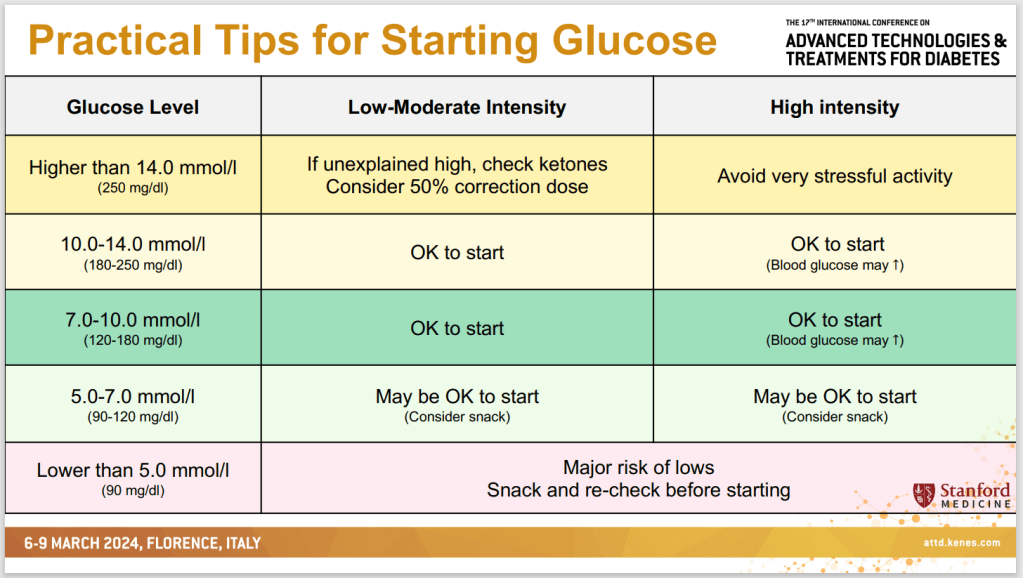
Starting Glucose

Bike riding is considered a Low-Moderate Intensity exercise so the suggestion is to start between 7-14mmol/L (126-252 mg/dL) which is in broad agreement with the previous advice.

Mealtime Insulin Before Exercise

In my previous blog, Diatribe had suggested reducing bolus injections by up to 50% leading up to exercise and we see here this is in broad agreement, especially with Low-Moderate exercise.

Basal Insulin Before Exercise

For non-loopers, John’s position was to reduce basal insulin by about 20% before exercise. Arguably Dessi’s position is not as strong saying a 10-20% reduction is only needed if the day is unusually active but, with John’s suggestion to adjust based on experience, we can see there is a middle ground between the two positions.

Snacks During Exercise (CGM)

Again, we see broad agreement with John’s talk. In terms of what to do below target, the softer language here allows room for John’s ‘maintenance carbs’ that he suggests (around 15g every 20 minutes). I should note here that my experience has been that, while I initially needed a protein bar before exercise to stave off lows, as my stamina/fitness improved, the need to do so has diminished. For example, the 10km/6 mile ride I did today I did without breakfast and no protein bar and stayed flat.

Dessi also suggests a backup glucose monitoring kit (good idea, especially for longer exercise intervals) and makes the excellent point that, as CGM can lag the true BGL value, a drop in BGL should be attended to as early possible.

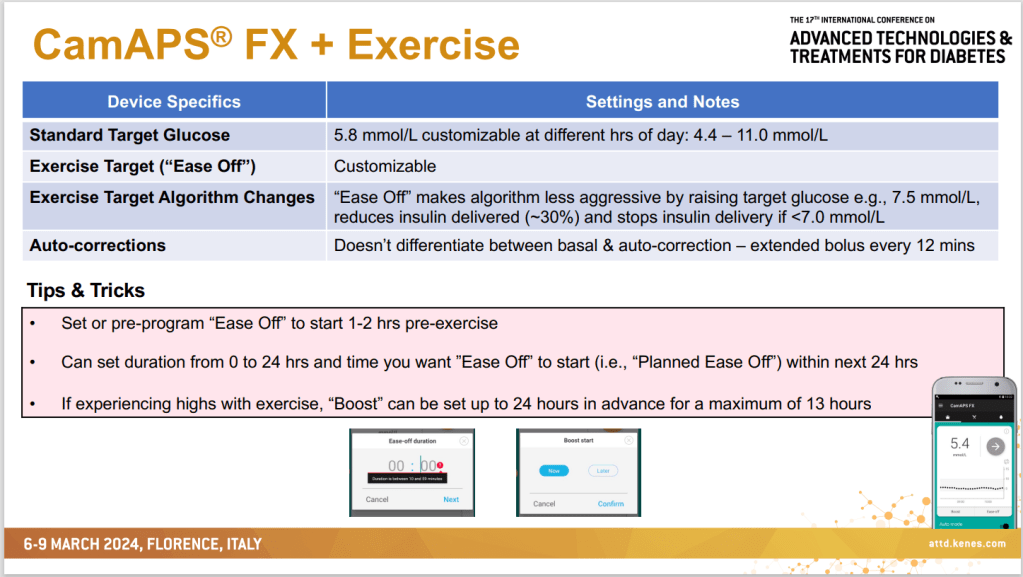
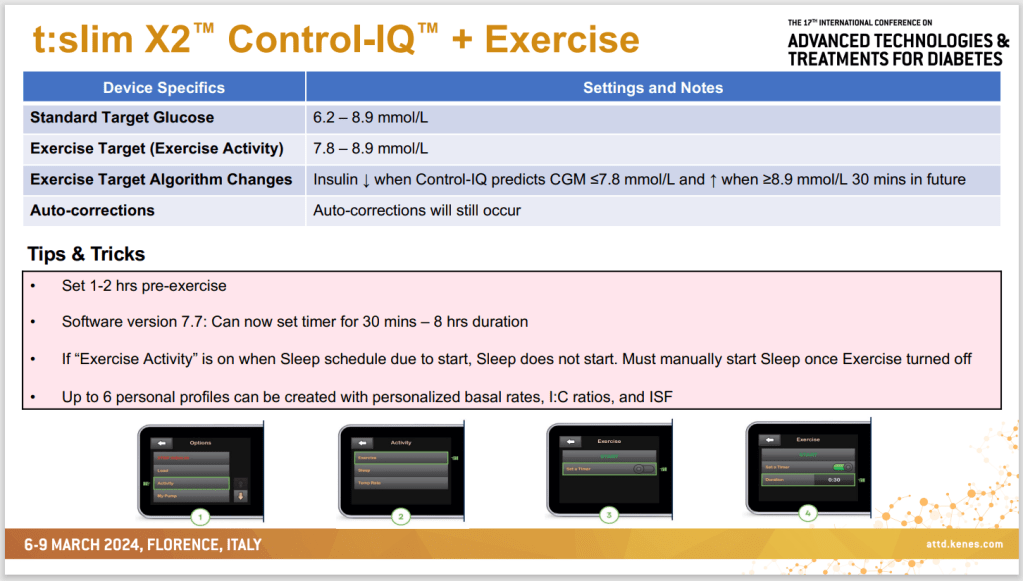
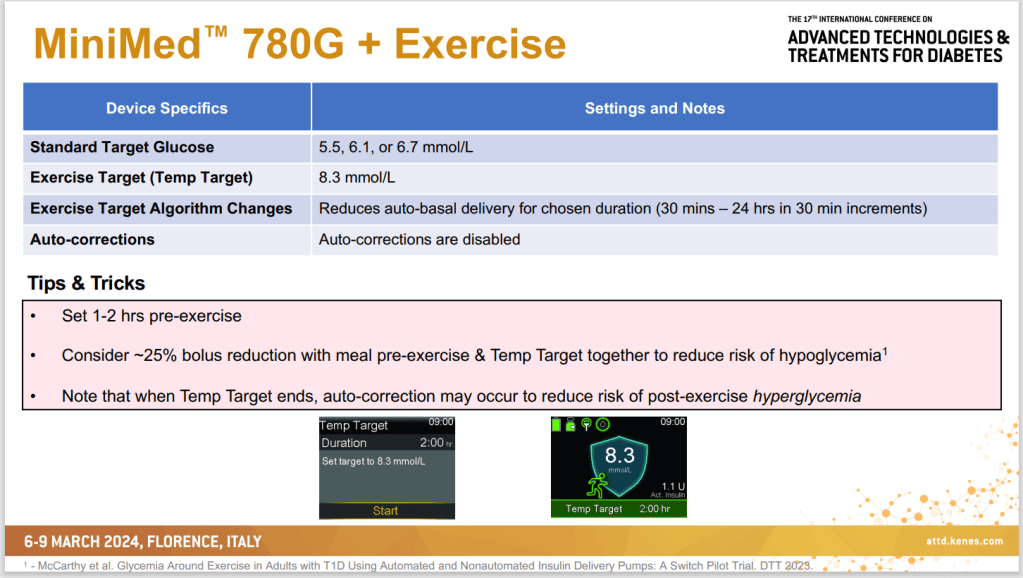
Looping Settings For Exercise

John also had a table of pump settings (screenshot in my previous article) and Dessi’s are in broad agreement. As they are friendlier to read, I am including hers here (sorry John).

Dessi’s Summary and What Really Happens

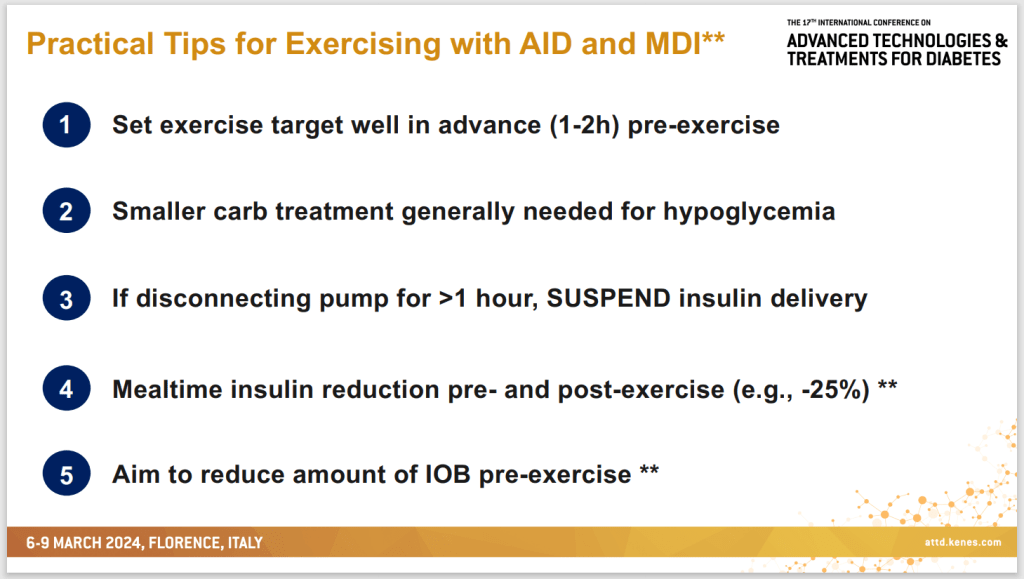
This was her summary slide combining tips for loopers and non-loopers. Again, nothing too unusual here, compared to previous tips but all good information.

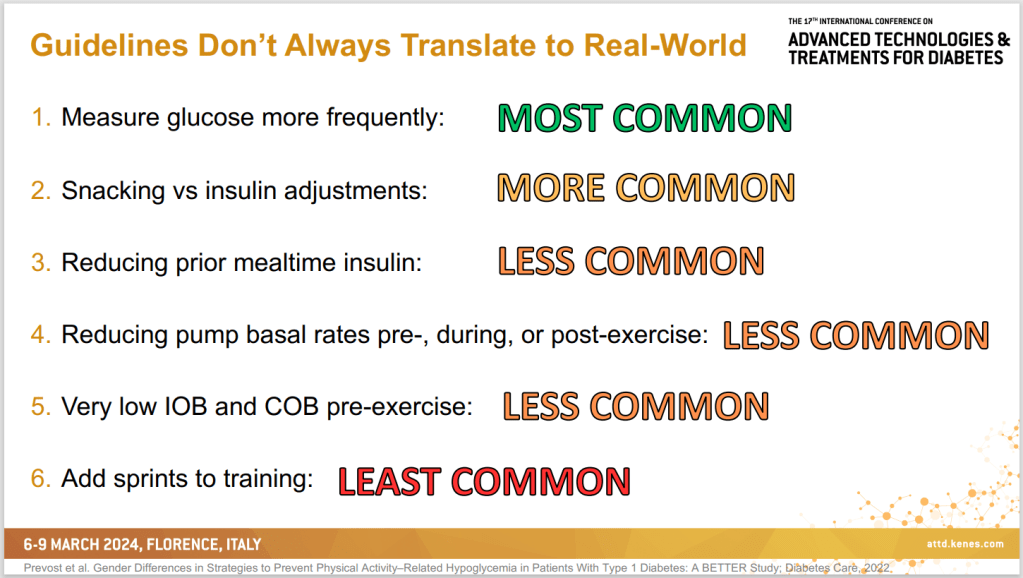
Of course, as she was going through all the suggestions I was thinking “yes, I will do that” and “no, I will not bother with that” and, as if she was reading my mind, she showed the slide above which aligned perfectly with my thinking.

Points 3-5 all relate to pre-exercise guidelines. I had dismissed these because, with a family, I cannot guarantee exactly when I will be starting exercise. For me it makes more sense to start following guidelines when I am about to ride, making points 1 and 2 the most relevant/practical.

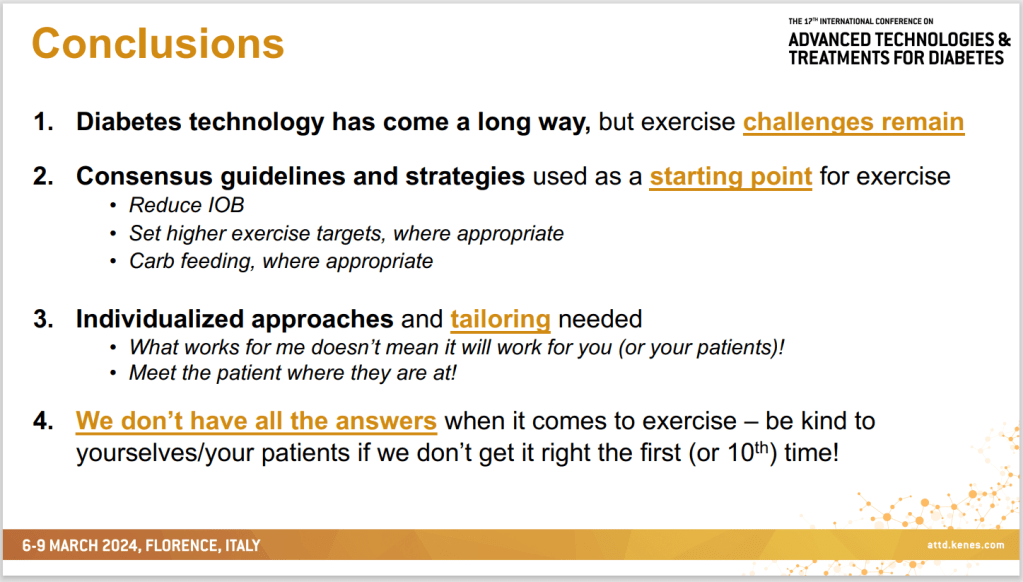
Her conclusions align to what many of us with type 1 diabetes concluded long ago when it comes to managing our blood glucose levels: Academic guidelines are well and good, but everyone’s diabetes is different, and we need to work out what works for us.

Things to Take on the Ride

From my own riding adventures, these are the things I keep on me while riding. For storage, you can pick up very affordable bike storage bags/panniers on the usual sites (Amazon, eBay, etc.)

  • A phone so you can monitor your CGM levels and/or a blood testing kit if you are not using a CGM. A phone can also be used to track your riding time and distance via apps like MapMyRide and Strava.
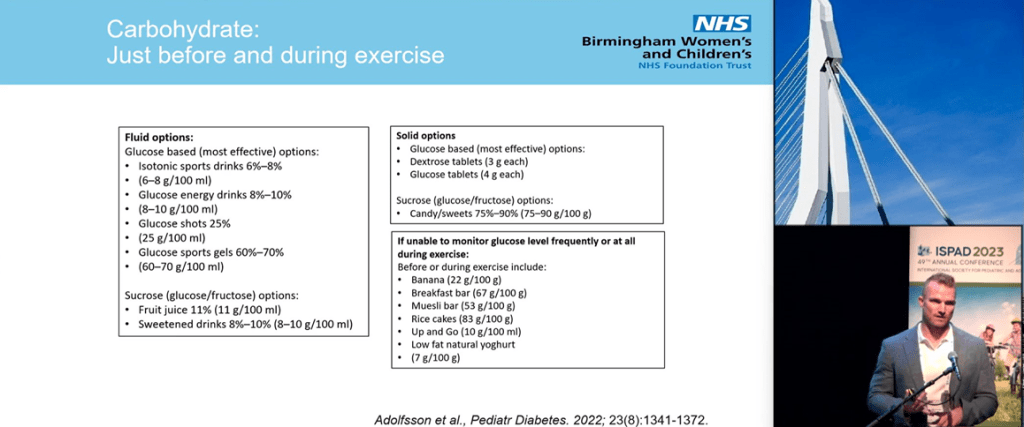
  • Hypo snacks (long and short-acting) to treat hypos and stave them off during exercise. John had some excellent examples
  • A medi-bracelet so, if there are issues, it can be quickly identified that you are a person with type 1 diabetes. Like the bike storage bags, these can be easily picked up online
  • Sunscreen, especially if you are cycling in the sun
  • Hydration: A riding bottle and bottle holder should be part of the bike or, you can also get wearable water bladders if you want to drink hands-free
  • Appropriate clothing: Some bike shirts have zippable pockets for storage or otherwise, simply clothes which allow movement and you will not get too hot in. I have picked up some excellent bike clothing and accessories at second-hand clothing stores
  • A smart watch: This is more a nice-to-have but I personally find it easier to check my BGLs on the watch by tapping it to my chin, than messing with the phone which is usually tracking the ride and not showing my BGLs

Bringing Together the Strategies for the Ride

Along with bringing the above along, here is the overall strategy summary for a morning bike ride, like those of the Blue Circle Cycling Club using my last post’s strategy as the foundation. Also note that, in the real world, people do not do all these things so work out which ones work for you.

Glucose Levels

  • Non-Looping: 1-2 hours before, have a Low GI breakfast to raise glucose levels with a reduced bolus (around 25-50%) to minimise insulin on board AND/OR reduce basal rates (10-20% reduction) to allow blood glucose levels to rise to around 7-14mmol/L (126-152mg/dL)
  • Looping: Skip breakfast, and 1-2 hours before set a higher loop target (around 8mmol/L = 144mg/dL) OR disable looping and follow the Non-Looping approach

During the Ride

  • Monitor glucose levels and, if they are dropping, eat a snack to counteract the trend.
  • If you already know how long you can exercise before levels start to drop, eat snacks accordingly. If unsure, start with eating around 15g of carbohydrate every 20 minutes of exercise.

After the Ride

  • Have a snack/coffee post-ride, especially if you are driving home
  • Monitor blood glucose levels for up to 24 hours
  • Reduce bolus rates by 25-50% up to two hours are the ride
  • Make any necessary adjustments to the approach for the following week.

Highlights from ATTD 2024

I have just returned from ATTD 2024 in Florence, Italy thanks to dedoc. ATTD (Advanced Technologies and Treatments for Diabetes) is one of the largest diabetes conferences in Europe. While the formal focus is on technology and new medications, the research coverage was quite broad. for example, I had a poster at the conference talking about motivation theory and its application in the doctor’s office.

I also presented on the petition to guarantee the humanitarian supply of medication, including insulin, to civilians in war-affected areas, in line with documents such as the Geneva Conventions. If you are interested in signing the petition, please go to https://www.change.org/insulinconsensus

Image care of https://twitter.com/1derfultype

So What Did I Learn?

In the spirit of Michelle Law’s Top Ten Takeaways and dedoc’s #PayItForward, I thought I would list the topics presented which piqued my interest.

Non-Invasive Glucose Measurement

In the expo area of the conference were a lot of companies looking to measure glucose in non-invasive ways, such as through saliva or with various electromagnetic waves scanning the skin. The measure of choice for determining accuracy for these systems is MARD (Mean Absolute Relative Difference). Generally speaking, a MARD less than 10% is considered accurate enough to inform insulin delivery i.e. be included in a bolus/looping system.

To understand how MARD can be manipulated look no further than Tim Street‘s excellent reviews of CGMs and how their accuracy is assessed, such as this one. However, even with the ability to artificially lower the numbers, the lowest MARDs being reported were in the low teens so, at least for now, finger-pricking and CGM insertion will need to continue.

TITR Gets More Coverage

At last year’s ATTD blog article, I mentioned Professor Thomas Danne pushing for Time in Tight Range (TITR, 3.9-7.8 mmol/L = 70-140mg/dL) rather than the usual Time in Range (TIR, 3.9-10 mmol/L = 70-180mg/dL) because it is a better predictor of the onset of Stage 3 diabetes and a better target for minimising the risk of long-term complications. In short, he suggested the evidence-based 50% TITR was a better goal than the consensus-based 70% TIR.

At this year’s ATTD, there was more talk of TITR and it is clear it is becoming an accepted standard in academic research. Some of the other dedoc voices expressed concern that a stricter range could lead to more pressure on people with diabetes (PWD) to ‘succeed’. While I am sympathetic to this concern, I would prefer my targets to be evidence-based but, to make sure people do not over-obsess on the numbers, perhaps a multi-target strategy should be considered with both quantitative and qualitative measures, aligned to the PWD’s goals.

Image care of https://twitter.com/Drhkakturk

Continuous Glucose Monitors (CGMs) and Looping for Type 2 Diabetes

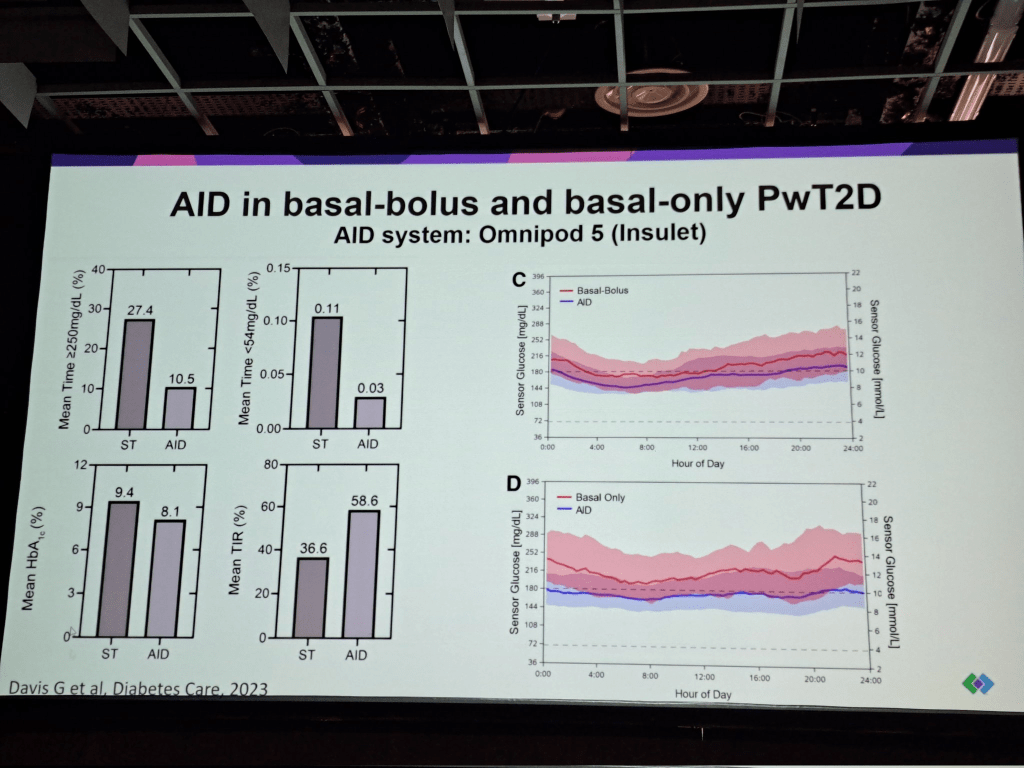
Historically, CGMs and Looping technology has been considered a type 1 tool. However, there are people with type 2 diabetes who require insulin and, from a common-sense perspective, based on the type 1 evidence, it makes sense they would also benefit from the technology. ATTD 2024 presented a variety of studies which confirmed this. Given the type 2 diabetes market is literally ten times the size of the type 1 diabetes market, it makes sense that diabetes tech. companies would pursue it.

Continuous Ketone Monitoring

The idea of monitoring ketones continuously, as well as blood sugar was also presented. It was shown that rising ketones can be used to predict hyperglycemia spikes and potentially predict DKA before it becomes dangerous. Abbott even went as far as to talk about a future all-in-one sensor which would track both in the one unit. Where I see this being useful is providing additional information for looping systems, to predict exercise, better handle ketogenic diets and SLGT2i medications.

GLP1s for Obesity Management

Drugs like semaglutide (Ozempic/Wegovy) are “single agonist GLP1s”: they bind to cells and trigger the same response as GLP1s in the body. The next generation of these drugs are in trials, referred to as double or triple agonists i.e. they activate more receptor sites. The upshot is they are more effective than their single agonist predecessors. How effective? Trials are reporting people losing 20-30% of their weight on the drugs which is incredibly powerful.

LADA Confirmed as a Distinct Phenotype and “Curable”

Perhaps because ATTD was in Italy, the home of Professor Raffaella Buzzetti, one of the leading authorities on LADA, there was substantially more coverage of LADA than I had seen in previous conferences. Professor Buzzetti presented evidence showing LADA is a distinct phenotype of type 1 diabetes (a distinct disease that presented differently) and confirmed that, with immune intervention drugs such as Teplizumab, it may be possible to indefinitely hold off LADA from becoming insulin dependent i.e. a cure.

#LanguageMatters Becomes #DeliveryMatters

One presentation talked at, not so much the words we use in speaking with people with diabetes but, how we talk to them i.e. with empathy and respect. This is a shift in the #LanguageMatters movement but a welcome one.

Patient Reported Outcomes (PROs) and Measures (PROMs)

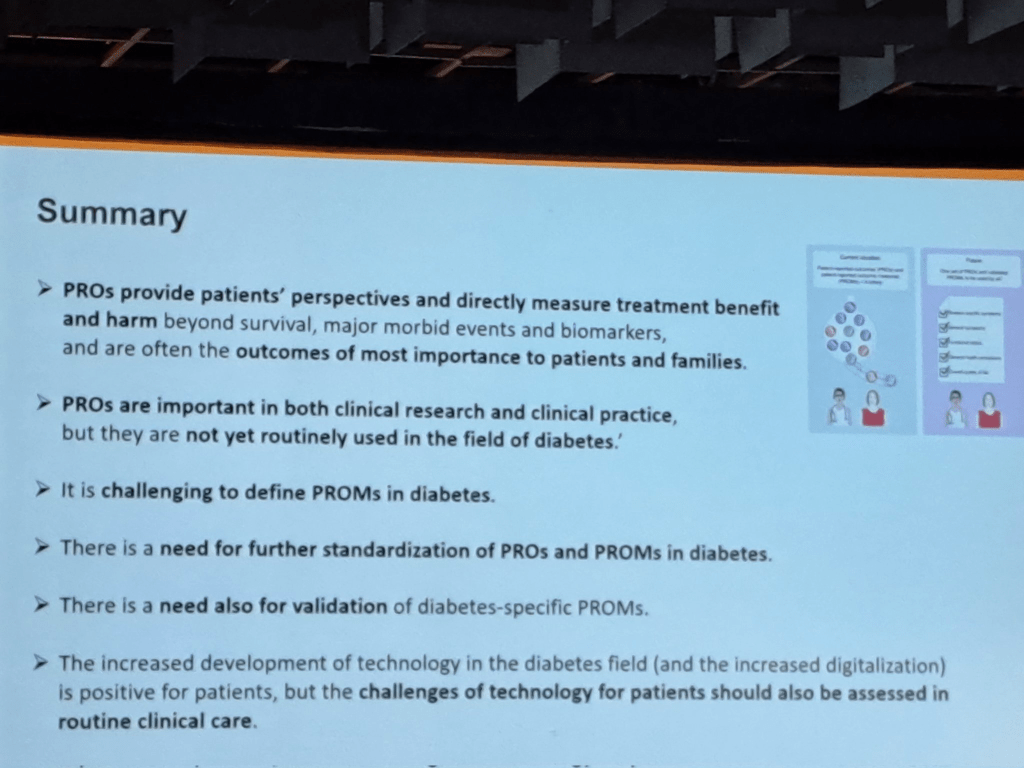
This had been touched upon in previous conferences but, again, seemed to have more prominence at ATTD 2024. In short, PROs are outcomes which are important to the person with diabetes, more than the clinician.

PROMs are the measures to assess them. At this stage, while there are PROM questionnaires being used in research, their efficacy is not strongly validated, and there is concern they are being used without a purpose in mind.

“Artificial Intelligence is not Ready for Primetime”

The use of artificial intelligence (AI) systems to provide guidance to people with diabetes in their daily management and in providing general advice on diabetes was discussed and considered not ready for general use because of ‘hallucinations’ (false facts incorrectly inferred by the AI engine which need to be verified by the user). Examples cited included mixing up mmol/L with mg/dL which could be disastrous in the context of giving insulin administration advice.

This being said, the potential was recognised once obstacles were addressed.

Tips and Tricks for People with Type 2 Diabetes

One study was presented which showed, even if the types of food a person with type 2 diabetes is eating does not change, intermittent fasting will still reduce their HbA1c. This is intuitively obvious, but it is good to have the evidence to back it up.

Another study showed 2.5-6.5 hours of exercise per week helps people with early stages of type 2 diabetes inproves beta cell function.

Type 1s have Insulin Resistance Too!

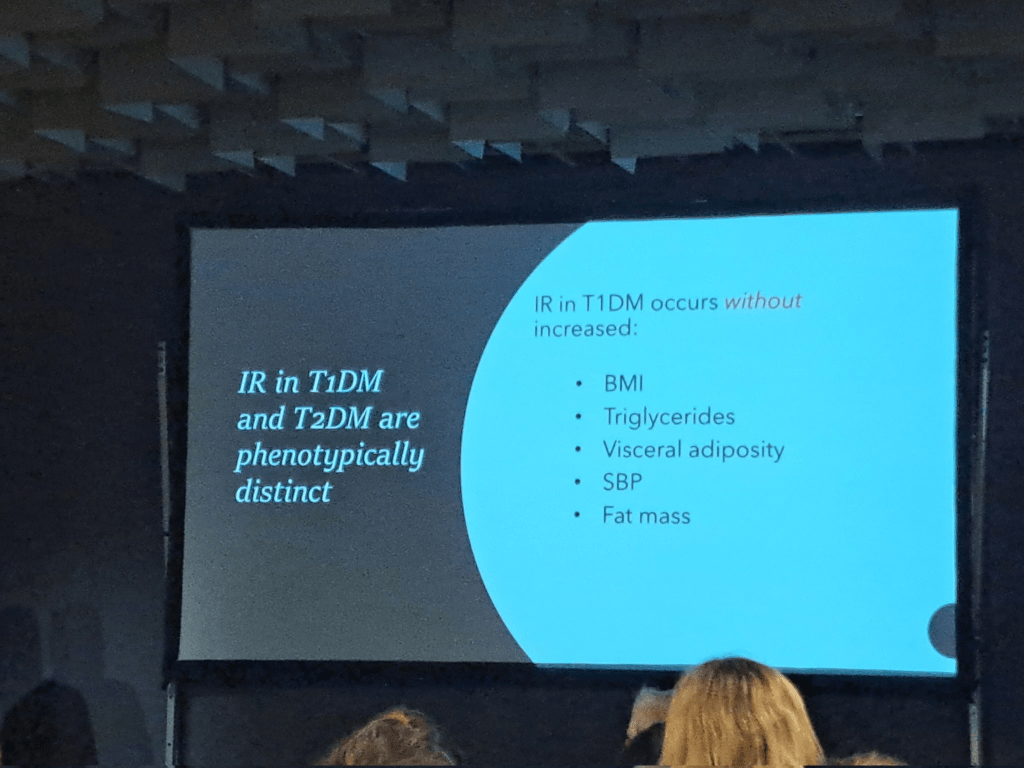
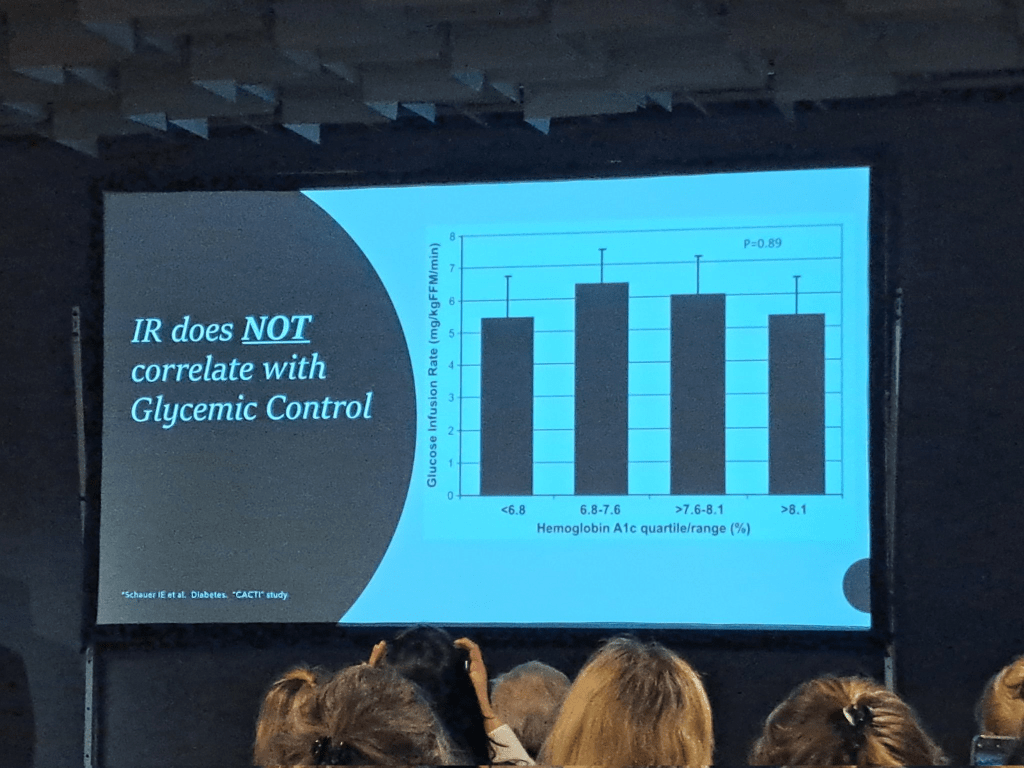
Rendering the term “double diabetes” somewhat redundant, it was shown that people with type 1 diabetes also have insulin resistance which, in their case, is driven by the insulin they inject and is independent of factors such as weight or glycemic control. Low carb was mentioned as one lever to pull in managing it.

Thank You dedoc!!

If you are interested in also attending these kinds of conferences, I highly recommend going to the dedoc web site and applying for one of their scholarships. They cover flights, accommodation, and conference registration. Am I one of these infamous “paid diabetes advocates” we hear so much about on social media? I do not think so. I still had to take leave from work and cover other expenses out of my own pocket. My bank account is no richer for the experience but my knowledge of where the research is heading certainly is and the friendships made with other diabetes advocates around the world are priceless. This is why I continue to apply for the scholarships for myself and for the communities I serve.

Living Without Air

Imagine a bomb which kills by removing air with its blast. Armor would be useless against it and civilians would have no defense. The only way to survive would be to have a personal supply of oxygen to breathe until air returns to the area. Such a bomb does exist; it is called a thermobaric bomb and it has been used in warfare. Thankfully, it is seen as something exclusively for the battlefield and, while not banned, its use on civilian populations is seen as possibly contravening the Protocol on Incendiary Weapons.

This article is not a treatise on the nastier weapons at the disposal of modern armies but asks the question “Should a civilian population be given what they need to survive in times of war?” If we think of the basics a person needs to survive, we can imagine this includes food, water, and shelter but what about medication? There are diseases, such as type 1 diabetes, where the absence of medication (insulin) literally means death. There is no remission for type 1 diabetes, there is no substitute for insulin. A person with type 1 diabetes needs insulin as much as they need air, food, water, and shelter.

So, do the international conventions go as far as provisioning medication for those who literally cannot live without it?

International Declarations, Covenants, and Conventions

The Universal Declaration of Human Rights thinks so with Articles such as:

  • Article 5: No one shall be subjected to torture or to cruel, inhuman or degrading treatment or punishment.
  • Article 12.1: Everyone has the right to a standard of living adequate for the health and well-being of himself and of his family, including food, clothing, housing and medical care and necessary social services, and the right to security in the event of unemployment, sickness, disability, widowhood, old age or other lack of livelihood in circumstances beyond his control.

The International Covenant on Civil and Political Rights states:

  • Article 6.1: Every human being has the inherent right to life. This right shall be protected by law. No one shall be arbitrarily deprived of his life.
  • Article 7: No one shall be subjected to torture or to cruel, inhuman or degrading treatment or punishment. In particular, no one shall be subjected without his free consent to medical or scientific experimentation.

Geneva Conventions Act 1957 – Schedule 1

  • Article 3.1: Persons taking no active part in the hostilities, including members of armed forces who have laid down their arms and those placed hors de combat by sickness, wounds, detention, or any other cause, shall in all circumstances be treated humanely, without any adverse distinction founded on race, colour, religion or faith, sex, birth or wealth, or any other similar criteria.
  • Article 3.2: The wounded and sick shall be collected and cared for.

Geneva Convention IV 1949

  • Article 56: To the fullest extent of the means available to it, the Occupying Power has the duty of ensuring and maintaining, with the cooperation of national and local authorities, the medical and hospital establishments and services, public health and hygiene in the occupied territory, with particular reference to the adoption and application of the prophylactic and preventive measures necessary to combat the spread of contagious diseases and epidemics. Medical personnel of all categories shall be allowed to carry out their duties.

International Covenant on Economic, Social and Cultural Rights

  • Article 12.1: The States Parties to the present Covenant recognize the right of everyone to the enjoyment of the highest attainable standard of physical and mental health.
  • Article 12.2: The steps to be taken by the States Parties to the present Covenant to achieve the full realization of this right shall include those necessary for…The creation of conditions which would assure to all medical service and medical attention in the event of sickness.

Convention on the Rights of the Child

  • Article 6.1: States Parties recognize that every child has the inherent right to life.
  • Article 6.2: States Parties shall ensure to the maximum extent possible the survival and development of the child.
  • Article 24.1: States Parties recognize the right of the child to the enjoyment of the highest attainable standard of health and to facilities for the treatment of illness and rehabilitation of health. States Parties shall strive to ensure that no child is deprived of his or her right of access to such health care services.
  • Article 24.2: States Parties shall pursue full implementation of this right and, in particular, shall take appropriate measures:
    • (a) To diminish infant and child mortality;
    • (b) To ensure the provision of necessary medical assistance and health care to all children with emphasis on the development of primary health care;
  • Article 27.1: States Parties recognize the right of every child to a standard of living adequate for the child’s physical, mental, spiritual, moral and social development.
  • Article 37: States Parties shall ensure that… No child shall be subjected to torture or other cruel, inhuman or degrading treatment or punishment.

Conclusions and Call to Action

I have included a couple of provisions regarding torture because this is a fitting description for what a person with type 1 diabetes goes through if they do not have insulin. Without insulin, the body breaks down and floods the blood with fuels such as glucose, fatty acids, and ketones. The blood turns acidic and the organs of the body are slowly destroyed. Any ‘state party’ engaged in war and knowingly restricting the movement of insulin is, in my opinion, committing an act of torture. I appreciate others may see it differently.

Obviously, wars make life difficult for those who cannot escape. Inevitably, civilians get caught in the crossfire literally and figuratively. However, if those engaging in war are signatories to the documents above or endorse their principles, it is reasonable to expect them to stand by their commitments. The movement of humanitarian aid and medication should not be weaponized by being withheld, confiscated, or destroyed. To do so is to lose sight of the values often being fought for in the first place.

To this end, myself, and a collection of international diabetes advocates have put together a petition which you can sign urging warring nations to meet their international obligations. While the catalyst for the creation of the petition was the Russia-Ukraine conflict and the Israel-Gaza conflict, this petition is not directed at any one nation and simply demands that if a nation is to be recognized as an international citizen, it must act as one. I urge you to endorse this position so that the international bodies that our group represent, or have ties to, can put pressure on the relevant parties and save the lives of people who will otherwise die.

A Broken Pump Plan Template

About a month ago I put out a Sick Day Plan Template. In this blog I have put together a broken pump plan template. This is a plan to follow if you use an insulin pump and it has a systematic failure.

Unlike the Sick Day Plan, there are Broken Pump Plans out there so I have merged a few of them to create what I believe to be a practical approach to a disastrous event. The main sources for this template are:

As with the Sick Day Plan, I am not a medical professional so I strongly recommend running your version of this plan past your health care team before using it.

The Template

Contacts

RelationshipNameContact Number
Diabetes Educator<DE Name><DE Phone Number>
Insulin Pump Supplier<Pump Support Name><Pump Support Number>

Things to Carry

  • Short-acting insulin
  • Long-acting insulin
  • Needles for injection
  • Glucometer and strips
  • Lancet/Genteel
  • Ketone strips
  • Hypo snacks

Pump Settings

Target<Target blood glucose level>
IC ratio<IC ratio number>Grams of carb 1 unit of insulin covers
ISF<ISF number>The amount blood glucose levels drop with a unit of insulin
Basal<Basal number>How many units per hour needed for basal insulin
TDD<TDD number>Total daily insulin usually used (bolus + basal)

NB: This is quite a simplistic profile as it assumes no variation over the day. Also, if looping, numbers may not be accurate as the loop may have adjusted the profile within its algorithm so monitoring is essential.

DKA Symptoms to Watch For

DKA usually develops slowly. Early symptoms include:

  • Being very thirsty.
  • Urinating a lot more than usual.

If untreated, more severe symptoms can appear quickly, such as:

Fast, deep breathingMuscle stiffness or aches
Dry skin and mouthBeing very tired
Flushed faceNausea and vomiting
Fruity-smelling breathStomach pain
Headache 

Steps to Follow

NB: Assumes a mechanical/electrical pump failure, not a cannula issue

  • Call the pump manufacturer to report the fault and find out when a new one can be delivered
  • If tech support can’t fix it, stop the pump and disconnect it
  • If you have one, activate your spare pump

If off the pump for less than 3 hours:

  • Check blood sugar
  • If above target inject rapid insulin to bring it down, if very high (>14 mmol/L, >250mg/dL) check for ketones
  • If showing signs of DKA (thirsty, excessive urination, vomiting, headache, exhaustion), check for ketones, regardless of BGLs
  • If ketones above 1.5mmol/L, double the correction dose (or add 10-20% of your TDD), drink a glass of water every 15 minutes. If BGLs are not high, also eat a hypo snack to counter the extra insulin
  • If you eat, inject rapid insulin to match the carbs

If off the pump for more than 3 hours:

  • Check blood sugar every 4 hours
  • Calculate the basal insulin needed for 4 hours
  • Inject enough rapid insulin to cover it
  • If above target inject rapid insulin to bring it down, if very high (>14 mmol/L, >250mg/dL) check for ketones
  • If showing signs of DKA (thirsty, excessive urination, vomiting, headache, exhaustion), check for ketones, regardless of BGLs
  • If ketones above 1.5mmol/L, double the correction dose (or add 10-20% of your TDD), drink a glass of water every 15 minutes. If BGLs are not high, also eat a hypo snack to counter the extra insulin
  • If you eat, inject rapid insulin to match the carbs
  • If without a pump overnight and do not have long-acting insulin, continue every 4 hours


If off the pump overnight or more than one day with long-acting insulin:

  • Check blood sugar every 4 hours
  • Calculate 24 hours total basal (or 2*12, whichever works)
  • Inject long-acting insulin to cover it
  • If above target inject rapid insulin to bring it down, if very high (>14 mmol/L, >250mg/dL) check for ketones
  • If showing signs of DKA (thirsty, excessive urination, vomiting, headache, exhaustion), check for ketones, regardless of BGLs
  • If ketones above 1.5mmol/L, double the correction dose (or add 10-20% of your TDD), drink a glass of water every 15 minutes. If BGLs are not high, also eat a hypo snack to counter the extra insulin
  • If you eat, inject rapid insulin to match the carbs

Reintroducing a new pump:

If not looping or having basal suspension, consider the insulin on board before activating the basal rate of the pump. For example, reconnect when you would otherwise give yourself a basal shot

A Sick Day Plan Template

I just put together a Sick Day Plan/Guide for my Family in Case I am unconscious. I thought I would share it so others can craft it to make it their own. The guidelines are taken from the Australia Diabetes Education Association (https://www.adea.com.au/wp-content/uploads/2020/09/Consumer_01_10.pdf)

I have written them for someone with a pump (because I have a pump) and while the administering of insulin can be done with a pump, in an emergency, I made the call that a family member would be more capable of injecting insulin than checking if a pump still had insulin and using it to give a bolus.

I am not a medical professional so I strongly recommend running your version of this plan past your health care team before using it.

The Template

Sick Day Plan

Contacts

RelationshipNameContact Number
Partner<Partner Name><Partner Phone Number>
Endocrinologist<Endo Name><Endo Phone Number>
Diabetes Educator<DE Name><DE Phone Number>
GP/Family Doctor<GP Name><GP Phone Number>
Dentist<Dentist Name><Dentist Phone Number>
Cardiologist<Cardiologist Name><Cardiologist Phone Number>

What To Do When Sick/Unconscious (Looping Insulin Pump Plan)

  • FAMILIARISE YOURSELF WITH THE INSTRUCTIONS BEFORE ACTIONING THEM
  • If feeling unwell, Leon is unconscious, or BGL > 15mmol/L (270mg/dL) for more than 2 hours
  • Check Blood Glucose Levels (BGLs) and Ketone Levels
  • Continue to drink (0.5-1 cup of fluid per hour) and eat if possible (15g carb per hour)
  • If BGLs greater than 10mmol/L (180mg/dL)
    • Low carb intake and use insulin (<Inset enough to get you down to, say, 4mmol/L (72mg/dL))
  • If BGLs less than 4mmol/L (72mg/dL)
    • Take fast acting carbs
    • Check BGLs every 15 minutes and treat until above 4mmol/L (72mg/dL)
  • If ketones 0.6 – 1.5mmol/L (60 – 150 mg/dL)
    • Change pump site
    • Check BGL/ketones every hour
    • Give 20% of your Total Daily Dose (TDD) of insulin every two hours.
  • If ketones >1.5mmol/L (150mg/dL)
    • Give 30% of your TDD every two hours
  • Otherwise
    • Check BGL/ketones every 2 hours
  • If vomiting stop taking Metformin and SGLT2i’s

NB: Plan may need adjustment if not running a looping pump.

Liquids With Carbs

  • Fruit juice (10g/100mL)
  • Tea with sugar (5g/teaspoon)
  • Milk (5g/100mL)

Liquids Without Carbs

  • Water
  • Diet coke/pepsi
  • Diet cordial
  • Stock
  • Tea without milk and sugar

When To Seek Medical Attention

  • Leon is unconscious
  • Blood Glucose Levels over 15mmol/L (270mg/dL) and not coming down after two insulin treatments
  • Ketone levels above 1.5mmol/L (150mg/dL) and not coming down after two insulin treatments
  • Low BGLs (<4mmol/L (72mg/dL)) even after two hypo treatments
  • Persistent vomiting (>4 hours) or stained with red/green/yellow
  • Cannot follow sick day action plan
  • DKA symptoms
    • Nausea/Vomiting/Stomach Pain
    • Increased thirst
    • Increased urination
    • Rapid, short breathing
    • Fruity smelling breath
    • Drowsy, weak, or confused
    • Rapid heartrate
    • Headache
    • Blurred vision
    • Dry skin

Note: Leon should not drive if he needs medical attention

How to Test Blood Sugar Levels

  • FAMILIARISE YOURSELF WITH THE INSTRUCTIONS BEFORE ACTIONING THEM
  • Get the black diabetes kit (usually in the blue diabetes bag in the craft cupboard)
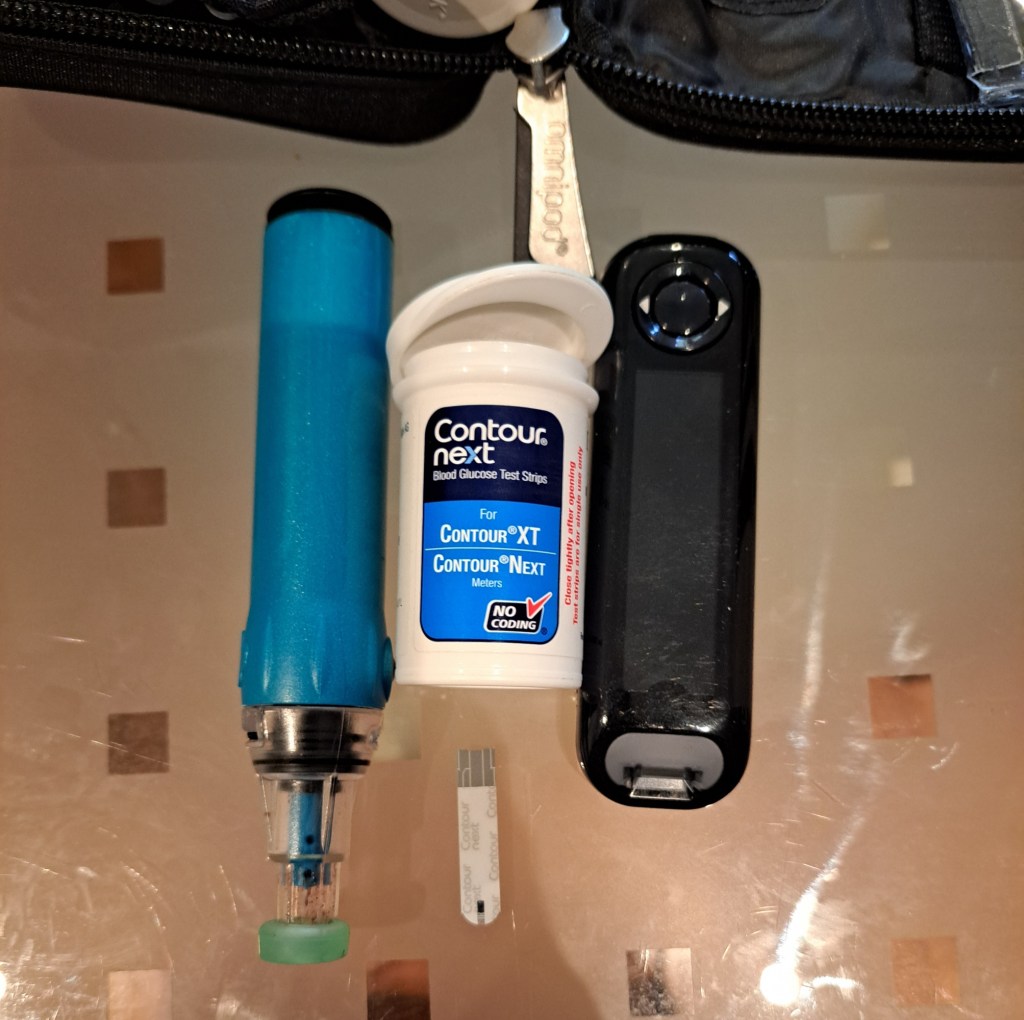
  • Take out the Genteel lancing device, Test Strip container (remove a test strip), and the Glucometer
  • Place the grey end of the test strip into the glucometer where the slot is
  • Place the Genteel against a finger tip
  • Press and hold the black button. You should see blood appear at the site in contact with the fingertip
  • If you fail to draw blood push the plunger back down until it clicks and try again
  • Dip the inserted test strip into the blood until the glucometer beeps
  • Wait a few seconds and it will tell you Leon’s blood glucose level

How to Test for Ketones

  • FAMILIARISE YOURSELF WITH THE INSTRUCTIONS BEFORE ACTIONING THEM
  • Get the black diabetes kit (usually in the blue diabetes bag in the craft cupboard)

This image has an empty alt attribute; its file name is 20231125_155424.jpg

  • Take out the Genteel lancing device, a Purple Test Strip in foil, and the Ketone Glucometer
  • Place the black striped end of the test strip into the glucometer where the slot is
  • Place the Genteel against a finger tip
  • Press and hold the black button. You should see blood appear at the site in contact with the fingertip
  • If you fail to draw blood push the plunger back down until it clicks and try again
  • Dip the inserted test strip into the blood until the glucometer beeps
  • Wait 10 seconds and it will tell you Leon’s blood ketone level

How to Give a Glucagon Injection

Only to be done if the blood sugar levels are less than 3mmol/L (52mmol/L) and unresponsive/unable to eat/drink.

NB: I could find no good guidance on when to use glucagon other than ‘when low’ so feel free to adjust the 3mmol/L level to one which works for you and your health care team.

The glucagon kit can be found in the blue diabetes bag in the craft cupboard in the front pouch.

Watch the video “How to do a glucagon injection” video on YouTube by University College London Hospitals NHS Foundation Trust (https://www.youtube.com/watch?v=9dDJQPHJq3w)

How to Inject Insulin when Leon is High (>15mmol/L (270m/dL))

  • FAMILIARISE YOURSELF WITH THE INSTRUCTIONS BEFORE ACTIONING THEM
  • Get an orange injection pen from the fridge (butter compartment or the grey cooler bag)
  • Get a needle from the fridge (butter compartment)
  • Remove paper cover from bottom of needle
  • Remove top from insulin pen
  • Screw the needle onto the insulin pen and remove the two needle caps
  • Dial 1 unit and press the dialler down until you see insulin come out of the needle
  • Dial the units indicated above
  • Push the needle into a fatty area of the body e.g. belly
  • Press the button down and leave it in while you count to 10
  • Remove the injection pen from the injection site and cover the insulin pen with the pen’s blue cap to hide the needle tip

Exercising with Insulin

One of the highlight talks for me at ISPAD 2023 was by John Pemberton who spoke on managing exercise when you have type 1 diabetes. This was particularly relevant to me because I have just started cycling again and want to start up a type 1 cycling club in Sydney where I live. He had a wealth of information on exercising safely and, combined with a few other resources I have found, I thought I would consolidate it here for reference.

Given my interest is in the context of a weekly morning cycle for people with type 1 diabetes, the blog will be geared towards this. If this is not what you are looking for, or even if it is, I strongly encourage you to consult an exercise physiologist and your health care team before embarking a change of exercise, especially if you are insulin dependent.

Why is Exercise a Problem for People with Type 1 Diabetes?

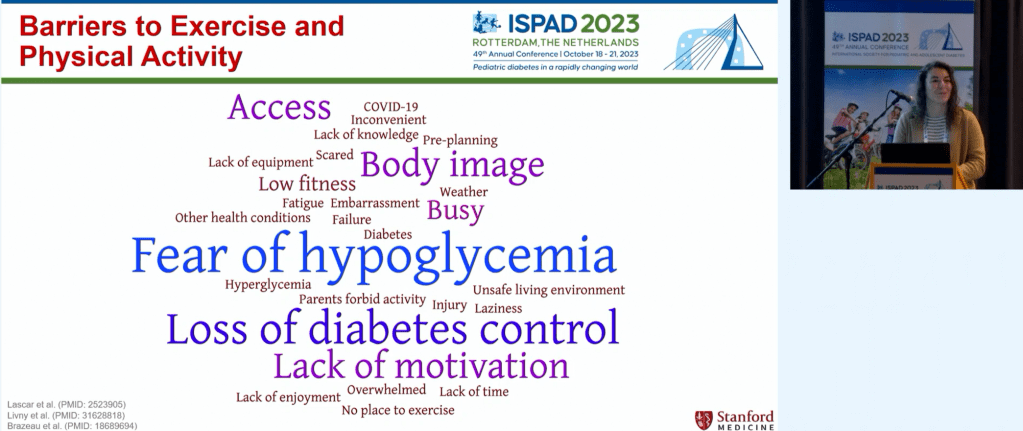
The answer is because, in the short term, it makes managing insulin and blood glucose levels harder. For a disease which is already a full-time job for many, making that job harder is not particularly desirable. No one wants overtime for a job that is 24-7. The fear of being in the middle of exercise and having a hypo was consistently mentioned at EASD 2023 and ISPAD 2023 as a psychological blocker for doing more exercise. Dessi Zaharieva summed it up well with this.

While exercise obviously uses up energy, another complication is the increased heart rate makes insulin more effective: this was explained by John Pemberton as being because it accesses more of the body before getting broken down by the liver and kidneys.

So, without smart management we have glucose leaving the blood to feed an exercising body and the tool of choice for doing this, insulin, is now amplified.

On top of this, different exercises affect the body differently. Intense, anaerobic exercise can lead to an increase in blood glucose levels, with the liver dumping glucose into the blood to help the body keep up, while less intense aerobic exercise generally lowers the blood glucose levels.

We can see why hypoglycaemia may be a concern and why people reliant on insulin may consider it all a bit too hard.

Is Exercise Important?

It is hard to find anyone who does not acknowledge the value of exercise to long term health. At every conference there is always an academic who quips that if they could put the health benefits of exercise into a pill, they would win the Nobel prize for Medicine. In the specific case of insulin, exercise lowers insulin resistance and reduces the risk of a variety of diseases. Dessi Zaharieva also put up a great slide at ISPAD 2023 highlighting the benefits.

The World Health Organisation has clear recommendations for exercise which I expect many of us in the Western World spectacularly fail to heed.

While a weekly bike ride is unlikely to tick the WHO box in itself, it is a step in the right direction.

Tools for Exercising Safely

In my opinion, the tool that makes the biggest difference for being able to exercise safely is a Continuous Glucose Monitor (CGM). This tells you what your glucose level is throughout exercising and which direction it is heading, giving you warning if your levels are going too low. In the case of cycling, this means wearing an integrated watch to display the blood glucose level, or having a mounted device, such as a CGM reader or your mobile phone.

If you do not have a CGM, finger pricking can be used. Hypoactive suggests “test your blood glucose (BGL) at least twice, 15-30 minutes apart before you exercise.” This will give an indication of blood glucose level and the direction is it going.

If you are going low during exercise, you will need to treat it, which means having a readily available source of glucose is important when exercising. For cycling, these can be carried in a bike bag/pannier, or in your pocket.

If the worst case scenario does happen, and you go unconscious due to a low, wearing a medi-bracelet also makes a lot of sense so you can receive treatment as quickly and efficiently as possible.

If the UV levels are going to be high while exercising, it also makes sense to wear sunscreen. Sunburn can also play havoc with glucose levels.

Depending on how long the exercising goes on for, supplementary food to eat along the way may also make sense.

A cheeky snack in preparation for exercise can also be useful but the strategy employed is strongly dependent on how you receive insulin.

Exercise Preparation: Multiple Daily Injections (MDI)

For each of the preparation sections, I will break down the approach into “Food Strategies” and “Insulin Strategies”.

MDI Food Strategy

In the case of MDI, the food strategy is to eat food such that the blood glucose level before exercise is, say, between 7-15 mmol/L (126-270 mg/dL) (taken from My Way Diabetes), providing a buffer for when the exercise brings blood sugar down. Sports Dieticians Australia set a more conservative range of 7-10 mmol/L (126-180 mg/dL) for exercise going over 60 minutes. Diatribe recommends reducing bolus rates by 50% to get there. John Pemberton had a table of suggested foods for the purpose of getting ready for exercise.

Sports Dieticians Australia are more general in their recommendations suggesting simply low GI foods.

MDI Insulin Strategy

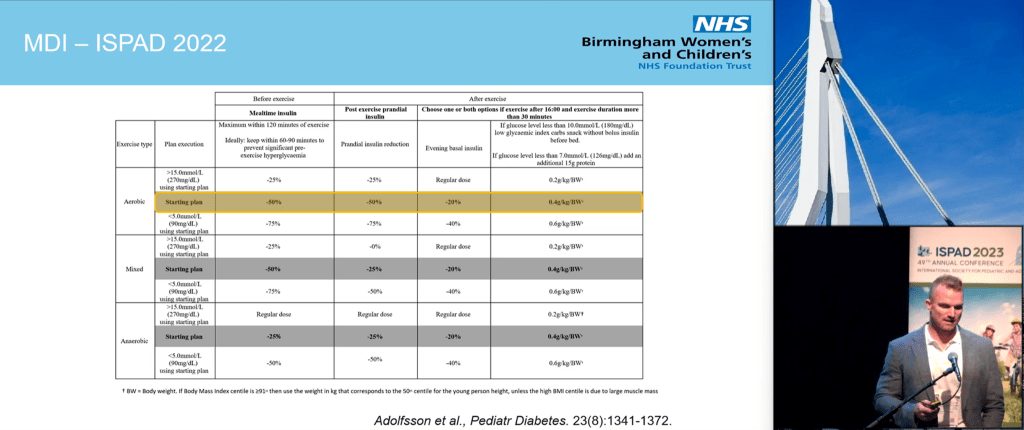
The insulin strategy is to reduce the basal insulin leading up to exercise, raising the blood sugar level. Diatribe recommend a 20% reduction in basal rates for exercise of more than 40 minutes. John Pemberton also had some thoughts on this.

In the case of cycling, this is generally considered an aerobic activity. In the table you begin reducing bolus rates by the amounts for pre- and post-exercise in the “Starting Plan”. If you find you end up too high or too low, you can adjust by moving to the appropriate adjacent plan in the table.

Exercise Preparation: Non-Looping Pump

Pump Food Strategy

The food strategy for pumps is the same as MDI i.e. eat food to temporarily raise blood sugar levels prior to exercise, modifying bolus rates, as needed.

Pump Insulin Strategy

The main difference with the Pump Insulin Strategy to the MDI one is the ability to set temporary basal rates. This gives the ability for some fine adjustment, which is harder with MDI.

Exercise Preparation: Looping/Automated Insulin Delivery (AID)

Looping Food Strategy

Eating food to raise blood sugars does not work with looping because the system automatically raises insulin levels to counter it, regardless of what is declared and bolused for. This means, by the time you are ready to exercise your body has plenty of insulin on board, which the exercise will supercharge, raising your risk of going low. Therefore, the strategy here is, for a morning ride, to skip breakfast.

To use food to raise blood sugars, the loop needs to be deactivated and we can follow the Pump Food Strategy. In my opinion, the better option is to consider the insulin strategy.

Looping Insulin Strategy

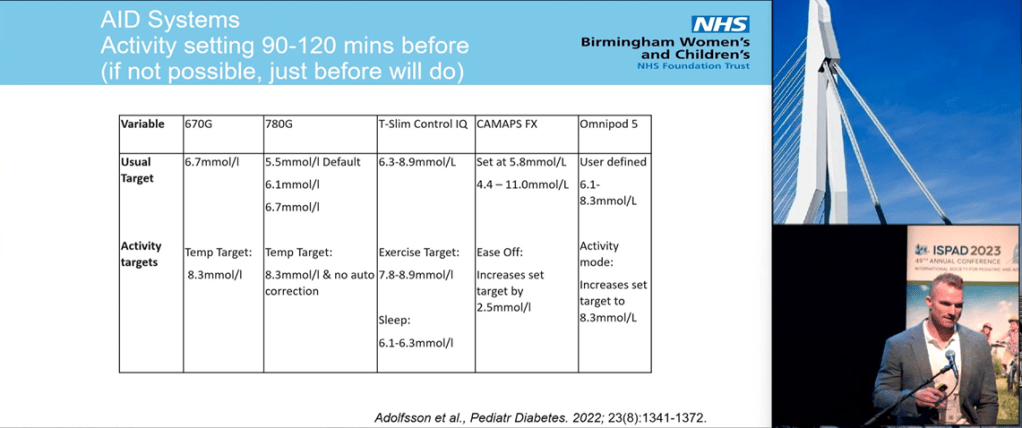
The target blood glucose level can be raised so the loop allows the blood glucose levels to naturally rise. This also minimises the amount of insulin on board (insulin in the body) which, in turn, minimises the risk of a hypo during exercise. Many looping systems also allow the declaration of exercise to modify how aggressive the loop is at reducing blood glucose levels. John had suggestions for most of the commercial looping systems.

Carbs During Exercise

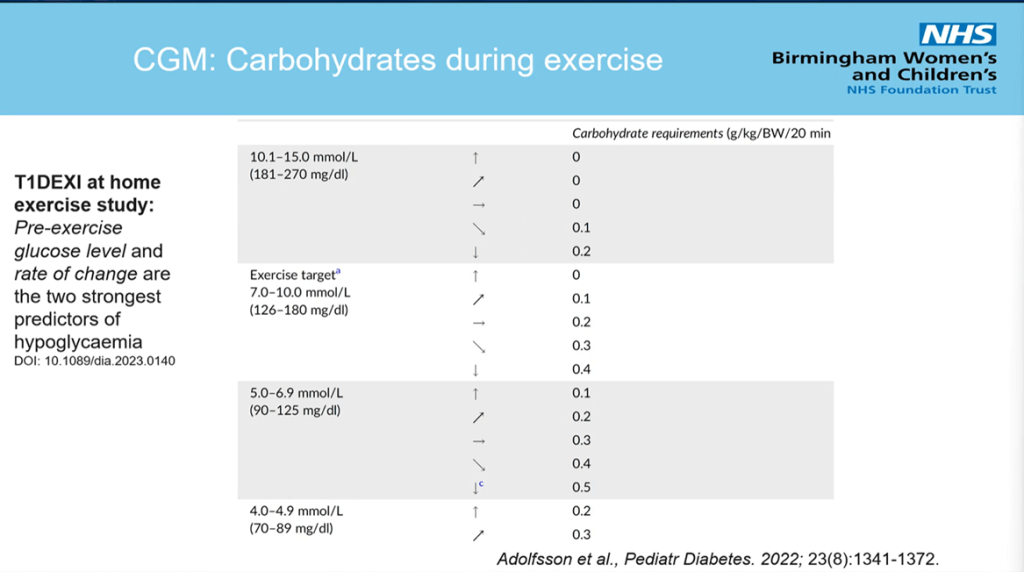
In my opinion this will be different for each person but there are guidelines out there. John Pemberton presented the following to calculate the carbs needed every 20 minutes.

g/kg/BW/20 min will be “grams of carbohydrate per kilogram of bodyweight to be taken every 20 minutes”. So, for example, if someone is 80kgs and their CGM level of direction suggests 0.2 g/kg/BW/20 min, this would mean 0.2*80g = 16g of carb every 20 minutes.

Sports Dieticians Australia suggest carbs are only needed every 60 minutes with aerobic exercise but do not go into details on the amounts.

Diatribe recommend for people on insulin pump therapy, to reduce the basal rate by about 50% (as a starting point) 1-2 hours before, during, and about one hour after exercise.

My thought is carry carbs with you and as soon as you see your glucose dropping, eat some. Examples of potential exercise raising food are above in the Carbohydrates: Just Before and During Exercise. Once you get a feel for your body’s carb cadence, you can get some carbs in ahead of the drop. Based on my own experience, as your body adapts to exercise and become more efficient, this cadence will change.

Post Exercise Tips

Hypoactive suggests monitoring glucose levels for at least 24 hours after exercise. The reason for this is muscles store glycogen which is consumed during exercise. To replenish glycogen stocks, glucose is taken out of the blood, increasing the risk of a hypo.

Diatribe recommend reducing bolus insulin by 50% for meals or snacks up to two hours after exercise.

My Strategy

For my weekly ride, as I am using a closed loop, I do not eat breakfast. While I initially set a higher target on my loop, I found it did not have much of an effect so I have stopped this. The one act which has made a huge difference in my blood glucose levels is eating a protein bar literally just before I ride. This act keeps my blood glucose levels flat for up to an hour.

Here is an example from literally this morning.

The rise just after 9am is the post-ride flat white coffee. While it always sends me up, this is my insurance policy for the car ride home again post-exercise lows. As we can see, my levels did drop into the high 3’s but, I have been this low before; this was happening to me even before I became insulin dependent so unless it goes below, say, 3.5 mmol/L (63 mg/dL) I do not give it too much attention.

Bringing It All Together For A Morning Ride

I will end this blog with a sample approach/preparation for an early morning cycle ride of, say, one hour.

Equipment

  • Functioning CGM
  • Mountable CGM reader or compatible watch
  • Rapid-acting hypo snacks for mid-exercise lows
  • Medi-bracelet
  • Sunscreen
  • Low GI snacks for maintaining healthy glucose levels during exercise

Glucose Levels

  • MDI: Low GI breakfast to raise glucose levels prior to exercise with a reduced bolus to minimise insulin on board AND/OR reduce basal rates to allow blood glucose levels to rise
  • Pump: Low GI breakfast to raise glucose levels prior to exercise with a reduced bolus to minimise insulin on board AND/OR set temporary basal rates to allow blood glucose levels to rise
  • Looping: Skip breakfast, set a higher loop target OR disable looping and follow the Pump approach

During the Ride

  • Monitor glucose levels and, if they are dropping, eat a snack to counteract the trend
  • If you already know how long you can exercise before levels start to drop, eat snacks accordingly

After the Ride

  • Monitor blood glucose levels
  • Reduce bolus rates by 50% up to two hours are the ride
  • Make any necessary adjustments to the approach for the following week.

Top Ten Topics at EASD 2023 and ISPAD 2023

Michelle Law has an excellent blog over at Pumps and Pricks. One thing she does is a ‘Top Ten’ of the conferences she attends. This year, like me, she attended EASD 2023, thanks to Dedoc, and posted her Top Ten Highlights. I have purposely not read it because this blog will do the same for EASD 2023 and ISPAD 2023. It will be interesting to see the areas of research that spoke to both of us and our different takes on them. The ranking of ten to one is not important; they are all interesting announcements/areas fo research.

10. Type 1 Diabetes Before Insulin

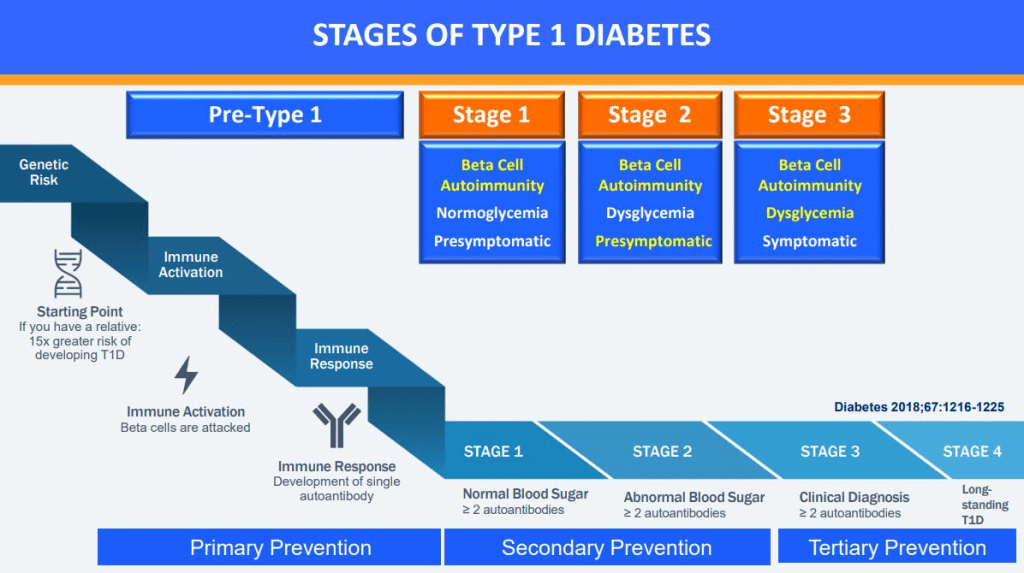
With drugs like Teplizumab which can delay the progression of type 1 diabetes, research is now focusing on the disease before the person becomes insulin dependent. These days there are four stages for type 1 diabetes with insulin only being needed in the third stage.

How do we know someone is likely to develop stage 3 type 1 diabetes? Because of the auto-antibodies in their blood which appear years before insulin is needed.

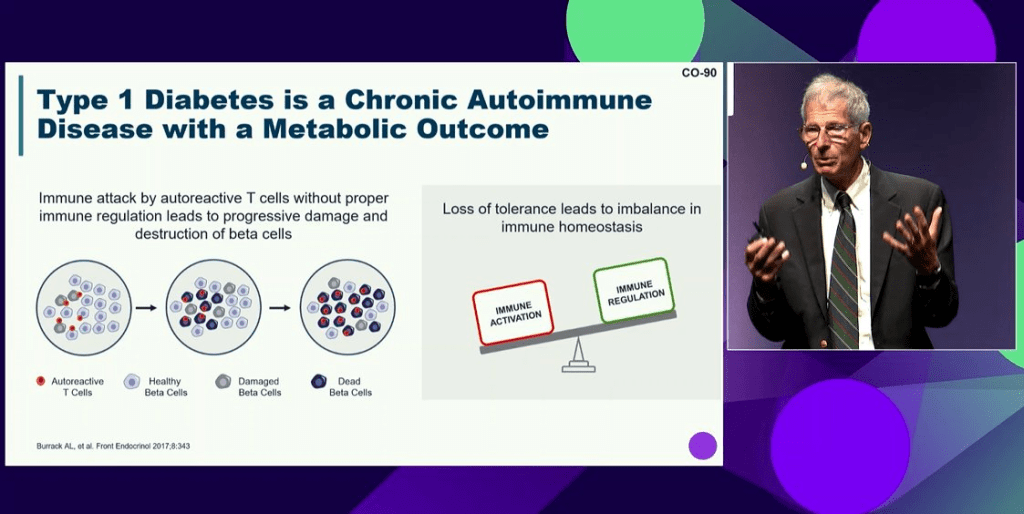
To shift this paradigm of type 1 diabetes being ‘insulin-dependent diabetes’, Kevan Herold described type 1 diabetes as an autoimmune disease with a metabolic outcome i.e. the beta cells stop working.

Flemming Pociot spoke of the limitations of just relying on auto-immune markers for early detection and how improved detection could be achieved by looking at genetic information and lipid profiles (FDR = First Degree Relative e.g. parent).

9. Time in Range is the New HbA1c

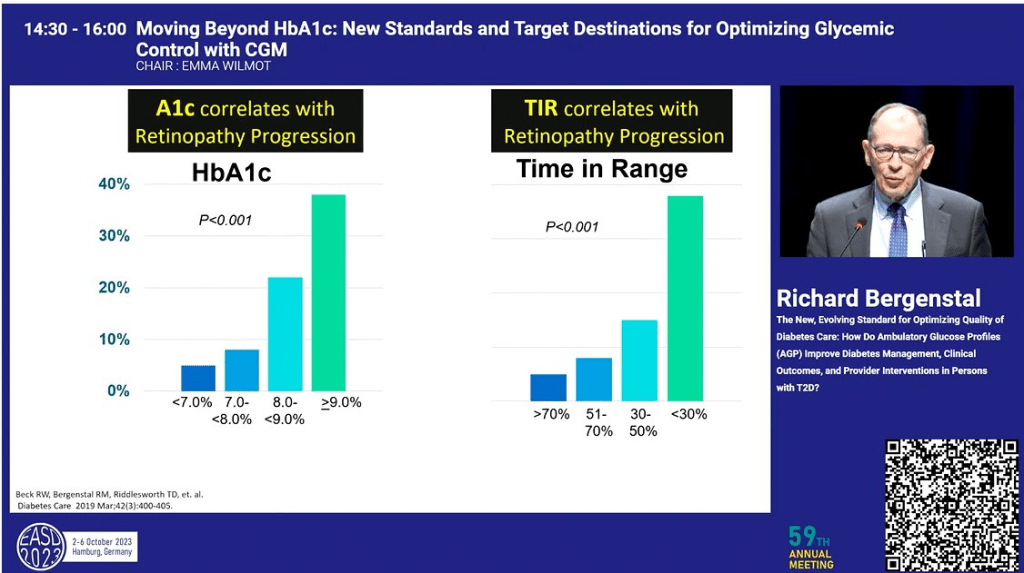
While there are plenty of people in the world without access to Continuous Glucose Monitors (CGMs), the people of Europe are generally not those people. So, it makes sense that the conferences focused a lot more on Time in Range (TIR) than on HbA1c.

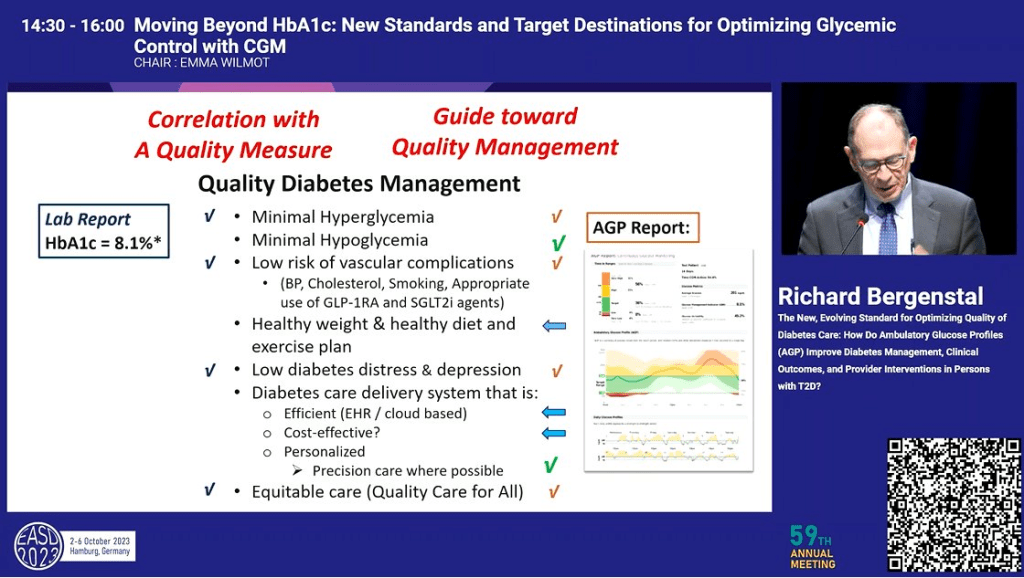
Richard Bergenstal showed that, from a research perspective, TIR is as predictive as HbA1c

and provides a wealth of information an HbA1c measure does not, providing better guidance for the management plan for the disease.

Throughout the two conferences, as touched on below, many of the outcomes were focussed on Time in Rage, Time Above/Below range rather than HbA1c.

8. Exercise and Diabetes

There was a lot of talk about exercise at the conferences. Dessi Zaharieva spoke of the known benefits of exercise for people with diabetes.

and the barriers people with type 1 diabetes often face when considering exercise.

John Pemberton showed a post-meal walk can have a significant, positive impact on glucose levels.

Jennifer Leohr showed Lyumjev (URLi) worked better with exercise than Humalog (Lispro) inducing less hypos.

7. Looping/Automated Insulin Delivery (AID)

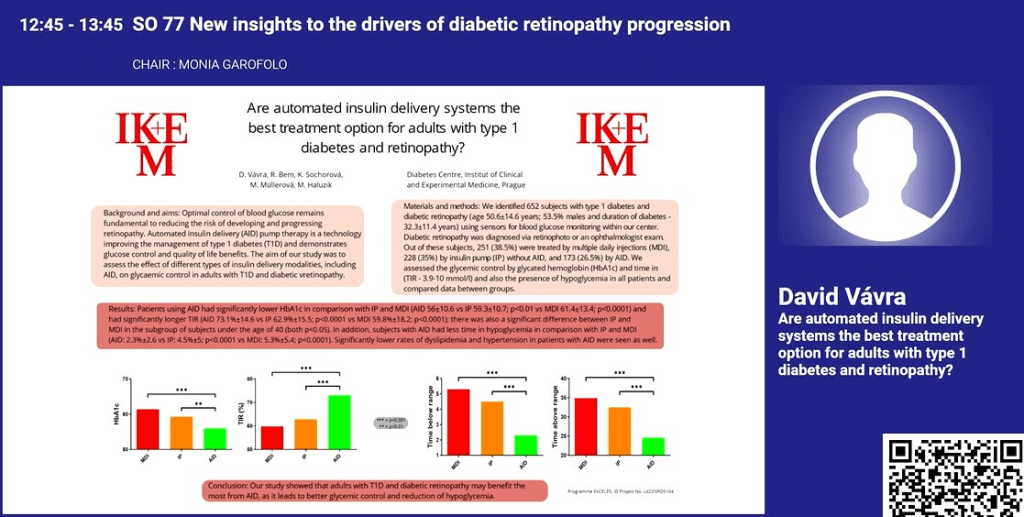
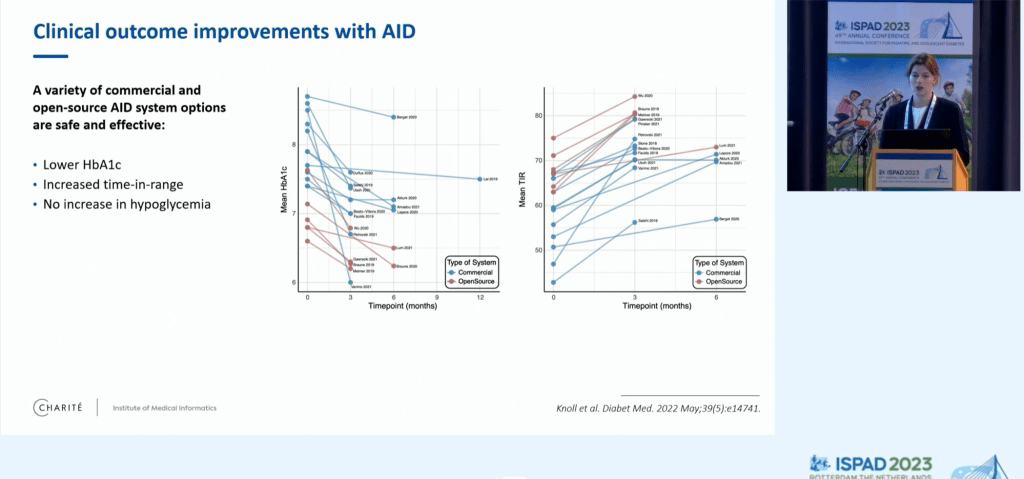
As we have seen in previous conferences, Looping systems (AID) showed superior performance to insulin pumps (IP) and multiple daily injections (MDI).

David Vavra showed similar results for HbA1c as well as other measures.

Javier Castaneda showed how 82% of those using the recommended settings on the commercial Minimed looping system achieve a Time in Tight Range (TITR) of over 50% which is, according to Thomas Danne, is sufficient to avoid long-term complications.

Comparing open-source looping systems to the commercial ones, Ludek Horvath found the open-source system yielded superior results but this could be a function of the people using them rather than any inherent advantage.

He also showed that looping systems achieve greater than 70% time in range which is significantly larger, and more consistent across countries, than the use of non-looping pumps or injections.

Katarina Braune also confirmed that open-source systems are at least as good as the commercial ones.

Yves Reznik talked about a study looking at people with type 2 diabetes, insulin dependent, but unable to give themselves injections. Moving to a looping system significantly improved their blood glucose levels.

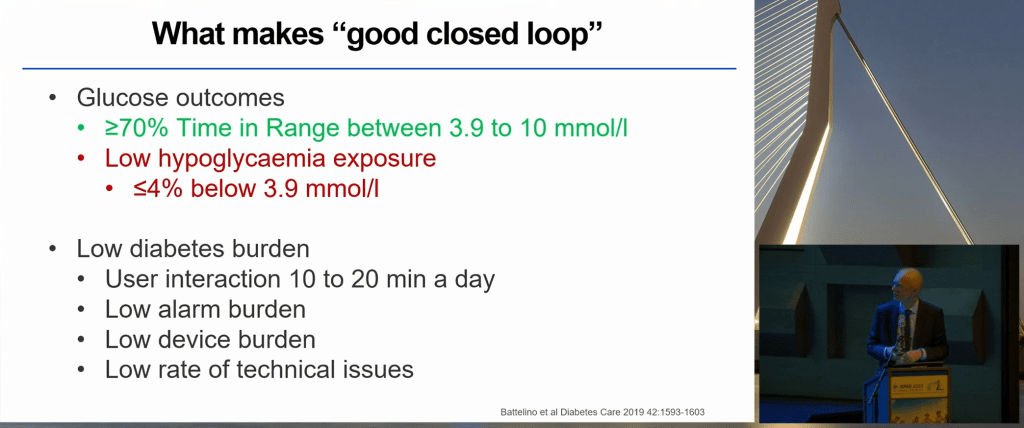
At ISPAD, Roman Hovorka spoke of what is desirable in a looping system and confirmed “The right system is the one people are willing to use”.

There was also increased talk of ‘fully closed looping’ i.e. no manual bolusing or declaration of meals which I had not seen much of in previous conferences. Sarah Koning looked at how many grams of carbohydrate a loop can tolerate in a meal without announcements. The answer is somewhere between 0-60 and at least 20g. While meals of 61-80g led to less Time in Range (TIR) and Time Above Range (TAR) with fully closed looping, there was no increase in hypos or DKAs.

Lenka Drnkova (Petruzelkova) showed that a fully closed open-source loop performs as well as the same system with manual boluses or no-bolus meal declarations. There are still some kinks to work out though e.g. exercise.

6. A Psychologist as Part of the Diabetes Health Care Team

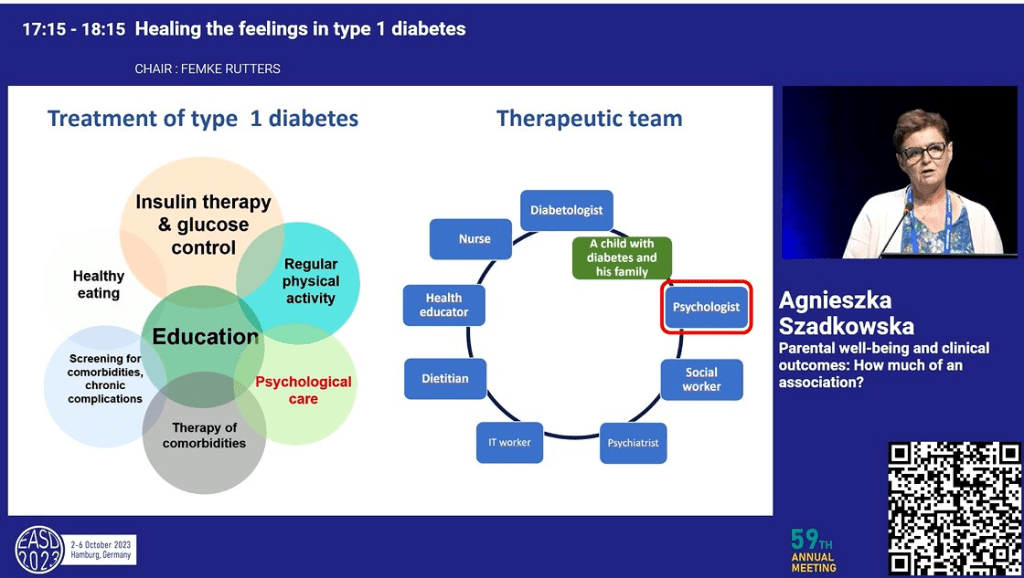
There was a lot of talk of a mental health specialist being part of the person with diabetes’ health care team. Agnieszka Szadkowska summed it up nicely in this slide where the psychologist is on equal footing with the rest of the therapeutic team.

Evelyn Cox presented preliminary findings linking mental health management with better clinical outcomes e.g. HbA1c and Time in Range.

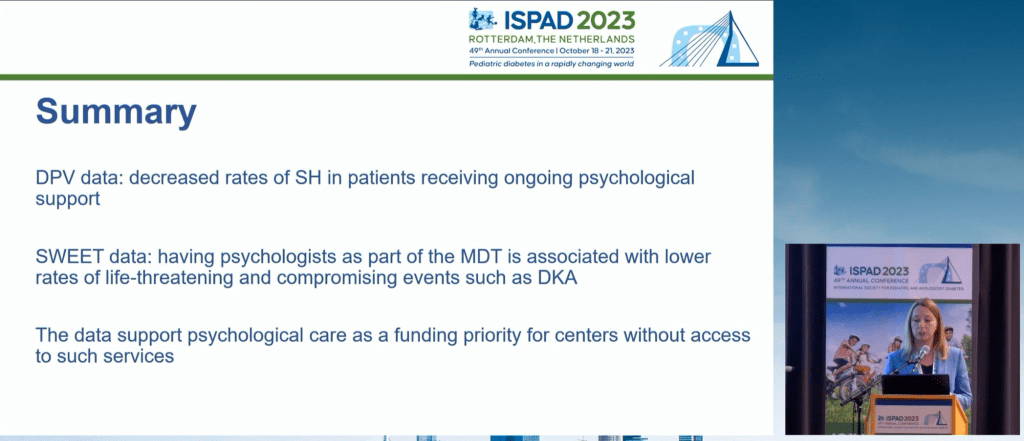
Agata Chobot linked on-going psychological support for people with type 1 diabetes with improvement in severe hypoglycemia and DKA rates.

5. End Diabetes Stigma

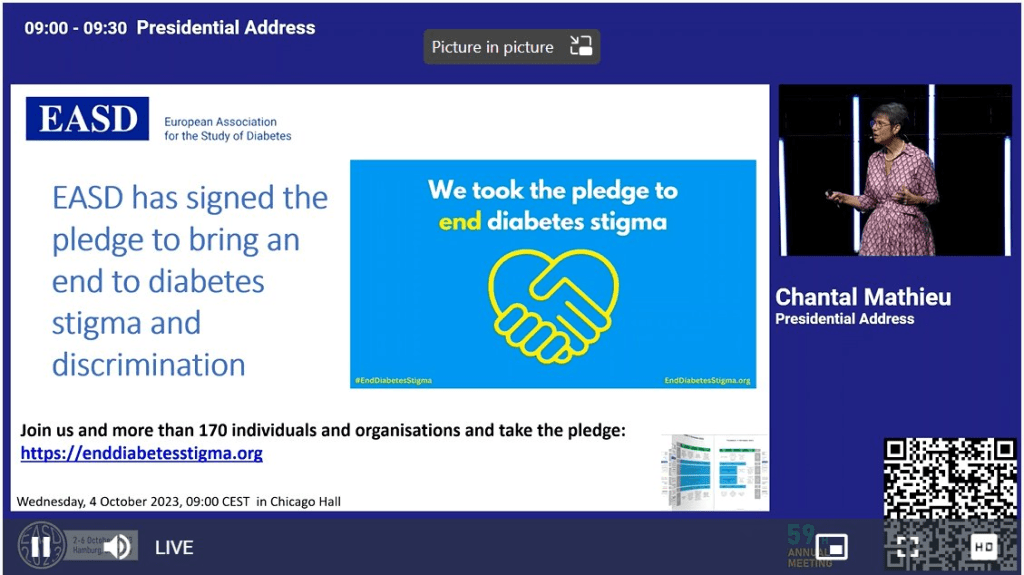
The recognition of the end diabetes stigma campaign was throughout EASD 2023, starting out with the presidential address.

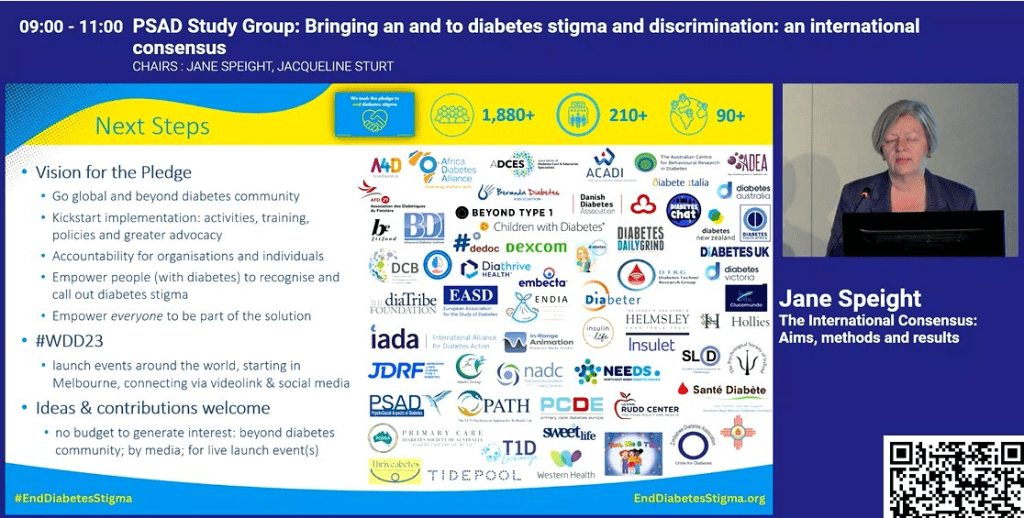
Jane Speight talked about those behind the campaign, how the pledge was created

and expanded on how many individuals and organisations had signed, and the reach of the campaign so far.

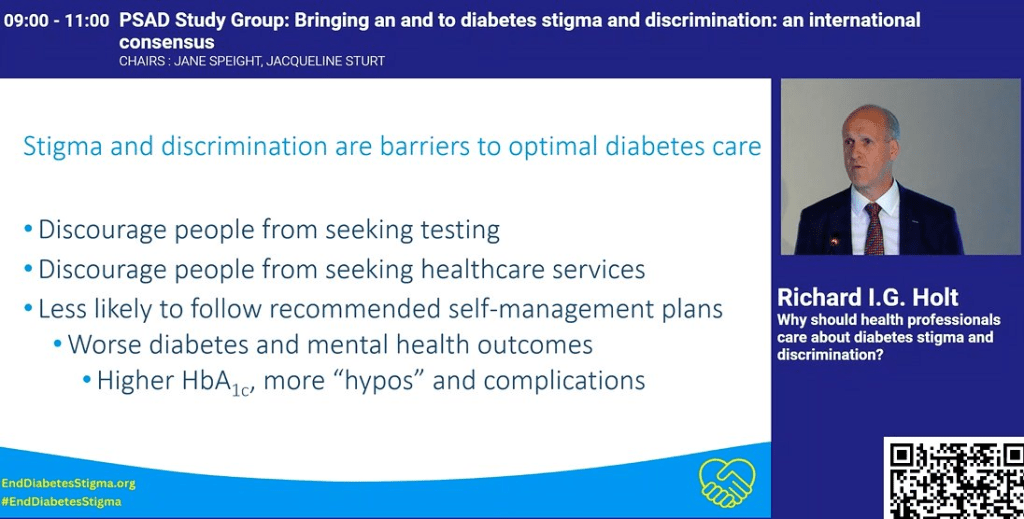
Richard I. G. Holt provided examples of how healthcare professional can be unwittingly part of the problem

and how stigma hinders optimal care.

4. Dual/Triple Agonists

Incretin Mimetics such as Ozempic/Wegovy have been big news for a while because, as well as being an excellent medication for type 2 diabetes, can result in weight loss. The next generation of these drugs are now coming to market and, while drugs like Ozempic target one type of receptor in the body, these new versions target 2 or more.

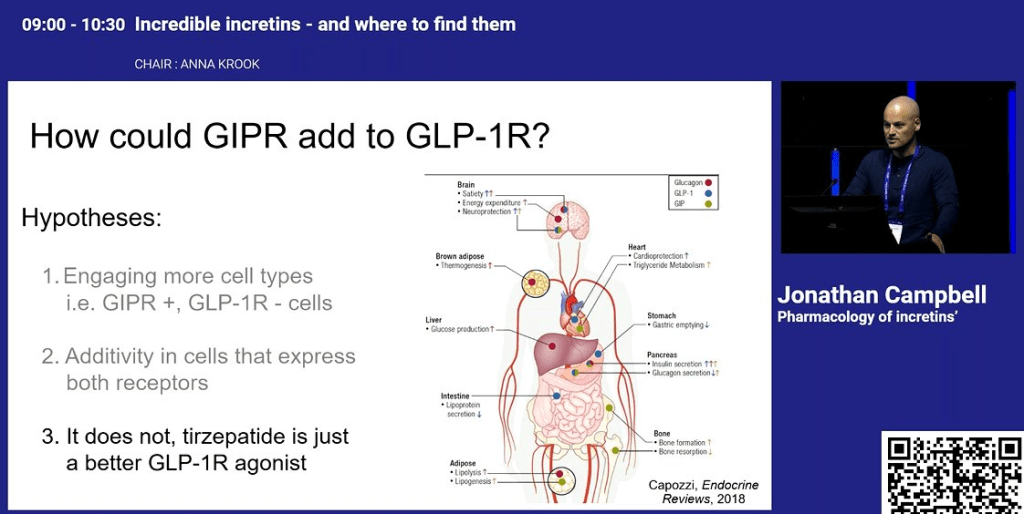
Jonathan Campbell talked about how dual agonists such as Tirzepatide work and, while they know what they do, how they do it is not as clear.

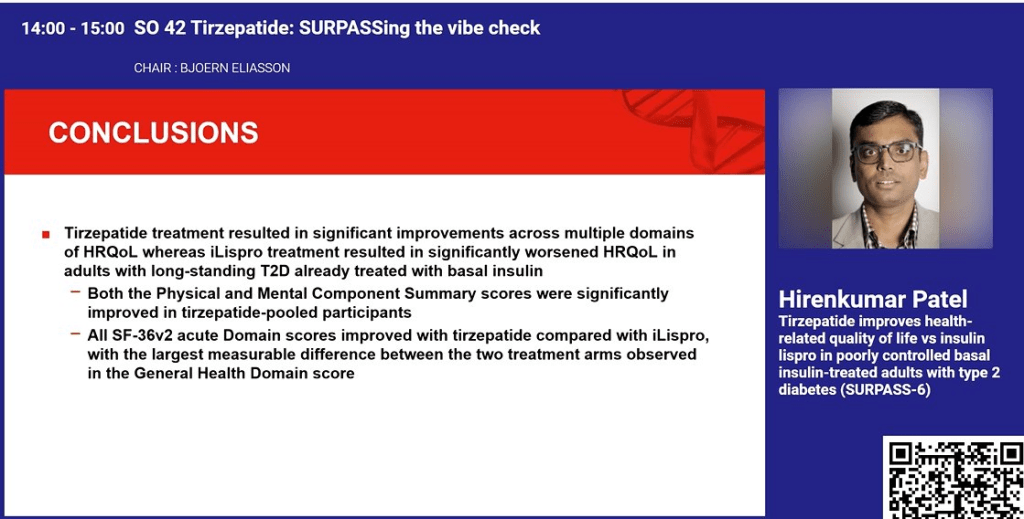
Hirenkumar Patel showed that, for people with type 2 diabetes, the use of Tirzepatide gave better results, both qualitatively and quantitatively, than basal insulin injections.

Eda Cengiz spoke of new research in a triple agonist which led to a 2% drop in HbA1c.

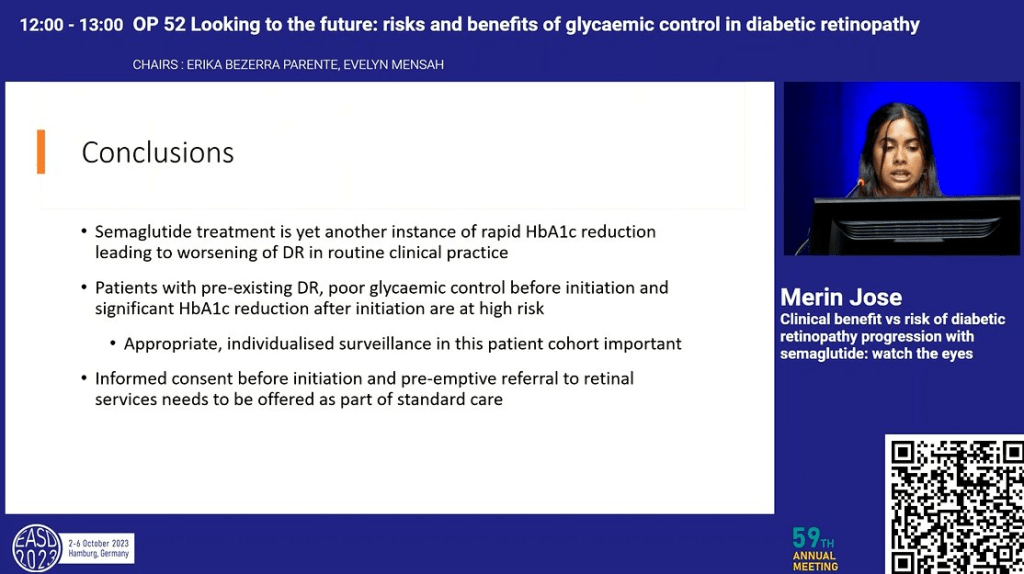
Merin Jose gave a word of warning that the rapid reduction in HbA1c resulting from these drugs can increase of the risk of diabetic retinopathy and this should be monitored closely.

3. Sleep and Diabetes

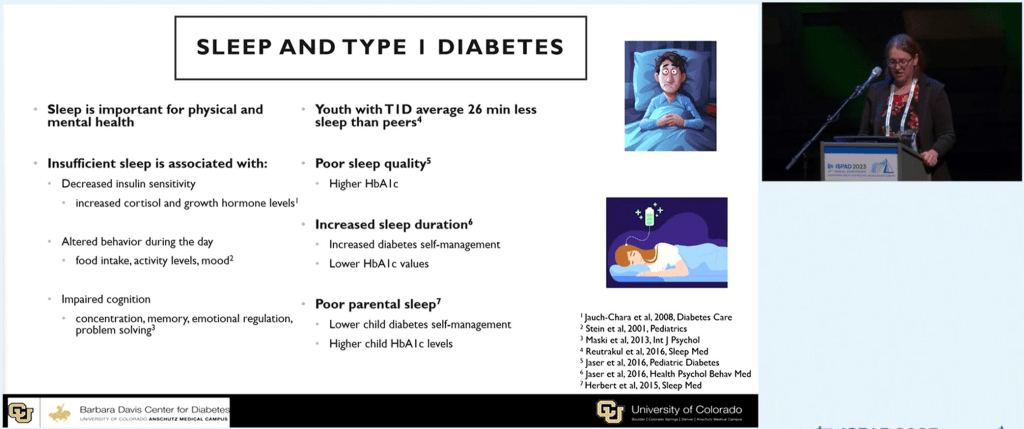
The benefits of sleep for people with diabetes came up during the conferences. Natalia Marhefkova showed how good sleep patterns directly affect outcomes e.g. a lower HbA1c. When asked by the audience what the ideal amount of sleep was, Natalia claimed it was 7-8 hours.

Erin Cobry also touched on the benefits of sleep for people with type 1 diabetes.

She also went on to talk about how Looping (AID) facilitates uninterrupted sleep and how even the interrupted sleep of carers can affect the clinical outcomes of the child they care for.

2. Diabetes and Diet

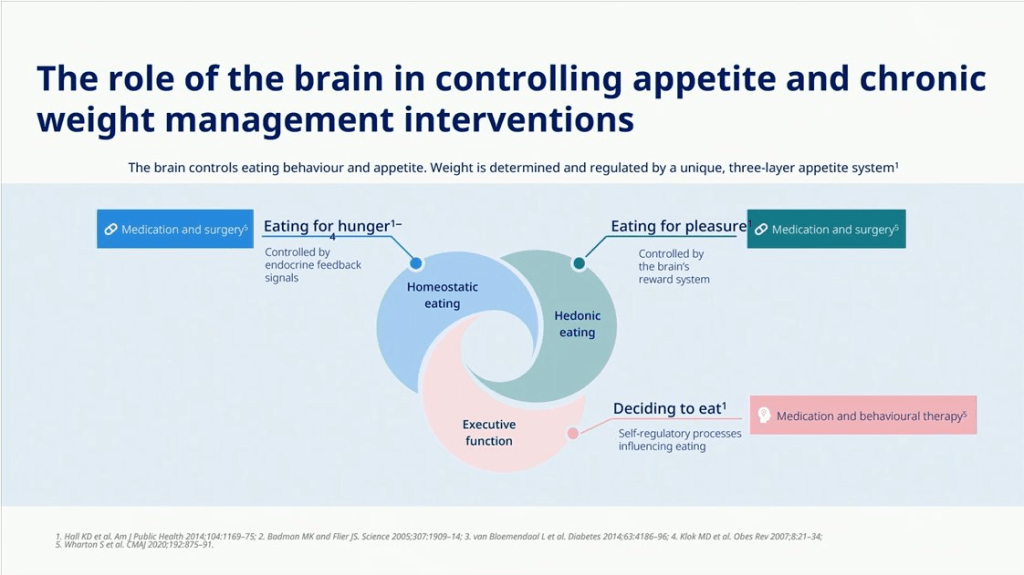
Jens Aberle talked about how if we plan to help manage the diet of people with diabetes, we need to better understand the reasons people are eating.

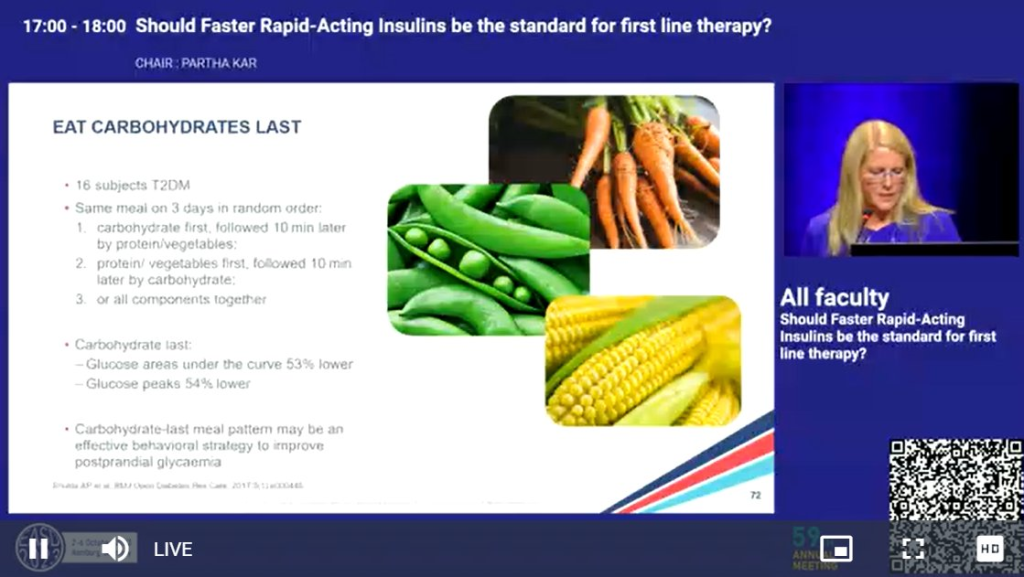
Emma Wilmot talked of a study which had confirmed that eating the carbohydrate foods last in a meal can have a significant impact on glucose peaks.

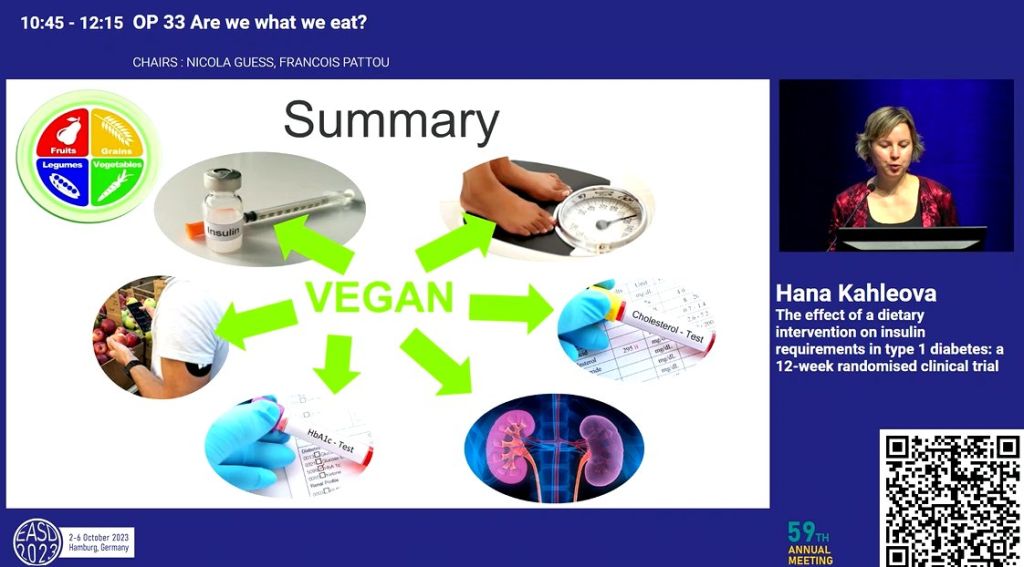
Hana Kahleova presented a study comparing a vegan diet to the ‘healthy plate’ and found while the healthy plate provided benefit in Hba1c and cholesterol, the vegan diet saw benefit in these and other measures such as daily insulin need, which was reduced, despite an increase in carbohydrate in-take.

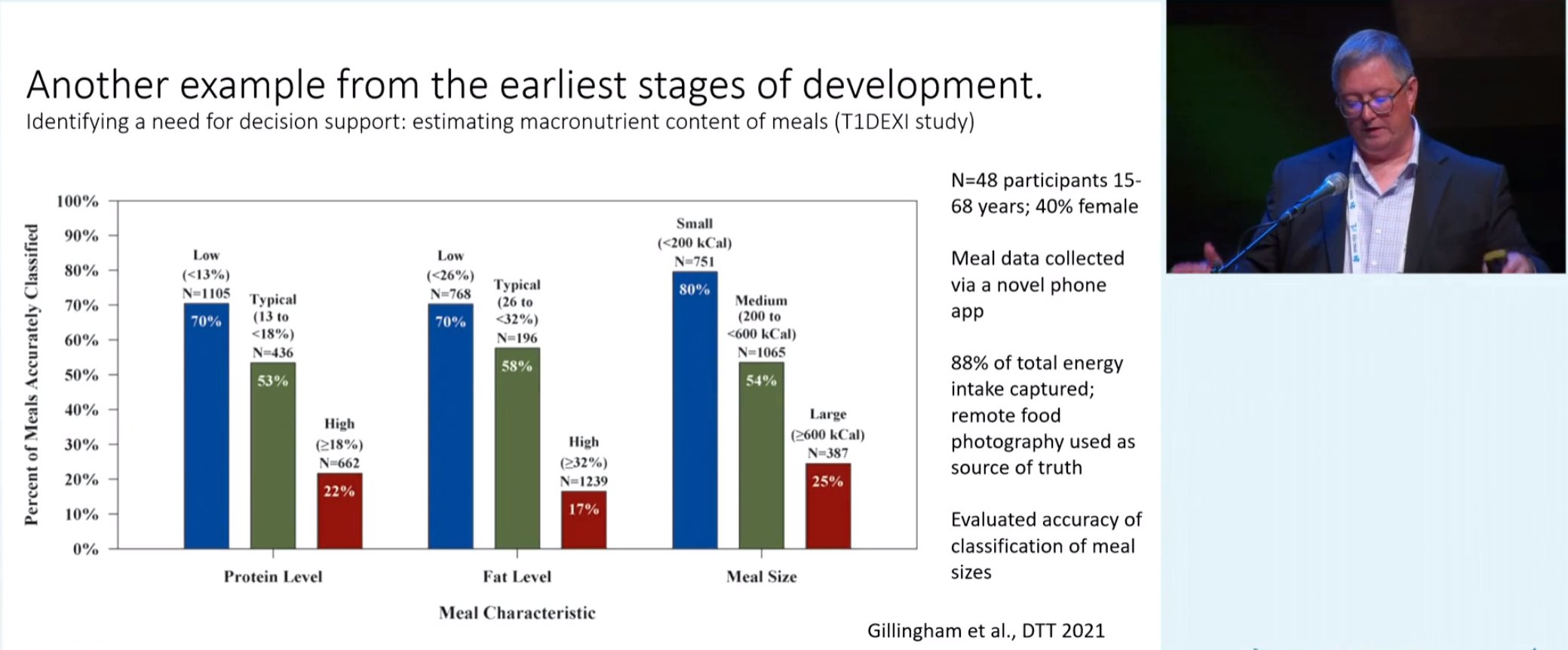
Mark Clements talked about how smaller meals are easier to estimate for their carbohydrate content than larger ones

Image

and how people with diabetes tend to underestimate the carbohydrate content of larger meals.

1. SGLT2is

This class of drugs lowers the threshold at which the body redirects blood glucose to the bladder. Aikaterini Eleftheriadou spoke of the benefits of SGLT2is compared to incretin mimetics in regard to long term complications.

Aino Latva-Rasku showed SGLT2is increase skeletal muscle and brain uptake in fatty acids in people with type 2 diabetes. One explanation is SGLT2is change the body’s preference for fuel source.

Milos Mraz spoke of the anti-inflammatory benefits for Type 1 Diabetes and while the blood glucose redirection mechanisms are understood, the other effects observed are not quite yet understood, similar to incretins.

Conclusions

My final thoughts (thanks Michelle) are:

(10) Type 1 Diabetes Before Insulin: The expansion of type 1 diabetes to consider the time ‘before insulin’ e.g. Stage 1 and 2 is really interesting. I wonder if this will lead to reclassification of LADA as simply a slow progressing form of Stage 2, Type 1 Diabetes.

The progress of early intervention type 1 drugs, such as Teplizumab, is really exciting and, hopefully will lead to a cure. One presentation spoke of using a combination of drugs whose effect for slowing progression will be additive and potentially ‘cure’ someone of type 1 diabetes, with the person taking pills rather than injections. While it has been promised for decades, with looping technology and immune system modifying drugs, we are genuinely getting closer to a practical cure.

(9) Time in Range is the New HbA1c: There is clearly an increased interest in using Time in Range (TIR) in academia, instead of the traditional HbA1c. My speculation as to “why?” is because it allows multiple secondary endpoints (additional measures) off of the same data whereas there is only so much you can do with an HbA1c measure. Unfortunately, bodies like the FDA who approve medications and diabetes technology still emphasize the value of HbA1c over TIR. This means for research to be useful to the manufacturers of the medications and technology, who also, in part, fund the research, HbA1c often needs to be the primary measure. Hopefully, in time, bodies like the FDA will see the value of TIR as a ‘primary endpoint’ in research.

(8) Exercise and Diabetes: There is increasing research into how to incorporate exercise into the lives of people with type 1 diabetes while allaying fears of hypoglycemia. This is great and can only be a good thing for diabetes management. For years I avoided exercise because of the concern of the effect it may have on short term blood glucose levels. Using the research, I am seeing at these conferences, I am now putting together a program for myself, and hopefully others with type 1 diabetes, which will help them introduce exercise into their lives safely.

(7) Looping/Automated Insulin Delivery (AID): Looping goes from strength to strength and there is a genuine belief in the looping research community that we are close to a fully closed loop. From my own experience I know of how looping reduces the burden of diabetes management significantly. While not a cure per se, looping makes mental room for other aspects of life and, for many, will bring precious relief from the constant harassment of management.

(6) A Psychologist as Part of the Diabetes Health Care Team: The rise in prominence of a psychologist on the health care team is well overdue and I look forward to this academic acknowledgement move to government policy and subsidised consults. While not disputed, the mental burden of diabetes management is rarely openly acknowledged. Access to psychological services, as a given for diabetes management, would be a huge step in this regard.

(5) End Diabetes Stigma: The rapid rise of the End Diabetes Stigma campaign is interesting. I have signed the petition and I hope it leads to something tangible for people with diabetes. People hide the fact they have diabetes and do not seek the help they need out of misplaced shame and embarrassment. This, in turn, leads to poor outcomes. In this sense ending diabetes stigma will save lives and improve the quality of life for many.

(4) Dual/Triple Agonists: This class of drugs is providing substantial benefit to people with diabetes, and I have spoken of these benefits in the past. In moving to double and triple agonists we are seeing an amplification of the effect and benefits and, while we do not completely understand the mechanisms in play, the promise of these drugs is significant.

(3) Sleep and Diabetes: For type 1 diabetes, interrupted sleep was often inevitable because of highs and lows, or because of split basal dosing. In the case of carers, the monitoring of the child with diabetes through the night also guaranteed broken sleep. Automated alarms and looping open the door for a complete night’s sleep for all. For myself, thanks to looping, a broken sleep because of diabetes may happen once a month but little more. Now I just need to work on getting the 7-8 hours sleep a night suggested to be optimal…

(2) Diabetes and Diet: While social media is awash in food hacks for people with diabetes, it is still good to have research-backed evidence on what is proven effective. Whether it is considering the psychological aspects of eating, or the practicality of estimating carbohydrates in a large meal, all of this informs people with diabetes on the best approach for them which has the best probability of success.

(1) SGLT2is: While there is still work to go on making these generally available for people with type 1 diabetes, due to factors such as the increased risk of DKA and eDKA, it is clear there are tremendous benefits in using them. I use a low dose SGLT2i at the moment, in combination with exercise once per week, and have seen a literally halving in my daily insulin needs and, without altering my diet, rarely see excursions beyond 8 mmol/L (144 mg/dL).

Thank you again to Dedoc for making it possible for me to attend these conferences and I strongly recommend, if you are an advocate who can #PayItForward to your community, applying for a Dedoc scholarship to attend a conference in 2024.

Literary Review: Low Carb Diets and Type 1 Diabetes

My first review was on Very Low Carbohydrate Diets (<50g carbohydrate/day) so if you are interested in ketogenic diets that is the literary (literature?) review for you. This review looks at academic papers researching Low Carbohydrate Diets (LCD, 50-130g carbohydrate/day). This is the area I generally aim for and, with looping, I have had success, bringing my HbA1c down to 5.6% i.e. within the non-diabetic reference range.

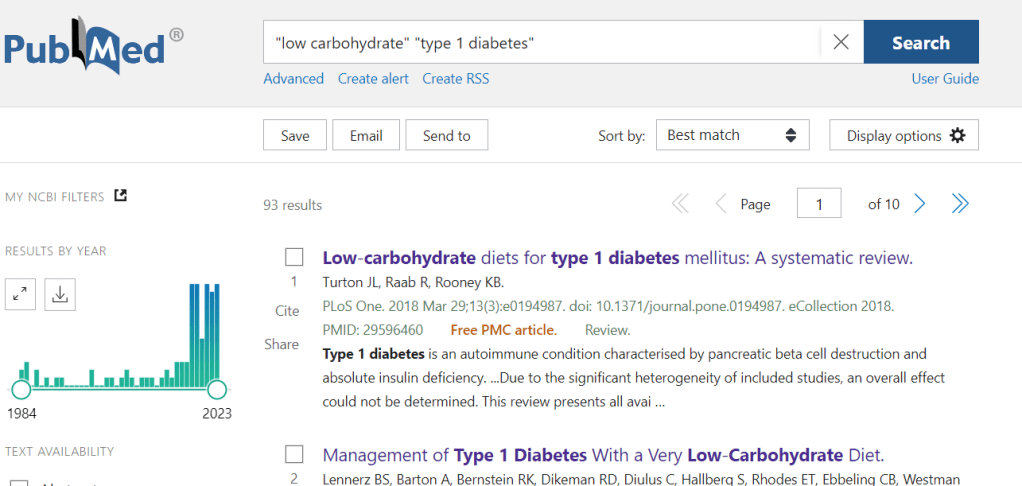
As before, I used PubMed and exactly the same search string as before. The difference was, in this case, I reviewed the 93 returned results, looking specifically for Low Carbohydrate Diets, not Very Low Carbohydrate Diets. As before, I only selected papers where the full publication was available and a quantitative group study of some kind was involved. The subjects also had to be human, not rodents etc.

Want to cut to the chase? Go straight to the tl;dr section at the end.

I plan to do a third review of plant-based diets for managing type 1 as well after this one. If there is a specific diet you would like me to trawl the literature for, let me know in the comments.

Brief Recap: Very Low Carbohydrate Diets (VLCDs)

In the previous review, there was no doubt that a VLCD can bring an average person’s HbA1c below 7% and, in some cases in the low 5% range. Whether going significantly below 7% was of benefit was not clear in the data provided by the search but, previously, I have shown that, if the occurrence of hypoglycemia can be controlled, getting below 6.4% will reduce the risk of long term complications.

To counter the clearly positive reduction in HbA1c, a few consequences/risks were also shown in the data which may need to be mitigated/monitored:

  • “Oxidative stress” leading to possible organ damage and heart disease
  • Glucagon response impairment
  • Increased risk of eDKA (euglycemic diabetic ketoacidosis)

and the following table was also provided in one paper in regard to a ketogenic diet (KD).

As mentioned at the time, these aspects do not necessarily outweigh the benefits of a lower HbA1c and many of them can be monitored through regular checks and managed very effectively through the use of things like multivitamins, laxatives, and cholesterol medications.

The question I hope to address in this article is whether an LCD can provide a comparable benefit and whether it still incurs the same risks.

What HbA1c can we expect from an LCD?

For the VLCD, the HbA1c range from the studies was between 5.3% through to 6.8%. The best result I found for an LCD was 6.0% in “Low carbohydrate diet in type 1 diabetes, long-term improvement and adherence: A clinical audit”. This trial looked at 48 people with type 1 diabetes over four years. The average HbA1c change was from 7.6% down to 6.9% but strong ‘adherence’ to the <75g/day (participant decided exactly how much below this level) led to the 6.0% outcome.

Contrary to the VLCD results, this paper reported that cholesterol levels improved on this regimen. However, similar to what we saw in the VLCD diets, after 2 years, half had stopped adhering to the carbohydrate levels specified.

The study also suggested on-going education was vital to keep people on the plan and estimated the LCD was only applicable to about 20% of people with type 1 diabetes, presumably based on the drop-out rate.

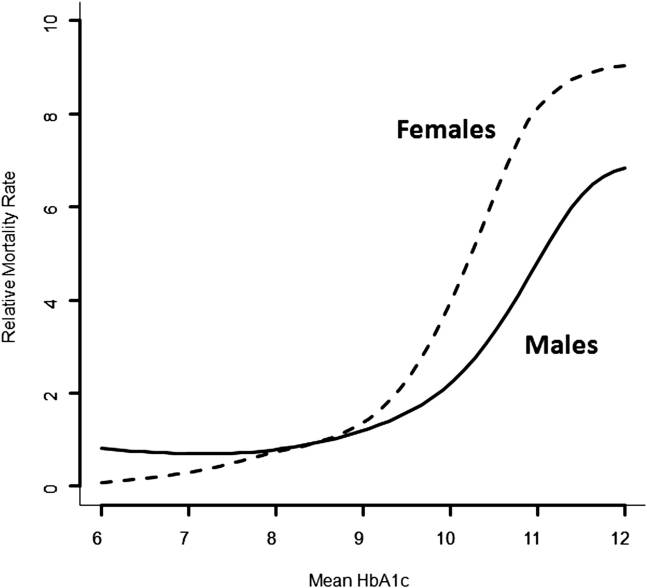
The study with the highest HbA1c end point was “A randomised trial of the feasibility of a low carbohydrate diet vs standard carbohydrate counting in adults with type 1 diabetes taking body weight into account”. This study kept the carbohydrates to a strict 75g/day and went over 12 weeks with 10 people with type 1 diabetes. Insulin use went down (which I saw in other LCDs and VLCDs) and HbA1c went from 8.9% to 8.2%, which puts it on a level where the mortality rate is similar to the general population’s but well above the 7.0% and 6.4% targets mentioned earlier. There were no changes to the lipid profile over this time.

Other papers fell between these two extremes. In “A low carbohydrate diet in type 1 diabetes: clinical experience–a brief report”, 24 people with type 1 diabetes were given a diet with 70-90g of carbohydrate/day for 12 months and taught how to bolus for the meals. Hypoglycemia episodes went from around 3 per week to once per fortnight, their HbA1c went down from 7.5% to 6.4%, and cholesterol was mostly unchanged, except for an improvement in triglycerides.

One patient was reported with a final Hba1c of 4.7%, which is extraordinary and, given this is below even what the most dedicated VLCD folks got in the studies reviewed, I am not convinced this was representative of what can be achieved with an LCD.

One other paper reported an improved cholesterol profile on an LCD, specifically, “Changes in the lipidome in type 1 diabetes following low carbohydrate diet: Post‐hoc analysis of a randomized crossover trial”. In this study 10 adults with type 1 diabetes went through either an LCD of <100g of carbohydrates per day or a diet of >250g of carbohydrates per day over 12 weeks. In this case they reported “total cholesterol, LDL and triglycerides had not changed significantly in this trial and only HDL cholesterol was significantly elevated in the LCD arm”

In “The Impact of a Low-Carbohydrate Diet on Micronutrient Intake and Status in Adolescents with Type 1 Diabetes”, 20 adolescents with type 1 diabetes were given 50-80g of carbohydrate per day for 6 months. HbA1c averages went from 8.1% to 7.7%. Not a huge drop and, again, above our mentioned targets of 7% and 6.4%. The paper also recognised the issue of nutrition in adopting a reduced carbohydrate diet saying “The dietician should plan a diet enriched with foods containing soluble vitamins (in particular folate and thiamin), selenium, magnesium, calcium, and iron. Furthermore, we recommend supplementation in a specific quantity, such as yeast extract, Brazil nuts, and Wolffia globose daily. Finally, we advise checking vitamin and mineral blood levels every six months and, if necessary, supplementing daily intake with vitamins and minerals.”

Corroborating this was a paper mentioned in the VLCD review, “The Impact of a Low-Carbohydrate Diet on Micronutrient Intake and Status in Adolescents with Type 1 Diabetes”, which looked at the micronutrient impact of a diet with 50-80g of carbohydrate per day and concluded the diet had the risk of not being nutritionally complete. As suggested before, this could be easily mitigated with a multi-vitamin, supplements, and regular reviews.

Have There Been Studies Directly Comparing VLCDs and LCDs?

It could be argued that, while a list of risks have been identified in VLCDs, a lack of studies looking at these same factors in LCDs does not mean they are not applicable e.g. we do not know if there is an impaired glucagon response on an LCD. There have been some studies directly comparing VLCDs and LCDs to see where the differences are.

In “Low-Carbohydrate Diet among Children with Type 1 Diabetes: A Multi-Center Study”, carers of 624 children completed surveys about the carbohydrate intake of their children with type 1 diabetes. Of these, 36 were following an LCD, and, of these, 5 were following a VLCD. No significant differences were found in the HbA1c levels of the two groups but, again, the VLCD group showed abnormal lipid profiles, specifically, higher total cholesterol and lower HDLs.

In “Physical Activity, Dietary Patterns, and Glycemic Management in Active Individuals with Type 1 Diabetes: An Online Survey”, they deviated from the American Diabetes Association definitions we have been using so far and came up with their own,

  • Normal (unrestricted): >200 g/day;
  • Moderate: 100-200 g/day;
  • Low-carbohydrate: 40–99 g/day;
  • Very low-carbohydrate: <40 g/day.

The Low-carbohydrate and Very low-carbohydrate ranges are similar to our LCD and VLCD ranges so I have kept used these for broad comparison. In this case the survey was of 220 people with type 1 diabetes and, of these, around 41 were on a Low-carbohydrate diet and around 27 were on a Very low-carbohydrate diet. As with the previous study, there was no significant difference in HcA1c between participants engaging in Low and Very low-carbohydrate diets. However, of the diets, the Very low-carbohydrate diet was the most predicative of achieving an HbA1c below 7%.

tl;dr

In the literature, LCDs deliver a reduction in HbA1c to somewhere between 6.0% and 8.2%. This compares to around 5.3% to 6.8% for the VLCD. The spread within the range appears to relate to how strictly the diet is followed. In the original review, one paper suggested HbA1c increases by 0.1% for every additional 10g of carbohydrate consumed daily. If we assume a VLCD is roughly 40g/day and an LCD is 100g/day this predicts a range difference of 0.6%. While this roughly matches the results for the lower end i.e. “highly motivated individuals”, it is less predictive for the average participant.

In contrast to VLCDs, lipid profiles (cholesterol) either remained the same or improved under an LCD. However, like the VLCDs, there is a risk that micronutrient needs are not being met with the diet.

When studies directly compared VLCDs and LCDs, there was no significant difference in the achieved HbA1c but, on balance, the evidence suggests, a VLCD has the potential to result in a lower HbA1c than an LCD.

One study suggested on-going education/coaching was important for participants to stay with the diet and I think this applies equally to LCDs and VLCDs.

As we can see there is a mixed bag here. Depending on the HbA1c targets we are pursuing, our concern for our cholesterol levels, and the level of carbohydrate restriction we are willing to tolerate, one approach may be preferable to the other. As mentioned in the introduction I have found success which compares favourably to the VLCD studies with an LCD and technology (looping). I do not see the need to restrict my diet further but, if I saw my HbA1c beginning to rise, a VLCD would certainly be an option. To mitigate the risks of a VLCD/LCD diet I also take supplements and get myself checked to mitigate the risks identified for these kinds of diets e.g. vitamin levels checked regularly.

To this end, my conclusion is, probably unsurprisingly, to follow a similar approach to me. Determine the HbA1c you are looking to achieve and, if you are not achieving it, consider reducing carbohydrate intake as part of your management plan. Small changes can bring you easily into the LCD range and, with the risks identified in this and the previous review, steps put in place to manage them. If you achieve your goals you will, hopefully, have a sustainable plan. If you do not achieve your goals, you can always consider moving to a VLCD although, as identified above, building a supportive team around you to keep you on plan is key because of the high dropout rates for both LCDs and VLCDs.

Literary Review: Very Low Carb Diets and Type 1 Diabetes

As this is quite a long article, for those who prefer the destination than the journey, we have a tl;dr section at the end which summarises the findings.

For a review of Low Carbohydrate Diets (50-130g carbs/day) go here.

Questions covered in this review are:

Why Do a Review?

There are a lot of suggestions on social media about how to live well with type 1 diabetes. Some of them directly contradict each other. At one end of the dietary spectrum we have the ‘Mastering Diabetes‘ folks who promote a plant-based diet with minimal animal products, reducing insulin resistance (which even type 1s have) and, therefore, the amount of daily insulin required (bolus and basal).

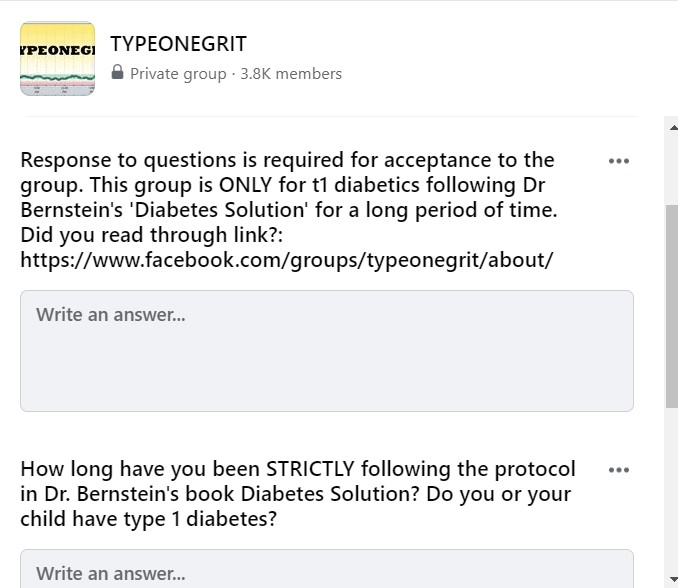
At the other end of the spectrum, we have the folks like the Type 1 Gritters. They strictly follow the teachings of Doctor Richard Bernstein who promotes a very low carbohydrate diet (30g/day) with intense exercise to manage diabetes. The thinking here is that while insulin resistance may temporarily rise with the additional fats in the blood (possibly offset by the exercise), the sheer lack of carbohydrate in the diet means bolus insulin requirements are significantly reduced. Doctor Bernstein, who has lived with type 1 diabetes most of his life, has had tremendous success with his approach and is now coming up to 90 years old.

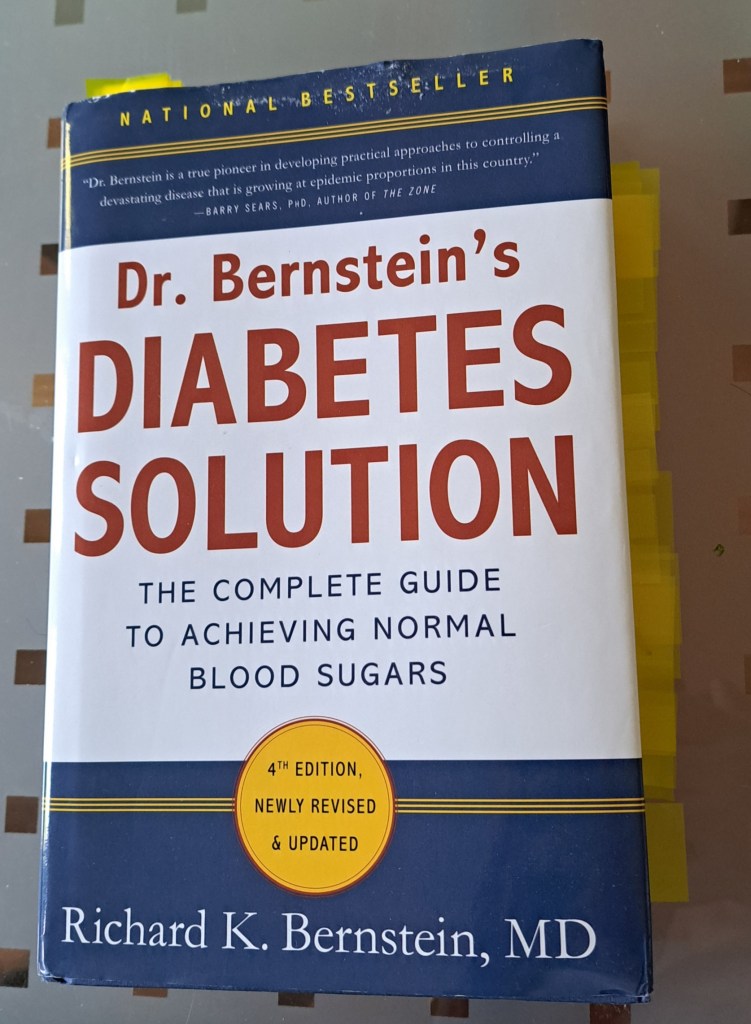
Doctor Bernstein documented his approach in a book called Dr. Bernstein’s Diabetes Solution. While excellent at describing the fundamentals of what type 1 diabetes is, unfortunately the book is now over ten years old and, in regard to technology, is quite out of date. The book dismisses continuous glucose monitors (although Dr. Bernstein now verbally supports them), insulin pumps, and flatly denies the existence of looping technology. For more contemporary wisdom from Dr. Bernstein, he has his YouTube channel, Dr. Bernstein’s Diabetes University. When I was first diagnosed, I watched practically every video on the channel and read the book (except the chapters on using insulin which, at the time, were not relevant to me). I took from it what made sense and parked the rest. It was an excellent foundation.

In the case of Dr. Bernstein, his diabetes management, informed by his health care team, was not working for him. Rather than be a passenger in his diabetes care, he started monitoring his blood glucose levels, determining what foods worked for him (low carb ones) and found a path which gave him success; the path he documented in his book so others could learn from his knowledge and experience. He ignored the zealots, did his own research, and adopted what worked for him. Every person with type 1 diabetes should be their own advocate, ignore the zealots, take control, determine the goals they wish to pursue, and find their path, just like Dr. Bernstein did.

Sadly, as if often the way with old texts, they are interpreted differently by different people. For me, the book was informative and gave me an approach to find my own diabetes management plan. It gave me permission to give critical thought to the advice of outsiders (including Dr. Bernstein) and make my own mind up. For others, like the Type 1 Gritters, it is a text which should be followed to the letter. I often bump my head against folk on Twitter who believe their goal (normal blood sugars) is the only goal which should be pursued and their approach (Dr. Bernstein’s Diabetes Solution) is the only approach to follow. Even when I have shown you can achieve superior results by embracing technology and NOT following Bernstein’s strict dietary plan, they continue with their dogmatism, the same kind of zealotry Dr. Bernstein fought all those years ago.

I am happy to give them the benefit of the doubt though as part of having critical thought is to listen to your detractors, consider their position and examine the evidence. This is what this article seeks to address. What evidence in the literature is there supporting a very low carbohydrate diet?

What is a Very Low Carbohydrate Diet?

In researching for this article I found academic literature, to allow for comparison, has broadly settled on the following definitions:

  • Very Low Carbohydrate Diet (VLCD): <50g/day carbohydrate
  • Low Carbohydrate Diet (LCD): 50-130g/day carbohydrate

Dr. Bernstein’s Diabetes Solution sits within the VLCD camp. I generally aim for LCD augmented with closed looping, which works for me in achieving my goals of having a sustainable/manageable approach and reducing my risk of long-term complications.

The Search Criteria

To find the articles, I used PubMed. PubMed is an online database for peer-reviewed medical articles and an excellent source for the latest research in diabetes. I try to review the latest findings once a month, collate questions, and discuss them with my endo when we meet.

My search was for the key phrases: “low carbohydrate” and “type 1 diabetes”. I had no interest in individual cases; if I wanted to hear about one person who got amazing results, I would go to Twitter and listen to the grifters selling their ‘services’. Group studies which show how the average person with type 1 achieves success with a VLCD was my target. I also wanted the full text of the paper to be available, so it could be debated openly, and a focus on quantitative information, not qualitative. The regimen being studied had to be VLCD with a focus on 30g or less/day diets, if available.

All up, the search returned a little over 90 papers. Where a paper made reference to another paper which could be of interest, I also followed the link and applied the same rules as above.

Does a VLCD lead to a lower HbA1c?

Yes it does! We have a few proof points of this. The first is “The glycaemic benefits of a very-low-carbohydrate ketogenic diet in adults with Type 1 diabetes mellitus may be opposed by increased hypoglycaemia risk and dyslipidaemia“. In this study 11 adults, who had been on a ketogenic diet (<55g/day) for an average of 2.6 years were studied and the following results found:

  • Average HbA1c was 5.3%
  • 0.9 hypoglycemia episodes per day
  • “Total cholesterol, LDL cholesterol, total cholesterol/HDL cholesterol ratio, and triglycerides were above the recommended range in 82%, 82%, 64% and 27% of participants, respectively”

The second study which talked at the average HbA1c I have mentioned in previous blogs: “Management of Type 1 Diabetes With a Very Low-Carbohydrate Diet“. This was a survey of the Type 1 Grit Facebook group. Of the 1,900 members of the group at the time, 316 responded with around half of these providing medical data. The following results were found:

  • Average time following a VLCD: 2.2 years
  • Average HbA1c was 5.67%
  • Average daily carbohydrate intake was 36g/day
  • 1 in 50 reported being hospitalised for hypoglycemia
  • Noted a correlation between HbA1c and carbohydrate consumed i.e. an increase in HbA1c of 0.1% for every additional 10g of carbohydrate consumed daily
  • Majority of respondents had dyslipidemia (abnormal cholesterol)

The two studies confirm that it is possible to get into the low 5% range with a VLCD. However, if someone is trying to convince you that a VLCD can consistently generate sub-5% HbA1c’s the odds are they are trying to sell you something because the evidence is simply not in PubMed.

There are two other commonalities between the studies. The first is dyslipidemia (abnormal cholesterol). If we believe these two studies are typical of VLCDs then it is reasonable to expect cholesterol results which will make your doctor frown. If cholesterol levels are important to you then a VLCD may work against you or will need to be managed.

The second commonality is the groups studied were not necessarily a random sample. In the case of the first paper, it is simply not stated where the participants came from; all we know is they were on a ketogenic diet for a number of years. In the case of the second, they came from a group dedicated to strictly following Dr. Bernstein’s approach. To join the group, participants have to pledge they follow Bernstein to the letter and have done for a “long period of time”. Here is an image of the application form to join the group.

Of those who make this commitment we have those who took the time to respond to the survey. In my mind this will also be a biased sample of those willing to share their success. It makes no sense to me that a group so committed to the cause would admit significant failure. Therefore, I see these results as the best an average person could hope for in adopting a VLCD, rather than an average or below-average measure.

A third study, “Safety and Efficacy of Eucaloric Very Low-Carb Diet (EVLCD) in Type 1 Diabetes: A One-Year Real-Life Retrospective Experience“v took 33 people with type 1 diabetes from an Italian clinic and switched them to a VLCD (<50g/day) for 12 months. Not surprisingly, in this case, the results were not as spectacular. The average HbA1c went from 8.3% at the start to 6.8% at the end.

Comparing to my own results, my HbA1c was last measured at 5.6%. This is better than the Type 1 Grit average without the need for a strict diet OR the exercise. However, for someone struggling to get their HbA1c below 7%, choosing a lower HbA1c as a goal to pursue, and indifferent to abnormal cholesterol levels, the VLCD may make sense.

Is the Lowest Possible HbA1c a Good Thing for Type 1 Diabetes?

Of the papers found through this process, some talked at the correlation between mortality rates and HbA1c. The first: “Mortality in Type 1 Diabetes in the DCCT/EDIC Versus the General Population” took a group of just over 1,400 people with type 1 diabetes and compared them to the general US population. They found that an HbA1c below 8.5% meant a lower mortality rate than the general population and, as can be seen on the graph below, below 7% the mortality rate was almost flat.

When the results were split by gender, a slightly different result emerged.

For males, while still quite flat, the mortality rate actually increased below 7% and started to be higher than the general population around 6%. This was not the case for women where an HbA1c continued to drop as the HbA1c went lower and become effectively unmeasurable at 6%.

Why would males have a higher mortality rate below an HbA1c of 7%? The speculation is the increase of hypos leads to an increased risk of death.

Backing up this surprising result was a second study: “Glycemic control and all-cause mortality risk in type 1 diabetes patients: the EURODIAB prospective complications study” Examining a little over 2,700 European people with type 1 diabetes it was found the all-cause mortality rate at an HbA1c of 11.8% and 5.6% was higher than at 8.1%.

The dotted lines are for a 95% confidence interval (think of these as error bars). Again, we see a crossover point with the general population between 8-9% and a more pronounced rising of mortality risk below 7%. In the discussion, the proposed reason for the increased mortality rate at lower HbA1cs was the increased risk of severe hypoglcemia.

Given the reference range for the HbA1c in a person without diabetes tops out at 5.6%, people with type 1 diabetes face a dilemma. If they chase normal blood sugars this means, on average, an increased risk of severe hypoglycemia and an increased risk of death. Thankfully, like many complications of diabetes, they are preventable if monitored closely. In the case of hypos, a continuous glucose monitor (CGM) would help keep track of lows before they become a problem. Similarly, a looping system would automatically intervene to prevent the hypo. It is possible, as these technologies become more widespread, the HbA1c to mortality rate curve will change allowing people with type 1 diabetes to safely pursue a normal range HbA1c without concerns of a hypo. Given the data behind these curves is over 30 years old, it is possible that modern insulins have already addressed the increased hypo risk and the curve, as HbA1c goes down, is flattened today. It will be good to get new data to confirm this is the case at some point.

What are the Complications Associated With a VLCD?

We mentioned the abnormal cholesterol results earlier but some papers did mention other complications as well. “Hyperketonemia and ketosis increase the risk of complications in type 1 diabetes” speaks at the health complications of a ketogenic diet (KD) which, arguably, a VLCD is. The main focus of the paper was “oxidative stress” leading to organ damage and heart disease but it also mentioned a raft of papers discussing other complications with a KD.

Again, how important these aspects are will depend on the individual and the goals they are pursuing. Also, some of these, such as constipation, can be addressed through medicinal interventions (laxatives).

Another paper, “Low-Carbohydrate Diet Impairs the Effect of Glucagon in the Treatment of Insulin-Induced Mild Hypoglycemia: A Randomized Crossover Study” sought to compare how a person responds to glucagon, based on whether they were on a VLCD (<50g/day) or a high carbohydrate diet (>250g/day). Presumably, due to the glycogen depletion in the liver, the response to glucagon in the VLCD cohort was impaired. Again, armed with this knowledge, a person pursuing a VLCD, who intends to use glucagon to manage severe hypos, can approach the situation prepared and perhaps change their plan to manage hypos with carbohydrates instead. Another consequence, mentioned in a few papers, was the risk of eDKA because of the significantly lower insulin requirements affecting basal control of the liver, and depleted glycogen stores.

Does a VLCD Give Me All the Vitamins and Minerals I Need?

Unless appropriately managed, the evidence suggests it does not. In “Prevalence of micronutrient deficiency in popular diet plans“, a VLCD, the “Atkins for Life” diet was examined in terms of its delivery of micronutrients (vitamins and minerals). It was significantly short in providing Vitamin B7 and Vitamin E.

Similarly, in “The Impact of a Low-Carbohydrate Diet on Micronutrient Intake and Status in Adolescents with Type 1 Diabetes” which considered a LCD of 50-80g/day it stated “LCD may result in nutritional deficiencies, as decreased carbohydrate consumption was positively correlated with decreases in vitamin and mineral intake that were not due to calorie reduction. Thus, these decreases resulted from the LCD content rather than from reduction in calories.”

This suggests that for both a VLCD and an LCD, a multivitamin may be needed to ensure micronutrient requirements are covered, with the possible consultation of a nutritionist.

Is a VLCD Sustainable?

I am sure there are individuals who have successfully maintained a VLCD for a very long time. However, if we are talking in general terms, the evidence is not strong that this is easy to do. Even in the Type 1 Grit study, after an average of 2.2 years, the majority of the participants were failing to meet the Bernstein guideline of no more than 30g/day of carbohydrate. Other studies also believed a VLCD had troubles being maintained. “Low-Carb and Ketogenic Diets in Type 1 and Type 2 Diabetes” states “An issue about the use of LCD (less than 100g/day) can be the long-term tolerability. In many cases LCD was stopped before 1–2 years for a variety of reasons, often because intolerable and with a limited choice of foods” and “A clinical audit performed to assess the long-term adherence to LCD in people with T1D showed that after two years about half of the people ceased adhering…”

Even in our HbA1c studies at the start of this review the average time spent on a VLCD was no more than three years. This suggests if a person’s plan is to adopt a VLCD beyond a couple of years, they will need to ensure it is aligned to their lifestyle and has sufficient variety of food to keep it interesting. The food variety may also help address the nutritional deficiencies mentioned earlier.

tl;dr

Given the claims often made about very low carbohydrate diets (VLCDs) and the contradictory messaging about the best way to live with type 1 diabetes, it is worth examining the available evidence to see what an average person with type 1 diabetes can expect. To do this a review of the PubMed literature was performed.

While there is no doubt that a VLCD can reduce the HbA1c of a person with type 1 diabetes to below 7%, there is a need to manage the resulting risks/complications. If the person adopting the diet is experiencing an increase in hypos, these will need to be managed, mindful that glucagon is often not as effective for people on a VLCD. Cholesterol levels are often out of the recommended ranges on a VLCD and this should be managed, ideally in consultation with the person’s health care team. If it is a concern then, in the case of LDL, cholesterol-lowering medications may be recommended. Other complications, such as constipation, diarrhea, kidney stones and the more serious organ damage and heart disease, should also be monitored for and, if they arise, addressed through other interventions e.g. medication and/or diet. To ensure the diet being adhered to is nutritionally complete, either a multivitamin should be taken and/or the advice of a nutritionist should be sought. Finally, the shift to a VLCD will be, for most people a significant change in lifestyle. With many people not sticking with a VLCD beyond 2-3 years, steps should be taken to make the diet both interesting (a variety of food) and practical for one’s life to maximise the chances of success.

Based on the above evidence, I can see why healthcare professionals are often cautious to recommend a VLCD for their clients as the picture painted above is not completely glowing and, given I am already achieving better management of type 1 diabetes without adopting a VLCD, I will stick to what works for me. My next step will be to assess the literature for an LCD (50-130g/day) to see if this can achieve similar results without the severity of impact or the same complications.

DIY Loop-Curious? Here is a Way to Ease in

These days I use a commercial looping system (Ypsopump + Dexcom + CamAPS) but, before this was an option for me, I was using AndroidAPS (with Omnipod and Dexcom). The idea of a DIY loop can be a bit overwhelming: there are many tools and terms and it is not always easy to know where to start. To help make things clearer, I thought I would give a path, and some explanations of the tools which can, if you choose, eventually lead to a fully looping system. I am describing a path using an Android phone but there are similar paths for Apple phones as well.

Why Go With a DIY Loop When Commercial Systems Are Available?

I recently helped a young lady with type 1 diabetes and her family go in the opposite direction to me. She was using CamAPS with Ypsopump but wanted to move to AndroidAPS with Omnipod. In her case, she simply was not a fan of having tubes when the Omnipod had none. Unfortunately, in Australia, the Omnipod 5 is not available, so the obvious choice for looping was AndroidAPS. The process I am about to describe she completed in a couple of days but you can go as slow as you like. You can adopt some of the tools and then stop. There is very little by way of commitment throughout the entire process. Let us start with xDrip+.

Another reason to go down the DIY Loop path is cost. All the tools I am describing today are free.

xDrip+

xDrip+ is a tool you can download right now. No technical knowledge required. xDrip+ is an application for managing a Continuous Glucose Monitor (CGM). In my setups that CGM is Dexcom but xDrip+ is compatible with Libre as well. What is great about xDrip+ is it comes with so many more features than the standard Dexcom app and is compatible with so many more phones. No more will you have to compromise your phone choice to adhere to Dexcom’s poorly maintained compatibility list. In the case of the family I was assisting, the phone they were going to was a Samsung Flip which, despite its popularity, is still not supported by Dexcom. xDrip+ worked straight away, no problems.

Some of the features of xDrip+ include:

  • Ability to ‘piggy-back’ onto another application managing your sensor e.g. CamAPS
  • Ability to show CGM numbers on a Wear OS watch
  • Ability to capture finger pricks from Bluetooth compatible glucose meters for calibration
  • Speak readings for the visually impaired
  • Upload to Nightscout (I will talk about this in a bit), the Dexcom servers, and Tidepool

There are also follower apps for both Android and Apple so parents can follow along.

There really is a lot in there and the price is right (free).

To get it on your phone, click on the link above, download the latest release, open it on your phone, install it and use it to start your next sensor instead of the Dexcom app. Getting it on the phone should take no more than a few minutes. If you hate it, return to the Dexcom app when the sensor expires.

I still have xDrip+ on my phone as a “companion App” to CamAPS. This allows me to display my glucose level on the lock screen of my phone, down to my cheap Wear OS watch, and even connect it to Alexa.
Nightscout

With xDrip+ installed, you can upload your data to the cloud. This means you can display your glucose level on a web browser along with other key data such as how old the sensor is (and pump information but we will get to that later). This is another way to allow followers to track your levels and receive alarms.

I find Nightscout to be a great way to see all my d-tech information in the one place.

Here, for example, I can see the CGM trace for the last 24 hours, how much insulin my pump has left (>50U), the charge level of my phone (22%), how old my pump cannula and insulin is (1 hour), how old my sensor is (6 days 23 hours), the age of my pump battery (23 days 1 hour) and my current basal rate (7.854 units/hour).

Every morning I open this up to check whether there are likely to be any interruptions during the day so I can plan for them.

Another nice feature or add-on, if you like, to Nightscout is Autotune.

By giving it access to your data in Nightscout, it can analyse the data and give recommendations for adjustments to your basal profile and IC ratio. Running this to help tune your loop or before you start looping to ensure your fall-back profile is reliable gives a lot of peace of mind. I spoke about how I do this tuning here.

To get Nightscout going, follow this excellent video by Scott Hanselman. This will get you up and running in 30 minutes to 1 hour.

AndroidAPS

Once you have the previous two going, you can start down the path of AndroidAPS. AndroidAPS is an app which allows for looping i.e. it bridges the gap between your CGM and pump so they talk to each other and automatically manage your blood glucose levels. The full documentation can be found here. If it seems overwhelming, my suggestion is read the ‘Getting Started’ and ‘What Do I Need’ sections in full and then walk through the step-by-step build instructions. Building the APK file may take an hour or two and then you can add it to your phone, as you did with xDrip+. As with everything else, this will cost you nothing but a little time.

Please note that, even with the app installed, there is still much to do before the app will allow you to loop. Before key features are enabled, you must complete the ‘Objectives’. The Objectives are actions you must perform in the app, multiple choice questions, or immersion into a feature for a limited time for you to see what it is like. To complete all of the Objectives will take a few weeks and, by the end, you will completely understand how to use the app and the features which allow it to loop.

Even though I now use CamAPS, I still have AndroidAPS running , listening to xDrip+ for the CGM data and applying the loop to a virtual pump. Why bother? Because AndroidAPS still has features missing from CamAPS such as the ability to record pump set changes, and sensor changes and this where Nightscout retrieves the data from, as I upload it directly from AndroidAPS.

Conclusions

So there you have it, you can install all three, or stop wherever you like. Even if you go all the way to AndroidAPS, there is no lock-in contract and YOU decide when to activate looping. This can take as little as a couple of days to set up or longer depending on how much you want to ease in. Every step of the way you are in control and, with thousands of people running this software, you can be confident it is safe and secure.