Review: CareSens Dual

I was recently asked to present at the NSW Branch Conference for the Australian Diabetes Educators Association (ADEA) on Looping/Automated Insulin Delivery and what it means for Diabetes Educators.

One of the perks of these conferences are the sponsor stands where various companies set up and offer freebies. One such stand was Pharmaco Diabetes with the CareSens Dual.

They actually had a range of glucometers but the Dual piqued my interest as it measures glucose and ketones. I have an Abbott Freestyle Optium Neo which was literally the first glucometer given to me seven years ago at diagnosis so, given its age, I thought road-testing a backup would be a good option.

The folks at Pharmaco were generous enough to send me one to try out so this is how it went.

What I Received

In the package was the meter box, a box of ketone strips, a guide for ketones, and some brochure-ware on the full range of meters and consumables.

One of the meters in the brochure which I thought was great was the CareSens N Voice which can speak the reading and a larger screen for people with visual impairment. This consideration of the user really impressed me.

The meter box came with the usual suspects (see image below). The one thing which surprised me was the logbook. Do PWDs still use a physical logbook? I was using the MySugr app almost from day one. These days I have Nightscout.

The warranty registration was interesting in that it was dual-country. The New Zealand one promised a free gift whereas the Australian one did not. The CareSens is essentially the only fully subsidised glucometer in New Zealand so New Zealand PWDs are very familiar with it. In Australia, if you are registered with the NDSS, you can get a free meter from a variety of manufacturers, including CareSens.

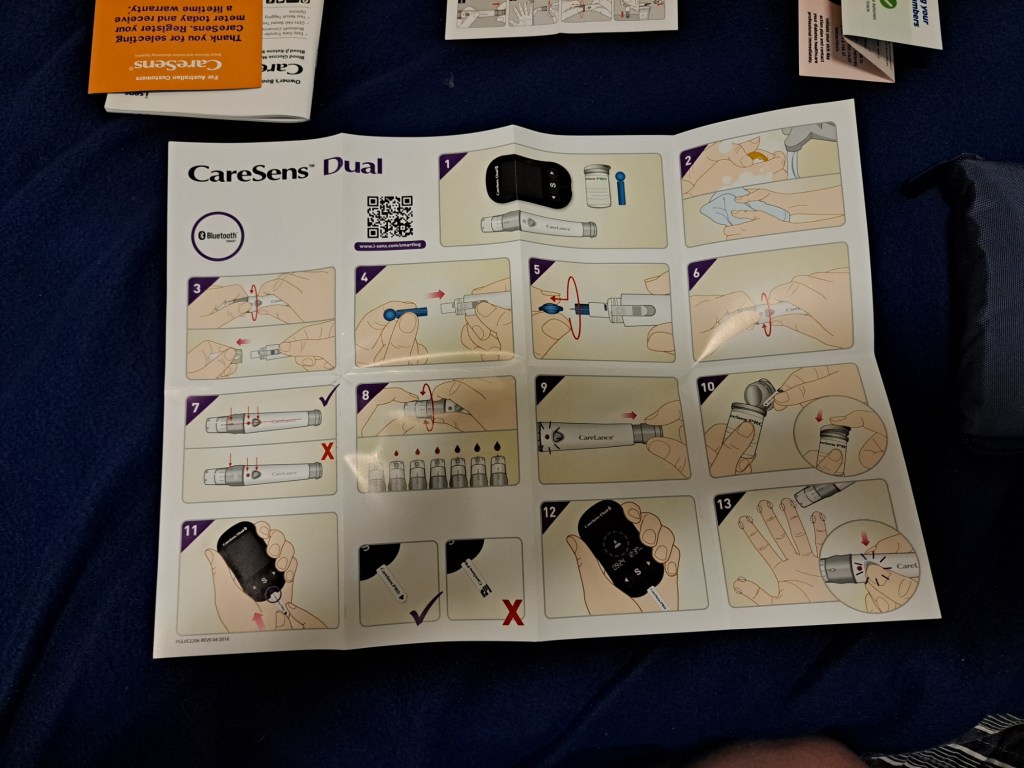
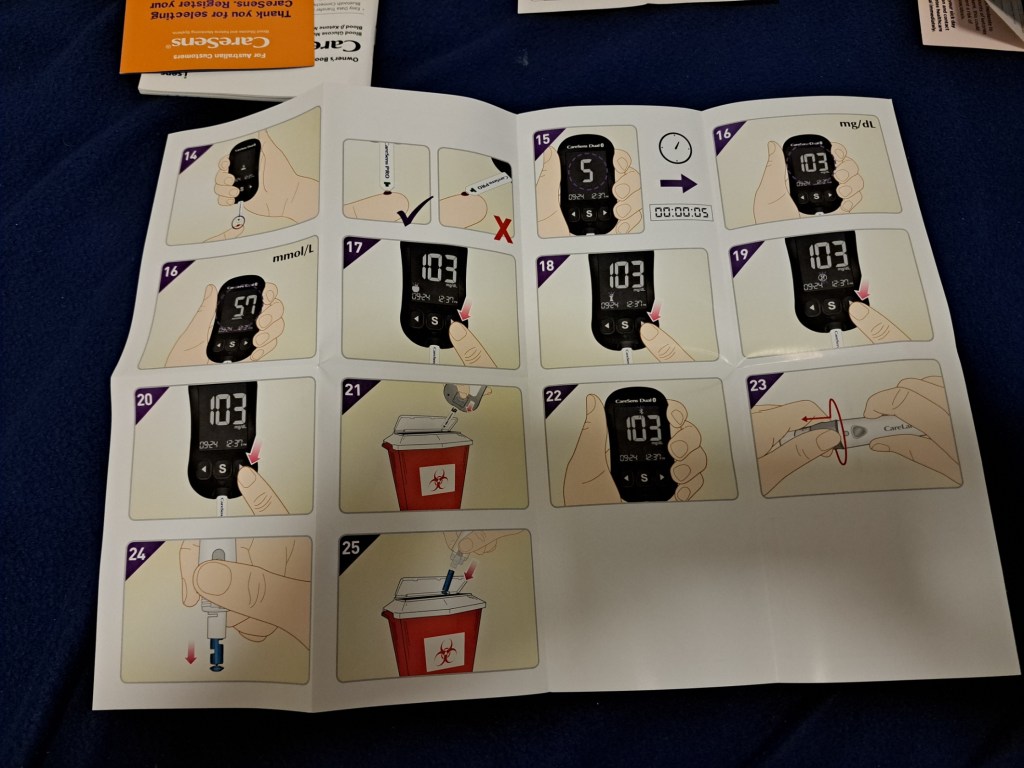
The instructions are pretty much the same for all these kinds of devices so nothing too unusual here. I did get a giggle out of the ‘do not insert the strip the wrong way round’ image. Rather than the lancet which comes with CareSens, if you fingerprick regularly, I recommend a Genteel which allows you to use any part of your palm, rather than the sensitive fingertips. This advice is not specific to CareSens; I am just not a fan of jamming a needle into one of the most sensitive parts of my fingers.

While it is not an issue for me, the glucometer allows you to press a button to eject the strip without touching it, and the same for the lancet in the finger-pricker. I guess there are people out there who feel squeamish about touching their own blood and, in these cases, the meter would be a great choice.

I have not had an opportunity to test for ketones (I do not run ketogenic and have not been near DKA since diagnosis) but the blood testing was within 10% of my CGM, which is good enough for me. I did look for online sources to validate the accuracy of the meter but could find nothing recent.

Conclusions

The meter will be a solid addition to my collection and provide me more than one device which can test for ketones. I am tempted to put one of my dual-sensor meters in my travel luggage so I can ketone test easily while away from home and have the other one easily available for home testing.

Thoughts on the Australian Government’s Inquiry into Diabetes

This week, on the 3rd July, 2024, the Australian government released the 23 recommendations resulting from their Inquiry into Diabetes. This blog will review each recommendation and consider its impact on people living with diabetes, and how the Australian government manages diabetes in general. The blog is quite long, so if you want the short version, head on over to the tl;dr section.

Details of the Inquiry

The Inquiry kicked off back in 24 May, 2023 when the Honorable Mark Butler MP called for a committee to investigate and report on diabetes. The Terms of Reference for the inquiry were, according to the committee’s chair, Doctor Mike Freelander, “very broad” with a view to “get as much information as we can so we can get a plan for the future”. Reading the article, the motivation for the inquiry seemed to be the incidence of obesity and type 2 diabetes in Australia and coincided with the release of a study from Deakin University confirming an increase in the rate of type 2 diabetes in Australia.

This was not an inquiry targeted at type 1 diabetes, but at diabetes in general, with obesity and risk factors also being considered. This is reflected directly in the formal Terms of Reference for the inquiry:

“The Committee will investigate:

  • The causes of diabetes (type 1, type 2 and gestational) in Australia, including risk factors such as genetics, family history, age, physical inactivity, other medical conditions and medications used;
  • New evidence-based advances in the prevention, diagnosis and management of diabetes, in Australia and internationally;
  • The broader impacts of diabetes on Australia’s health system and economy;
  • Any interrelated health issues between diabetes and obesity in Australia, including the relationship between type 2 and gestational diabetes and obesity, the causes of obesity and the evidence-base in the prevention, diagnosis and management of obesity; and
  • The effectiveness of current Australian Government policies and programs to prevent, diagnose and manage diabetes.”

The problem I have with investigating the “interrelated health issues between diabetes and obesity” and “risk factors such as genetics, family history, age, physical inactivity…” is these do not apply to all diabetes types equally, and also apply to other diseases, such as breast cancer. As can also be seen in this last link, risk factors are often conflated with causation. Correlation is not the same as causation and, in the case of diabetes, leads to a lot of unnecessary blame and stigma (there are plenty of skinny type 2s, chubby type 1s, and muggles of both sizes, so broad correlations have limited application at the level of the individual, especially when a proven chain of causality has not been established.)

As it was a public inquiry, submissions and public hearings were part of the process giving a voice, to any interest group who felt the inquiry Terms of Reference related to them, for consideration. So, from the start, there was potential for recommendations which may address broad health issues in the Australian population but not necessarily address prevention of diabetes, treatment of diabetes, or improvements for those living with diabetes. As you will see below, this lack of focus in the Terms of Reference led to a lack of focus in the Recommendations with some having tenuous links to diabetes, at best.

Let us review the recommendations and consider their implications.

The 23 Recommendations

Recommendation 1: The Committee recommends that the Australian Government undertakes a comprehensive economic analysis of the direct and indirect cost of all forms of diabetes mellitus in Australia.

This is an excellent idea. Approval for subsidised medications, equipment, and treatments rely on favourable economic consequences. Approval may require a measure of economic return e.g. spend $1 and return $2 worth of productivity within a specific time period, or an estimation of the cost for ‘Quality-Adjusted Life Years’ (QALYs.) In the case of the NDSS subsidy for CGMs, the cost came in at around $35,000 per QALY, below the unofficial approval threshold of $50,000 per QALY. Subsidies for things like Type 2 CGMs or Type 1 Loops will need to go through a similar exercise. Basically, accurate economic analysis will lower the barriers for smart decisions to be made.

Recommendation 2: The Committee recommends that the National Health and Medical Research Council expedites a review of the Australian Dietary Guidelines, and ensures that the revised guidelines include adequate information for Australians living with diabetes.

Here we see the broader terms of the inquiry coming into play. I do not see a lot coming out of this other than education programmes for ‘guides to healthy eating’. I do not believe information access is the problem. I think we all know we need to move more and eat less, preferably eating food with lower energy density. I can almost guarantee any “adequate information for Australians living with diabetes” will concentrate on type 2 diabetes and its risk factors and largely ignore any other type whose needs are different (people with type 1 are less concerned with glycaemic index/load and more concerned with total carbohydrate count, for example.) The cynic in me has no expectation this level of nuance will be captured in any revisions and expect the guidelines will not go much deeper than “fat bad, protein good, but remember to eat some carbs.”

Recommendation 3: The Committee recommends that the Australian Government implements food labelling reforms targeting added sugar to allow consumers to clearly identify the content of added sugar from front-of-pack labelling. This food labelling initiative should be separate from the information regarding added sugar potentially being included in the Nutrition Information Panel.

This one has little to do with people living with diabetes, whose concerns are carbohydrates in general, rather than just added sugar. I see this adding no value to me personally and see it causing a lot of confusion for people with type 1 diabetes. When bolusing, the need of a person using insulin is for clear carbohydrate labelling. This should not be sacrificed for ‘added sugar’ warnings.

The other concern I have is this recommendation will be seen as ‘proof’ that eating sugar causes diabetes. The causes of diabetes types 1 and 2 are unknown i.e. the reason the immune system starts attacking the pancreas in type 1 is still not understood. Even the proof that sugar causes obesity is limited so, given the Terms of Reference, I think sugar was over-represented in this inquiry.

Recommendation 4: The Committee recommends that the Australian Government implements a levy on sugar-sweetened beverages, such that the price is modelled on international best practice and the anticipated improvement of health outcomes. The levy should be graduated according to the sugar content.

Sugar levies in other countries have shown a decrease in sugar consumption and a slowing of obesity rates in children but that is all the evidence shows so far. While reductions in rates of type 2 diabetes are predicted, using the risk correlations, there has not been enough time to confirm the prediction. I am not against the idea of a sugar tax (my secret hope being it will increase the variety of sugar-free drinks on the supermarket shelves), I am simply uncertain of its place in this inquiry. The hypothesis that sugar consumption leads to weight gain which may lead to an increased rate of obesity which may lead to an increase in the rate of type 2 diabetes seems tenuous to me in its relevance for an inquiry into diabetes of all types.

Recommendation 5: The Committee recommends that the Australian Government considers regulating the marketing and advertising of unhealthy food to children, and that this regulation should:

  • Focus on children defined as those aged 16 and under
  • Be applied to television, radio, gaming and online
  • Use definition of unhealthy food that has been independently developed.

More recommendations relating to general population health with little consideration for diabetes specifically. At least Recommendation 2 threw diabetes in at the end. Again, I am not against lumping in unhealthy food in with cigarettes and alcohol, in terms of advertising, I am simply struggling to link the recommendation to diabetes and the Terms of Reference. My guess is the link is unhealthy food may lead to obesity which increases the risk of type 2 diabetes but I am surprised there were not recommendations raised with a more direct link to diabetes prevention and management. For example, Teplizumab is proven to delay stage 3 type 1 diabetes by literally years so why has it been left out of the recommendations, but an unproven sugar tax included?

Recommendation 6: The Committee recommends that the Australian Government provides its response to the Australian Food Story: Feeding the Nation and Beyond report and considers a dedicated resource within the Department of Health and Aged Care to support access to healthy food to all Australian communities.

For the curious, the referenced report can be found here. The report is focussed on food production and food security but was not about links between food and health. In fact, the word ‘health’ gets mentioned only three times throughout the report’s recommendations. Once in reference to the National Health and Medical Research Council and, of the other two references, the first calls for a National Food Council to advise the government of food matters of which ‘Health and Nutrition’ was one of ten factors to be considered. The second reference called for changes to funding research on ‘food, health and nutrition.’

As we can see, there is a theme here that food, and specifically, sugar is considered the culprit to Australia’s health issues and incidence of diabetes (diabetes type be damned). There is no doubt that access to healthy food is a good thing for Australia in general but, for me, these food recommendations miss the mark for an inquiry on diabetes of all types.

Recommendation 7: The Committee recommends that the Australian Government, in consultation and cooperation with state and territory governments, develops a best practice framework to tackle the problem of obesogenic environments, including through better urban planning and the development of physical activity initiatives and supports efforts to increase access to regular exercise in schools and neighbourhoods as a matter of urgency.

This is a recommendation exclusively considering obesity. The Term of Reference for obesity was “Any interrelated health issues between diabetes and obesity in Australia, including the relationship between type 2 and gestational diabetes and obesity, the causes of obesity and the evidence-base in the prevention, diagnosis and management of obesity.” The recommendation implies that lowering the barriers to physical exercise in urban areas will impact obesity levels. It is a reasonable hypothesis but I could not find a lot of evidence to prove it, similar to the case with sugar leading to obesity and type 2 diabetes. So, again, I question the relevance of this recommendation to this inquiry.

The recommendation is another nice idea for general health improvement but, for tackling how Australia manages diabetes? For me, it seems a poor foundation to build on. Perhaps funding research to work out the causes, rather than acting on the correlations and hoping for the best, would be a better use of money. To mix metaphors, we want to smash the causal chain, not throw stuff at the wall and see what sticks.

Recommendation 8: The Committee recommends that the Australian Government explores the potential for effective national screening programs for all forms of diabetes, particularly Type 2 diabetes.

I appreciate I have not been completely glowing in my appraisal of the recommendations so far but this one strikes me as really ill-conceived. Screening for every type of diabetes except type 2 diabetes makes more sense. For type 1, for example, we recently saw the approval for a national screening program in Italy. So why not type 2? Because there is no simple test to definitively diagnose type 2 diabetes. For type 1 we can test for auto-antibodies (which appear years before symptoms) and for MODY we can conduct genetic testing but, for type 2, the test is the symptoms i.e. elevated blood sugars and their effects on the body. There is literally no test we can conduct on a baby to determine if they are going to get type 2 diabetes and even in adults, diagnosis is a series of tests, not some simple screener.

The best we could do would be to implement regular testing of HbA1c which tells us the person may have some form of diabetes but is certainly not definitive for type 2. An elevated HbA1c, in the absence of a diagnosis of diabetes, is referred to as Pre-Diabetes and it is estimated over 1/3 of the US adult population is pre-diabetic. That is a lot of noise to filter out to find the true type 2 diabetics.

The idea of screening for MODY and type 1 diabetes makes sense to me, assuming it is cost effective (see commentary of Recommendation 1). Screening for MODY makes sense to reduce the widespread misdiagnosis and resulting mistreatment, and screening for type 1 makes sense because immune interventions can delay the onset of symptoms for years. It is clear though, screening only makes sense if something is going to be done with a positive test. Unless medical interventions are part of the overall strategy, screening is useless.

Recommendation 9: The Committee recommends that the Australian Government implements a national public health campaign to increase public awareness of the early signs of all forms of diabetes mellitus.

By the early signs for all forms of diabetes, I assume they mean the “Four T’s” which indicate an insufficient amount of insulin in the blood. Certainly, prior to diagnosis, I had enough awareness of two of the T’s (Toilet and Thirst) to know I needed to see a doctor when I was permanently thirsty and peeing every 30 minutes. Given awareness could prevent DKA death in an undiagnosed type 1, I do have some sympathy for this recommendation, assuming it is cost effective.

Recommendation 10: The Committee recommends that the Australian Government funds the development of education-based obesity screening information and resources.

More obesity recommendations which, again, speak to the health of the general population, rather than at diabetes. As with the screening in Recommendation 8, it only makes sense if there is a resulting intervention strategy for those positively identified. While ‘resources’ suggests some level of funded intervention, it is a bit nebulous.

Recommendation 11: The Committee recommends that the Australian Government implements a national public health campaign to increase awareness of the importance of prevention, identification of early signs, and good management of all forms of diabetes mellitus.

This is similar or, at least, related to Recommendation 9 regarding early signs. Prevention is an interesting one. Again, we are predicating our actions off of correlations, given the causes of diabetes in many of its forms (including type 1 and 2) are unknown. If the cause is unknown, how can we prevent it and raise awareness on what is needed to prevent it? As alluded to earlier, the usual suspects for ‘prevention’ equally apply to other diseases as they do to diabetes.

“Good management”, I assume, means eating less and moving more. I doubt this will include, for example, a national public health campaign on the correct use of insulin or on the importance of a well-rounded health care team.

What this is really recommending is a public health campaign to improve the overall health of Australians.

Recommendation 12: The Committee recommends that equitable access to health care for people living with all forms of diabetes be improved through:

  • Access to longer appointments with a health care provider subsidised by the MBS
  • Access to case conferencing models of health care, especially in rural and remote areas
  • Access to telehealth services
  • Increase in the number of item numbers for allied health consultation for those with diabetes for diabetes educators and dieticians and other allied health providers
  • Access to diabetes educators, including in high-risk outer metropolitan, rural and remote communities.

Finally! A recommendation which actually considers diabetes specifically, rather than being about general population health and issues of sugar consumption, a lack of exercise, and obesity. We are about halfway through the recommendations and, by my reckoning, maybe three of the 12 recommendations are specifically targeted at diabetes, rather than general population health.

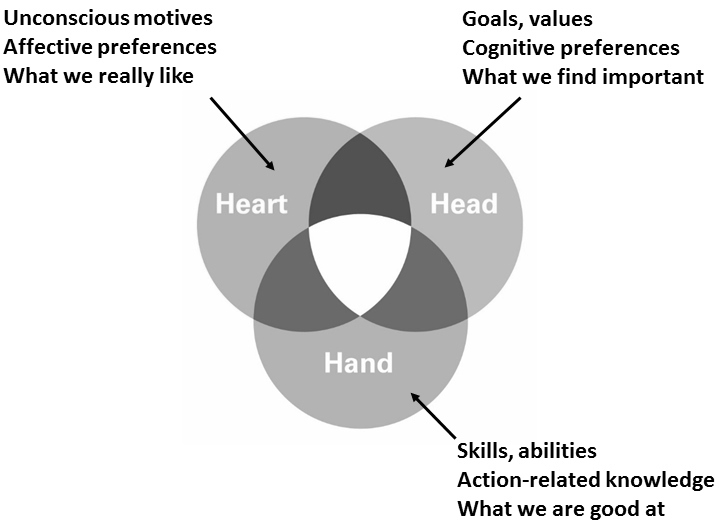
Longer appointments are a nice idea if there is something to talk about. I would personally like to see more research and effort being put into structuring the conversations with health care providers so they are more relevant to the person with diabetes (PWD) and deliver real value, rather than being a doctor taking twice as long to tell their client they need to use insulin properly, eat ‘healthier’ carbs, lose weight, and do more exercise. How about a session where the concerns of the PWD are discussed BEFORE the blood results? How about a discussion around the various technologies available and why they may or may not be relevant/desirable to the PWD? How about a discussion of the various medications available which may be of benefit? I am hoping to construct a framework for such a discussion applying corporate motivation theory but this takes time. You can read details of my idea here.

I had to look up “case conferencing” but, from what I can tell, it is health care professional speed dating. Basically, you round up a team of health care professionals (Endo, Dietician, Exercise Physiologist etc.) and have people meet with them as part of a single session. Given the lack of health care professionals in rural areas the organised corralling of them in one spot, and the recommendation for telehealth services make a lot of sense.

Assuming it is done with cultural consideration, I see this having a huge impact in rural aboriginal communities. Aboriginal people are four times more likely to have diabetes/pre-diabetes than their non-indigenous counterparts. Anything that can be done to lower the barriers to health care and education access for these disproportionately affected communities is a good thing.

Then we move on to diabetes educators, a topic of particular interest for me. Firstly, fixing the ‘item numbers’ for allied health professionals is a great idea. A key reason why I do not see my diabetes educator is Medicare and my private health insurance do not recognise the visits. My Diabetes Educator has a Provider Number but, for whatever reason, the visits fall between the cracks. My hope would be that this recommendation would fix that.

Access to diabetes educators (DEs) is a problem in Australia whether it is in urban or rural areas although other HCPs seem to cover the shortfall so that the health of PWDs does not suffer. The online forums constantly buzz with people craving access to a DE but they either do not have one in their area or the DEs are booked out. The pathway to becoming a DE is quite narrow in that you must have a health-related qualification (dietician, nurse etc.) before you can become accredited as a DE.

My personal belief is a person who has lived with diabetes for, say, ten years, could offer tremendous value to someone newly diagnosed but the prospect of studying for three years to obtain a health degree so they can then study to be a DE is a barrier too high for many. A solution might be for a sub-accreditation for non-HCPs where PWDs can assist the newly diagnosed in a structured manner. The pool of available talent would increase and, if managed properly, would not compromise the quality of service given.

Recommendation 13: The Committee recommends that the Australian Government reviews the limits for accessing juvenile mental health and diabetes services, with a view to enabling young people to continue receiving support for longer.

I am unsure which specific programs this relates to, but it sounds like there are specific programs where the recipients ‘age out’, similar to what used to happen with the CGM subsidies when it was limited to people with type 1 diabetes who were 21 years and under. I can see this being particularly important in the case of mental health services where suddenly cutting off the services because of a birthday could be disastrous. This being said, the supply of mental health professionals, such as psychiatrists, is very limited with many having waiting lists stretching for months.

It may also be alluding to the largely useless Insulin Pump Program which subsidises insulin pumps for people with type 1 diabetes under the age of 21. To date, the program has not had a significant impact so broadening the pool of potential recipients would be good.

Recommendation 14: The Committee recommends the Australian Government work with the state and territory governments to develop education tools and resources to support all staff across the health care system to improve understanding of diabetes, its different forms, the early signs and management. The Diabetes in Schools program should be funded to allow all schools to access it.

A high-level but reasonable recommendation. In fact, the NDSS already have the National Diabetes Nursing Education Framework which would go a long way to achieving this goal. The workbook associated to the program is an outstanding resource to give this baseline understanding.

I had to look up the Diabetes in Schools program but it sounds like a great initiative.

Recommendation 15: The Committee recommends that subsidised access to Continuous Glucose Monitors (CGMs) be further expanded. In the first instance, all access limitations in relation to patients with Type 1 diabetes should be removed. Furthermore, individuals with insulin-dependent Type 3c diabetes and patients with gestational diabetes should be made eligible for subsidised CGMs and for those with Type 2 diabetes requiring regular insulin. The Committee recommends prioritising the removal of age limitations on access to subsidised access for Type 1 diabetes patients.

This is a great recommendation. Type 3c diabetes is diabetes caused by physical damage to the pancreas. This may be as a result of an accident, surgery, or perhaps cancer. People with type 3c diabetes often fall through the cracks and have a difficult time accessing subsidy programs despite often having similar needs as people with type 1 diabetes. Expanding access to people with gestational diabetes and insulin-dependent type 2 diabetes also makes sense. This may also open up the door to extending CGM subsidies to the wider type 2 diabetes cohort in the future if evidence shows it is economically viable.

Recommendation 16: The Australian Government should explore expanding subsidised access to insulin pumps for all Australians with Type 1 diabetes. A gradual increase, such as expanding access to those aged 40 and under, would be useful as an initial step.

This is another issue I have strong thoughts on, and I was a co-author on this petition which describes why the current model is broken. I was also a signatory to the recently released Consensus Statement on Automated Insulin Delivery for Type 1 Diabetes in Australia.

A gradual increase makes sense although why it would be based on being less than 40 years of age mystifies me. As far as I know, there is no medical evidence to suggest 40 years has significance in the efficacy of pump use. For me, it would make more sense to roll it out in a manner similar to how the CGM subsidy was rolled out e.g. ((type 1 diabetes AND (21 years and under OR indigenous OR concession card holder)) OR (insulin-dependent gestational diabetes). The rest of us would access a pump in the same way as we do today and, over time, the program could expend where the evidence supports the case.

Recommendation 17: The Committee recommends that the Australian Government undertakes a review of the price and choice of insulin pumps in Australia.

I have no idea where this one is coming from. We have a pretty good choice of pumps in Australia so why fix something which is not broken? I hope this is not suggesting we have too much choice and implies we should go down a path similar to, say, New Zealand where only two pumps are funded. Choice is not a luxury; it ensures people are getting the right technology to maximise their prospect of success. Their job may mean a tubeless pump is a better choice. They may have sight impairment which means a pump which connects to a phone or which has a high-contrast screen is the best option. A wider choice ensures a broader set of people’s needs can be met.

Recommendation 18: The Committee recommends that the Australian Government, subject to a positive recommendation from the Pharmaceutical Benefits Advisory Committee, expands the eligibility criteria for Glucagon-like Peptide-1 (GLP-1) receptor agonists, particularly for high-risk patients.

Yes! A great recommendation. I talked about GLP-1s and their benefits for all types of diabetes around four years ago, based on the results coming out from international conferences. These results are now filtering down to the government subsidy level and, hopefully, will soon lead to wider availability for these powerful tools although, historically, supply has been an issue.

The next generation of GLP-1s are now coming out with even more impressive results in terms of weight loss and glucose management. The most well-known is arguably Tirzepatide (Mounjaro) which is approved for people with type 2 diabetes but not type 1. Upcoming trials hope to show it is of benefit to both types of diabetes.

Recommendation 19: The Committee recommends that the Australian Government establishes mechanisms for securing supplies of Glucagon-like Peptide-1 (GLP-1) receptor agonists for disadvantaged and remote communities, including Aboriginal and Torres Strait Island communities.

As mentioned in Recommendation 18, supply of GLP-1s worldwide has been an issue. Given their benefit for both weight loss and for people with diabetes, it is a good suggestion although it is not clear to me how it is to be implemented. If those of us in the cities are struggling to get supply, and the issue is worldwide, this makes access a non-starter for remote communities whose logistics challenges will only add to the problems.

Recommendation 20: The Committee recommends that the Australian Government considers expanding access to bariatric surgery within the public system for eligible patients.

For people with type 2 diabetes and obesity, bariatric surgery has an impressive remission rate of around 50-95%. In Australia, to be eligible for the surgery you must have a Body-Mass Index (BMI) of over 40, or type 2 diabetes and a BMI of over 35. The recommendation is not clear in which direction access should be expanded (lower BMI? different types of diabetes?) Also, only so many surgeries can be conducted in Australia annually and the government would need to provide significant funding to keep up with the current demand, let alone increased demand.

Recommendation 21: The Committee recommends that the Australian Government takes steps to manage diabetes research efforts through the Australian Centre for Disease Control (CDC) by coordinating with the peak bodies such as JDRF and Diabetes Australia research priorities with an emphasis on equitable access and prevention. The Committee also recommends that the Australian Government considers increased funding for Type 1 diabetes research and clinical trials.

All sensible recommendations. I assume coordination between the relevant bodies is not as efficient as it could be and thus the call for improvement. If it means better use of money to help people with diabetes, I am all for it.

Recommendation 22: The Committee recommends that the Australian Government undertakes a survey of current diabetes-related data, with a view to developing strategies for establishing new and improving current data sources and for establishing a national diabetes mellitus register within the CDC.

This is an interesting one as I thought, until recently, that Australia had pretty good data because of the NDSS diabetes database. However, when the register was first established, ‘best guesses’ were made to the type of diabetes people had, based on the information available at the time. This summary covers the history of the NDSS register and some of the problems in the quality of its data.

To give an idea of how, even today, poor data are being captured, according to the NDSS database there are literally no people with type 1 diabetes in Australia who are insulin independent. This means LADAs who, by definition, do not require insulin for at least six months after diagnosis, are lost in the system. Why is this the case? Because it is really hard to change the details in the NDSS database once a person is registered. This means all LADAs, including myself, are told to register as insulin-dependent so that access to subsidised resources is not an issue later on. In short, there is no formal recognition of LADA in Australia and certainly no data to ascertain the prevalence and characteristics of this type 1 sub-type.

Recommendation 23: The Committee recommends that the Australian Centre for Evaluation in the Department of Treasury commits to the ongoing assessment of any actions taken in respect of Committee recommendations made in this report.

This sounds more like bookkeeping than a specific diabetes-related recommendation. Accountability is good though, so I appreciate the value of it.

tl;dr

The recommendations of the inquiry are a bit of a mixed bag, driven by overly broad Terms of Reference and, arguably, pre-conceived notions on the causes of diabetes and, specifically, type 2 diabetes.

The recommendations fall into the following categories (23 is generic and has been left off):

Sugar Recommendations (3, 4)

In short, added sugar is the devil and should be treated as such (change food labelling to call out sugar has been added and tax it). No argument from me on that front but, for type 1 diabetes, total carbohydrates is the key piece of information. As long as that is not sacrificed, all good. As for a sugar tax, if in encourages more variety in sugar-free drinks, I am all for it.

Why is sugar being mentioned in an inquiry into diabetes? No idea. Sugar is not mentioned in the Terms of Reference and its inclusion will feed misconceptions about diabetes being caused by sugar eating.

Obesity Recommendations (7, 10, 20)

The obesity recommendations (design cities for exercise, screen for obesity, and make bariatric surgery more accessible) do not talk at the links between diabetes and obesity, as outlined in the Terms of Reference and tenuously relate to “the causes of obesity and the evidence-base in the prevention, diagnosis and management of obesity”. I would argue they miss this mark given there is limited evidence that city design improves obesity rates. As for the final two recommendations, without investment in what happens after a positive screening and in bariatric services, all we are doing is creating demand for a system which is not set up to serve it.

General Health Recommendations (2, 5, 6)

In short, review dietary guidelines, regulate the advertising of unhealthy food to children, and ensure access to healthy food. All great ideas, and all as relevant to diabetes as they are to many other diseases where diet is considered a risk factor. Should they be in the recommendations for an inquiry into diabetes? Is there evidence that any of these measures will impact diabetes in the Australian population? Do they align to the specified Terms of Reference? No.

Diabetes Recommendations (1, 8, 9, 11-19, 21, 22)

The remaining two thirds of the recommendations actually relate to diabetes, which is good. Economic rigour around the cost of diabetes is a great idea (1) and provides a foundation for smart, economically responsible decisions. Screening for diabetes (I have no idea why they focus on type 2 diabetes here) and increasing overall awareness to enable ‘self-screening’ (8, 9, 11) makes a lot of sense. Catching diabetes early in all of its forms improves outcomes for the individual and the country.

Improved access to health care professionals (12, 13) for all Australians is a good idea but the shortage of these professionals is not considered in the recommendations and risks straining an already strained system further.

The call for improved education of health care professionals in their knowledge of diabetes (14) is a great idea. Many people with diabetes (especially people with type 1 diabetes) actively avoid engaging with the health system because they know they will need to educate the HCP themselves and, often, their knowledge and experience will not be respected and ignored for a lecture received back in medical school decades earlier. Improved education is a tide which will raise all boats and improve the system for all.

Improved and subsidised access to proven medications and technologies (15, 16, 18, 19) is a great idea although I am concerned about the suggestion to review the choice of pumps (17) unless this is aimed at getting the most recent pumps into the country as Australia is a version behind in many CGM and pump systems. The suggestion to use a cut-off of 40 years of age for pump subsidy confounds me and is misaligned to previous Australian subsidy schemes and pump subsidy schemes being rolled out internationally.

Improved research funding administration and access to data (21, 22), as with Recommendation 1, will only improve the decisions made in the future. We can only set our direction when we know where we are, where we are wanting to get to and the means we have to get there, and while many of the recommendations make good guesses to the direction we should head, Recommendations 1, 21, and 22 enable a foundation for much smarter navigation.

Conclusions

There are some good ideas here but there are also missed opportunities and half-solutions. Screening for different diabetes types and for obesity is well and good but what then? The emergence of immune intervention treatments for type 1 diabetes e.g. Teplizumab is also a missed opportunity and a great solution to the question of screening next steps. The lack of health care professionals to service the diabetes community is also absent from the recommendations despite calls to increase demand.

I look forward to seeing how these recommendations are implemented and hope, the ones which are truly focussed on diabetes get the attention they deserve. Diabetes is a costly disease for both the individual and the country so smart, evidence-based decisions, will make a big difference.

Getting Medical Interventions Approved By Government

Having played for a few years at the nexus of academia, big pharma, and government, it is interesting to watch how these three bodies orbit each other and interact (for those of you familiar with the Three-Body Problem you know such a system is often unstable, but I digress). It is often frustrating, being a person with type 1 diabetes, knowing there are, for example, medications out there with overwhelming evidence behind them but which are not funded by government national health programs. GLP-1s are a great example. These are well established to provide benefit to people with type 1 diabetes but are still, certainly in Australia, not covered and financially out of reach for those who would benefit.

So, what does it take to get something approved for government subsidy? I see four major factors which are necessary, and I thought I would write this article to describe them. For context, I will use the subsidy of continuous glucose monitors (CGMs) for people with type 1 diabetes (T1Ds) in Australia as a case example.

The ‘Ask’

The first step is a clearly articulated ask: “We would like the government to fund/subsidise <x>”. In the case of CGMs for T1Ds, the ask is “We would like the government to fund/subsidise CGMs for T1Ds”. In reality, the ask for was for a specific subset, and the program was expanded to all T1Ds over time (for reasons explained later), but I will keep things simple to illustrate the point.

It is, at this stage, where we can answer why GLP-1s are not available for T1Ds in Australia. The fact is, in the case of Ozempic, Novo Nordisk has not asked because they have no need to. Demand is outstripping supply such that Novo can set the price as they wish and run their factories at full speed. Asking will create a new audience which they cannot serve and force a negotiation on price. There is no motivation to do this until general demand abates or supply can be scaled up.

The Medical Benefit

The ‘Ask’ needs to be justified by a tangible benefit which can encompass quality of life measures and overall health measures. In the case of CGMs for T1D, subsidy would allow more people to access the technology and significantly reduce the need for finger pricking. Near-real-time tracking of glucose levels would reduce the risk of serious hypoglycaemia and hospitalisation. All good things and a great improvement for the lives of people living with type 1 diabetes.

The Medical Benefit provides the “So What?” element to the request and can be very emotive. A piece of wisdom often used in sales is people make decisions on how they feel about the purchase and justify it with logic after the fact. The Medical Benefit is the door to stirring the heart of government to act and, in turn, makes for an emotive tale for voters for justify the spend and show the government cares.

The Evidence

A good tale still needs evidence. Aristotle’s ‘Art of Rhetoric’ speaks of three key elements necessary to persuade:

  • Ethos: The argument should be from a credible body
  • Pathos: The argument should stir the emotions of the receiver
  • Logos: The argument should be based in reason

I have taken it as given that, if a request is being made, for it to get the ear of the government, it will need to be from a credible source (Ethos). The Medical Benefit is the key to providing Pathos and clinical/world evidence is the key to Logos. Without evidence, it is a stirring tale but an unjustified one. A government needs to back decisions on reason otherwise the opposition will exploit the weakness.

In the case of CGMs for T1Ds, there was a wealth of clinical evidence showing improved health outcomes with the use of CGMs. I gave an example of this back in 2021 in the context of PWD pregnancy and the use of CGMs.

The Economic Benefit

Governments are required to be fiscally responsible because of scarce resources. In short, if the government is to spend a dollar, it needs to do so on whatever yields the most benefit. For medical interventions, economic justification is usually measured in cost per QALY (Quality-Adjusted Life Years). Basically, a threshold needs to be met where the cost generates a minimum level of benefit which, in this case is a longer and better quality of life for the individual.

The threshold varies from country to country and, while there is no official limit in Australia, a general rule of thumb is government will consider a medical intervention which costs less than $50,000 per quality adjusted life year.

In the case of CGMs for T1D, the economic numbers came out at around $30-35k per QALY and the request was approved.

Case Example: Automatic Insulin Delivery for T1Ds

Let us consider a couple of items being discussed in the diabetes community at this time. The first is equitable access to insulin pumps and, by extension, looping (Automatic Insulin Delivery aka AID) for all Australians. In Australia, while CGMs are subsidised by the government for T1Ds, pumps are not and need to either be purchased directly or obtained through private health insurance. Given a pump costs literally thousands of dollars this puts it out of the reach of many Australians and I recently helped co-author a petition to help get this changed which I encourage you to sign (QR code below).
So, based on the four elements mentioned above, how would we expect the request to fare if raised by a credible body to government as part of, say, the Inquiry Into Diabetes?

The ‘Ask’: This is relatively straightforward i.e. “AID systems should be subsidized for T1Ds”

The Benefit: Lots of qualitative and quantitative benefits to AID systems such as better overnight control, improved HbA1c and Time in Range, and less manual intervention by the T1D.

The Evidence: Lots of clinical and real-world evidence to support this from companies such as Medtronic.

The Economic Benefit: While it would be great to subsidise AID systems for all T1Ds, to get the appropriate cost per QALY, it may be necessary to pick a sub-group e.g. children (who consistently have higher HbA1cs than their older counterparts in trials), T1Ds who are pregnant and so on. Generally, the cohort selection will be driven by The Evidence as this informs the economic modelling. In other words, if there are no studies of AID systems helping pregnant T1Ds, it will be harder to economically justify their inclusion.

Case Example: CGMs for People with Type 2 Diabetes (T2Ds)

On the back of the benefits seen in T1Ds with the use of CGMs it makes sense to expand the program to T2Ds.

The ‘Ask’: Again, this is relatively straightforward: “CGMs should be subsidised for T2Ds”

The Benefit: T2Ds being able to see how food affects them will inform eating habits and improve health outcomes.

The Evidence: There is some evidence of benefit for insulin dependent T2Ds but the body of evidence for general benefit is still being gathered with limited long-term studies to justify The ‘Ask’. To quote this last paper, literally written this year, “…few studies reported on important clinical outcomes, such as adverse events, emergency department use, or hospitalization. Longer term studies are needed to determine if the short-term improvements in glucose control leads to improvements in clinically important outcomes”

The Economic Benefit: Without evidence to act as a foundation for the modelling, it is harder (not impossible) to determine a cost per QALY. The best hope would be to exclusively focus on where there is evidence (insulin-dependent T2Ds) with the hope that, as more evidence is acquired, the program can be expanded to the wider T2D population.

Conclusions

It is easy for us to be frustrated with the glacial movement of governments to get behind the latest advances in technology and medicine when it is clear, for those of us at the coalface, there are benefits to many, many people. However, as we can see, with competing priorities, it is important government spending is used as effectively as possible.

The inclusion of medical interventions in national health programs requires collaboration of all three bodies (big pharma to provide the intervention, academia to show it works, and government to provide the funding) and the will by all of them to drive it. Without this willingness and the elements mentioned above it is hard, if not impossible, to achieve success.

Where to Find Australian Clinical Trials

Ever since being diagnosed seven years ago, I have been keen to participate in trials of new treatments. Unfortunately, there are not a lot of trials for LADAs (at least, not in Australia). When I became insulin dependent, a couple of years ago, I thought things would change but either my age (I am 50) or my HbA1c excludes me (studies generally like higher HbA1cs and mine is too low). I do check for new studies every month or so and thought putting a list together of where people can go may be useful.

Diabetes Australia’s Research Opportunities

Current research opportunities | Diabetes Australia has a great list of research studies for all types across all of Australia

Disclosure: I am on the Diabetes Australia Community Advisory Council

JDRF’s Clinical Trials Archive

Clinical Trials Archive – JDRF lists trials specifically for type 1 diabetes all across Australia

Australia/New Zealand Clinical Trials Registry

ANZCTR search results | Australian Clinical Trials is an Australian Federal Government registry for many health conditions with filters to show only ones relating to diabetes. Despite the title it seemed to only show trials in Australia at the time of writing.

Baker Heart and Diabetes Institute Clinical Research Trials

Clinical research trials (baker.edu.au) covers all types of diabetes (or, at least, types 1 and 2). The Baker is based in Melbourne but my understanding is some of their trials do recruit outside of Melbourne.

Disclosure: I am a voluntary clinical affiliate with The Baker (basically I am on the books if they need Lived Experience input on a trial) and an Associate Investigator on their FAME-1 Eye trial.

Australasian Type 1 Diabetes Immunotherapy Collective (ATIC) Clinical Trials

Clinical Trials | ATIC (svi.edu.au) are studies focused on immune system mediation which means they generally relate to type 1 diabetes. Arguably this is the frontier of type 1 diabetes treatment and has recently seen exciting results with medications such as Teplizumab for delaying the onset of symptomatic type 1 diabetes. Recruitment is across Australia and, at the time of writing, there was even a study recruiting in New Zealand.

Disclosure: I am on the ATIC Community Engagement Panel.

The 12 Levers You Can Pull To Manage Diabetes

My perspective on managing diabetes is it requires a multi-faceted approach. I refer to the strategic elements of this approach as ‘levers’. The way I see it, it is a case of working out how hard you can personally pull each lever and which ones work for you.

What are your Goals?

Before a strategy can be put in place, we must have an idea of where we are heading, what are our goals? These can be big, hairy audacious goals (I want completely normal blood sugars) or smaller ones (I want to reduce my HbA1c). With goals in mind, we can start to use the levers to get us there.

My goals are:

  • Minimise daily management to avoid burnout
  • Reduce my HbA1c to a point where my risk of long-term complications is no more than 2x baseline

That’s it! Goals do not need to be complicated and, in my case, one is qualitative (minimise management) and the other quantitative (based on my previous blog, getting an HbA1c under 7.0% is good, getting under 6.4% without hypos is better).

What External Factors Can Hinder Us?

In moving towards our goals, there are factors which may impede our progress. T1D Mum provided this great summary of “social determinants of health” which impact our lives.

While ‘Individual Lifestyle Factors’ speaks directly at the levers I am referring to, as we more further out, our ability to influence the impact on our lives becomes harder e.g. ‘Water and Sanitation’ without significant upheaval to our lives e.g. changing one’s job/home/country or, as t1d mum suggested through advocacy and demand for change. Perhaps we should include advocacy as a lever to address this although it is a slow moving one.

Levers You Can Pull

I brainstormed as many levers as I could think of and went to social media to see what other levels people could come up with.

These are the ones the collective came up with in no specific order:

Let us go through them.

Food

Arguably the lever which gets talked about the most and possibly one of the easiest to pull in some fashion. Clearly, reducing the amount of fast-acting carbohydrates will help with blood sugar spikes but, after this, we may adopt a different approach, based on our goals, beliefs, and social context.

For some, a ‘carnivore’ approach is the way to go given muscle tissue has many of the nutrients our body requires with zero carbohydrates. For others, a plant-based diet which reduces insulin resistance makes more sense.

Given how tightly food in woven into human culture, it is hard to give hard and fast rules about how to pull the food lever which will apply universally. Everyone will have an idea of the changes they can practically make to their diet to steer them towards their goals.

Sleep

The CDC gives a great summary of the benefits of sleep for people with diabetes. The very short version is a good night’s sleep is a relatively simple lever to pull to help you towards your goals. Tim Street correctly points out though that adjusting sleep patterns can have unpredictable effects to basal rates and glucose levels (Dawn Phenomenon) so make changes slowly.

Exercise

It is news to no one that exercise is beneficial to health in general and diabetes specifically. Again, I will pull out Dr. Dessi Zaharieva’s exercise slide to summarize the benefits.

Medication

Gone are the days when the only medication for diabetes was insulin. We now have drugs which reduce insulin resistance (Metformin), actively remove glucose from the blood (SGLT2is), and restore the satiety response (GLP1s) as well as many others and many more coming.

It may not be a lever any of us relish pulling but it is there for us to use as we see fit.

Technology

Even in the seven years since my diagnosis, technology has progressed significantly and continues to do so. We now have commercial looping systems which act as an artificial pancreas and, while not perfect, they can provide tremendous benefit in managing, for example, overnight levels.

Health Care Team

A good health care team is vital for good management. They act as a source of expertise as well as a sounding board for your own thoughts and discoveries. The ability to engage with the health care team or adjust its composition varies greatly from, for example, rural to urban areas which can limit how much this lever can be pulled and how effective it is.

Social Media, Online Resources, and Peer Support

Another resource for information and ideas, social media, online resources and peer support, like the health care team should be carefully curated so they work for you, rather than against you. Unlike the health care team, a lot of what is found online is unregulated so, even more than the health care team, critical thinking is needed to work out what is useful, what is unfounded, and what the agenda is behind the information. For example, I trust PubMed much more than medical ‘evidence’ from Twitter or Facebook. However, in terms of looping and success in managing LADA, online discussion groups have been essential. As Tim Street puts it “Peer Support…opens minds to methods that may help…”

Family, Friends, and Allies

Online support is one lever but support in the real world is another we can pull. As Tomorrow’s Gone suggests, having family and friends who are ‘followers’ to CGM data, who can help out on sick days, tell you when dinner is going to be ready so meals can be effectively managed, or do supply-runs when they unexpectedly run out is a great asset to have. Tomorrow’s Gone also mentions making allies of others such as the school a person with type 1 diabetes attends by providing a care plan.

Financial Status

There is flexibility in money and, therefore, financial status can greatly impact our success in managing diabetes. It is also one of the hardest levers to pull given the inherent expense in managing diabetes and the financial commitments of everyday life e.g. we may want to use certain technologies or medications but cannot afford them. Therefore, getting financial advice and stabilising finances with a budget can be a great lever to pull.

Time

As we can plan our finances, so too we can plan our time and give ourselves flexibility to explore other levers such as exercise or sleep. While none of us want to be a slave to a strict time regime, some planning and organisation can provide benefit.

Stress/Wellbeing/Mental Health

Stress hormones can cause havoc with blood glucose levels and maintaining good mental health is vital to keep the diabetes gremlin in its cage. Whether it is doing something relaxing such as meditation or yoga, or regularly seeing a mental health professional, there are ways we can keep our mind clear to tackle the demands of the body.

Education

This arguably overlaps with some of the other levers such as having an effective health care team and making good use of online resources but, as it also covers physical media such as books or university courses, I have called it out as a distinct lever.

Also, you are your best advocate in managing this disease. You know your body better than anyone and have the greatest motivation to keep you healthy. Arguably, this can only be done if you are educated about your body, about diabetes, and about the levers you intend to pull.

Education regarding your own body is an interesting one because this knowledge can only come from self-experimentation and not from the internet, a book, or a university. Dave Dikeman mentions practical knowledge of insulin dosing as an example which is vital if manually injecting and can be quite individual, depending on insulin resistance and diet.

Education can come from a variety of sources, such as those mentioned, and, for me, empowers and amplifies many of the other levers available.

No Lever Acts in Isolation and Levers can be Inconsistent

As you read through it may have occurred to you that some levers affect others, as mentioned with education. Also, levers may not always act the same way. For example, with a women’s monthly cycle insulin resistance can significantly change, affecting the way insulin, food, and exercise impact the body.

For this reason, I believe there is not one lever which is more important than any other and over-reliance on any one lever can set us up for failure. For example, an over-reliance on technology means we may be in big trouble if it fails. Using diet, being educated on how to inject safely as a backup, and having a robust support network means we have contingencies if technology fails. As Steve Norris sums it up “I think the problem is that the levers don’t pull consistently, nor do they act in isolation. A holistic, yet unburdened, approach is important…”

Highlights from ATTD 2024

I have just returned from ATTD 2024 in Florence, Italy thanks to dedoc. ATTD (Advanced Technologies and Treatments for Diabetes) is one of the largest diabetes conferences in Europe. While the formal focus is on technology and new medications, the research coverage was quite broad. for example, I had a poster at the conference talking about motivation theory and its application in the doctor’s office.
I also presented on the petition to guarantee the humanitarian supply of medication, including insulin, to civilians in war-affected areas, in line with documents such as the Geneva Conventions. If you are interested in signing the petition, please go to https://www.change.org/insulinconsensus

Image care of https://twitter.com/1derfultype

So What Did I Learn?

In the spirit of Michelle Law’s Top Ten Takeaways and dedoc’s #PayItForward, I thought I would list the topics presented which piqued my interest.

Non-Invasive Glucose Measurement

In the expo area of the conference were a lot of companies looking to measure glucose in non-invasive ways, such as through saliva or with various electromagnetic waves scanning the skin. The measure of choice for determining accuracy for these systems is MARD (Mean Absolute Relative Difference). Generally speaking, a MARD less than 10% is considered accurate enough to inform insulin delivery i.e. be included in a bolus/looping system.
To understand how MARD can be manipulated look no further than Tim Street‘s excellent reviews of CGMs and how their accuracy is assessed, such as this one. However, even with the ability to artificially lower the numbers, the lowest MARDs being reported were in the low teens so, at least for now, finger-pricking and CGM insertion will need to continue.

TITR Gets More Coverage

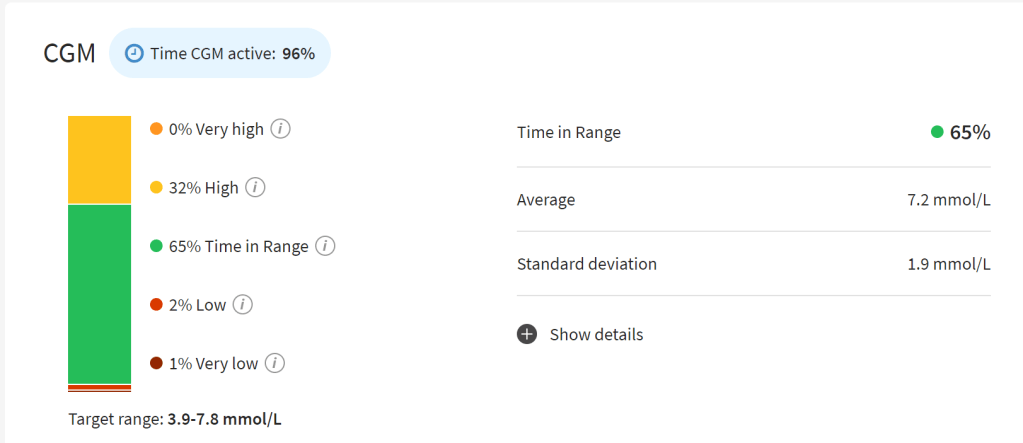
At last year’s ATTD blog article, I mentioned Professor Thomas Danne pushing for Time in Tight Range (TITR, 3.9-7.8 mmol/L = 70-140mg/dL) rather than the usual Time in Range (TIR, 3.9-10 mmol/L = 70-180mg/dL) because it is a better predictor of the onset of Stage 3 diabetes and a better target for minimising the risk of long-term complications. In short, he suggested the evidence-based 50% TITR was a better goal than the consensus-based 70% TIR.

At this year’s ATTD, there was more talk of TITR and it is clear it is becoming an accepted standard in academic research. Some of the other dedoc voices expressed concern that a stricter range could lead to more pressure on people with diabetes (PWD) to ‘succeed’. While I am sympathetic to this concern, I would prefer my targets to be evidence-based but, to make sure people do not over-obsess on the numbers, perhaps a multi-target strategy should be considered with both quantitative and qualitative measures, aligned to the PWD’s goals.

Image care of https://twitter.com/Drhkakturk

Continuous Glucose Monitors (CGMs) and Looping for Type 2 Diabetes

Historically, CGMs and Looping technology has been considered a type 1 tool. However, there are people with type 2 diabetes who require insulin and, from a common-sense perspective, based on the type 1 evidence, it makes sense they would also benefit from the technology. ATTD 2024 presented a variety of studies which confirmed this. Given the type 2 diabetes market is literally ten times the size of the type 1 diabetes market, it makes sense that diabetes tech. companies would pursue it.

Continuous Ketone Monitoring

The idea of monitoring ketones continuously, as well as blood sugar was also presented. It was shown that rising ketones can be used to predict hyperglycemia spikes and potentially predict DKA before it becomes dangerous. Abbott even went as far as to talk about a future all-in-one sensor which would track both in the one unit. Where I see this being useful is providing additional information for looping systems, to predict exercise, better handle ketogenic diets and SLGT2i medications.

GLP1s for Obesity Management

Drugs like semaglutide (Ozempic/Wegovy) are “single agonist GLP1s”: they bind to cells and trigger the same response as GLP1s in the body. The next generation of these drugs are in trials, referred to as double or triple agonists i.e. they activate more receptor sites. The upshot is they are more effective than their single agonist predecessors. How effective? Trials are reporting people losing 20-30% of their weight on the drugs which is incredibly powerful.

LADA Confirmed as a Distinct Phenotype and “Curable”

Perhaps because ATTD was in Italy, the home of Professor Raffaella Buzzetti, one of the leading authorities on LADA, there was substantially more coverage of LADA than I had seen in previous conferences. Professor Buzzetti presented evidence showing LADA is a distinct phenotype of type 1 diabetes (a distinct disease that presented differently) and confirmed that, with immune intervention drugs such as Teplizumab, it may be possible to indefinitely hold off LADA from becoming insulin dependent i.e. a cure.

#LanguageMatters Becomes #DeliveryMatters

One presentation talked at, not so much the words we use in speaking with people with diabetes but, how we talk to them i.e. with empathy and respect. This is a shift in the #LanguageMatters movement but a welcome one.

Patient Reported Outcomes (PROs) and Measures (PROMs)

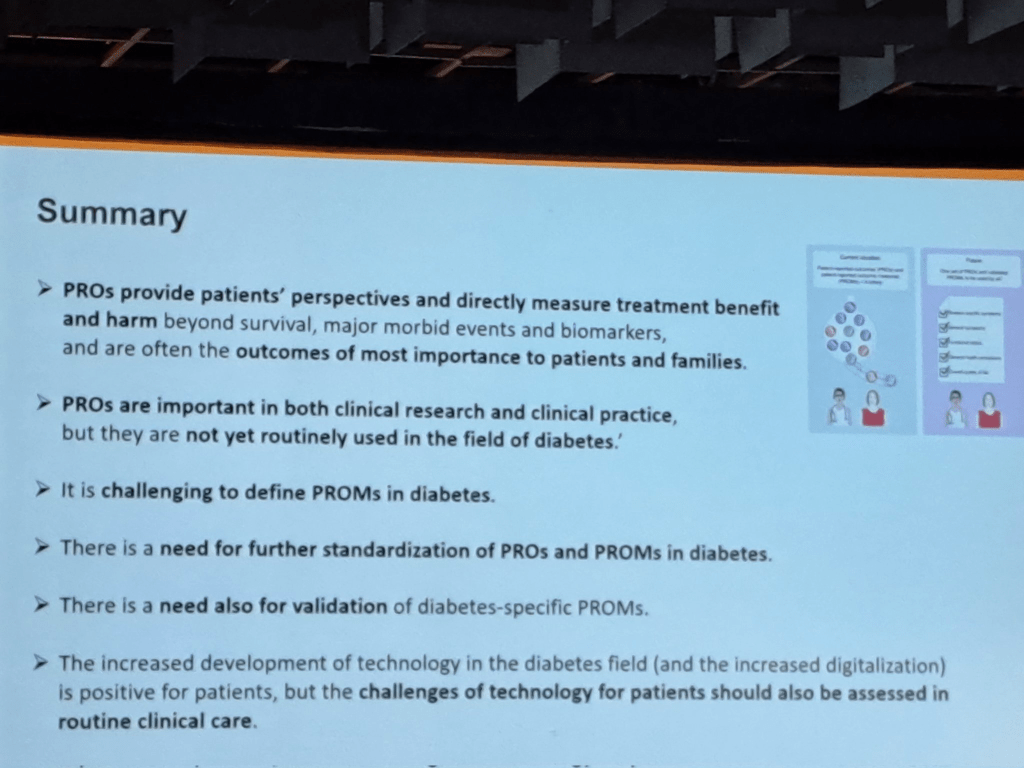
This had been touched upon in previous conferences but, again, seemed to have more prominence at ATTD 2024. In short, PROs are outcomes which are important to the person with diabetes, more than the clinician.

PROMs are the measures to assess them. At this stage, while there are PROM questionnaires being used in research, their efficacy is not strongly validated, and there is concern they are being used without a purpose in mind.

“Artificial Intelligence is not Ready for Primetime”

The use of artificial intelligence (AI) systems to provide guidance to people with diabetes in their daily management and in providing general advice on diabetes was discussed and considered not ready for general use because of ‘hallucinations’ (false facts incorrectly inferred by the AI engine which need to be verified by the user). Examples cited included mixing up mmol/L with mg/dL which could be disastrous in the context of giving insulin administration advice.

This being said, the potential was recognised once obstacles were addressed.

Tips and Tricks for People with Type 2 Diabetes

One study was presented which showed, even if the types of food a person with type 2 diabetes is eating does not change, intermittent fasting will still reduce their HbA1c. This is intuitively obvious, but it is good to have the evidence to back it up.

Another study showed 2.5-6.5 hours of exercise per week helps people with early stages of type 2 diabetes inproves beta cell function.

Type 1s have Insulin Resistance Too!

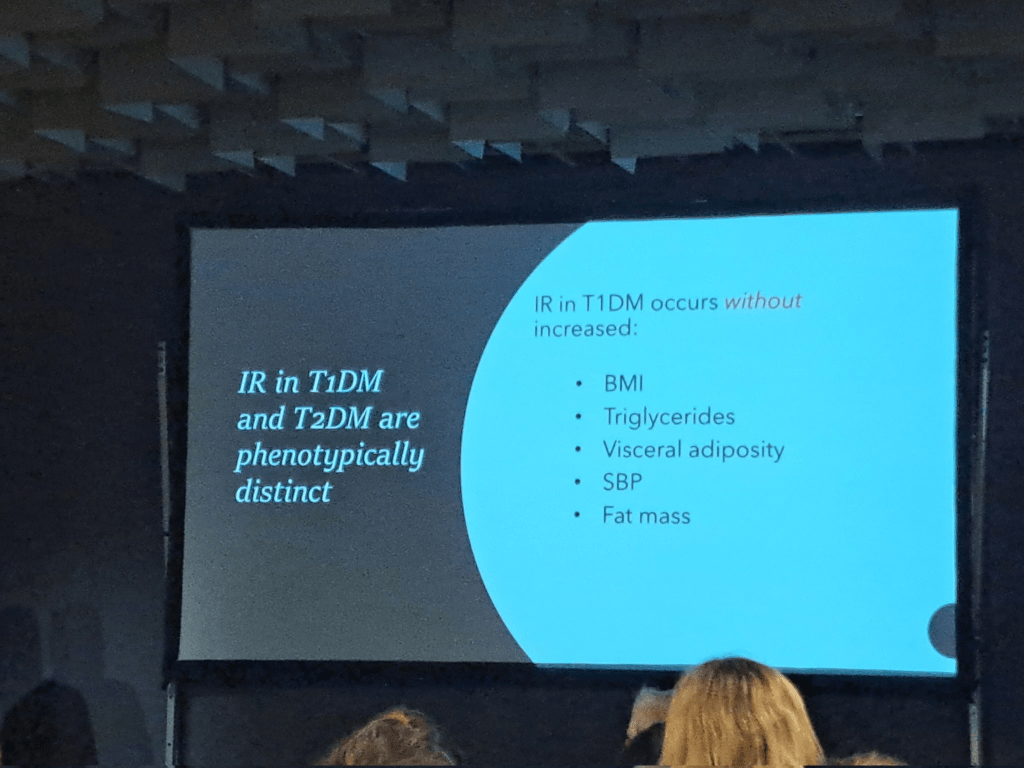
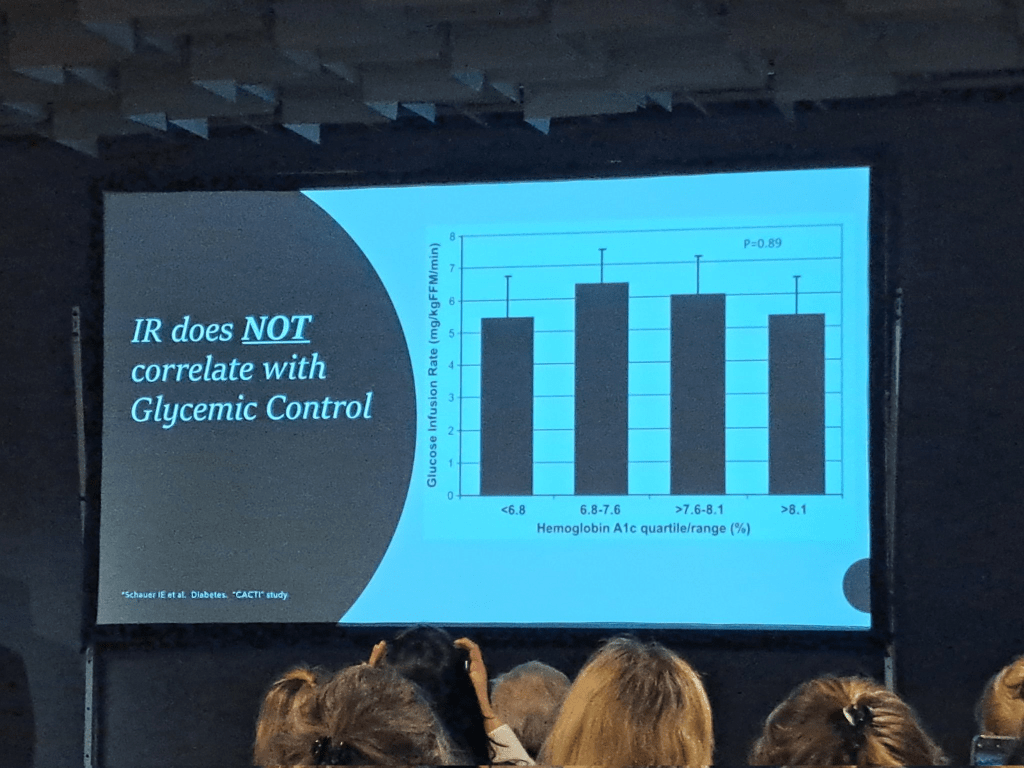
Rendering the term “double diabetes” somewhat redundant, it was shown that people with type 1 diabetes also have insulin resistance which, in their case, is driven by the insulin they inject and is independent of factors such as weight or glycemic control. Low carb was mentioned as one lever to pull in managing it.

Thank You dedoc!!

If you are interested in also attending these kinds of conferences, I highly recommend going to the dedoc web site and applying for one of their scholarships. They cover flights, accommodation, and conference registration. Am I one of these infamous “paid diabetes advocates” we hear so much about on social media? I do not think so. I still had to take leave from work and cover other expenses out of my own pocket. My bank account is no richer for the experience but my knowledge of where the research is heading certainly is and the friendships made with other diabetes advocates around the world are priceless. This is why I continue to apply for the scholarships for myself and for the communities I serve.

Top Ten Topics at EASD 2023 and ISPAD 2023

Michelle Law has an excellent blog over at Pumps and Pricks. One thing she does is a ‘Top Ten’ of the conferences she attends. This year, like me, she attended EASD 2023, thanks to Dedoc, and posted her Top Ten Highlights. I have purposely not read it because this blog will do the same for EASD 2023 and ISPAD 2023. It will be interesting to see the areas of research that spoke to both of us and our different takes on them. The ranking of ten to one is not important; they are all interesting announcements/areas fo research.

10. Type 1 Diabetes Before Insulin

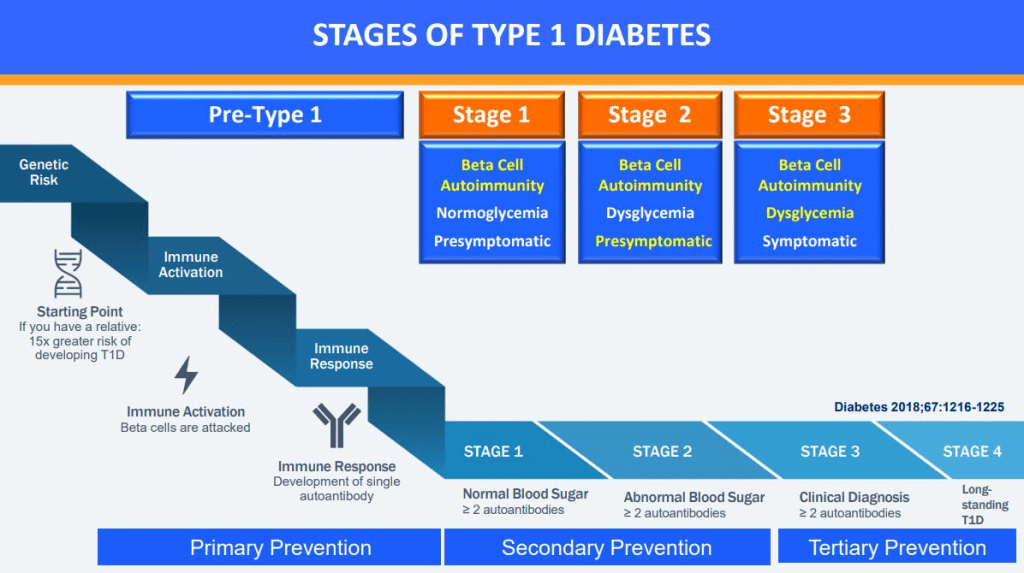
With drugs like Teplizumab which can delay the progression of type 1 diabetes, research is now focusing on the disease before the person becomes insulin dependent. These days there are four stages for type 1 diabetes with insulin only being needed in the third stage.

How do we know someone is likely to develop stage 3 type 1 diabetes? Because of the auto-antibodies in their blood which appear years before insulin is needed.

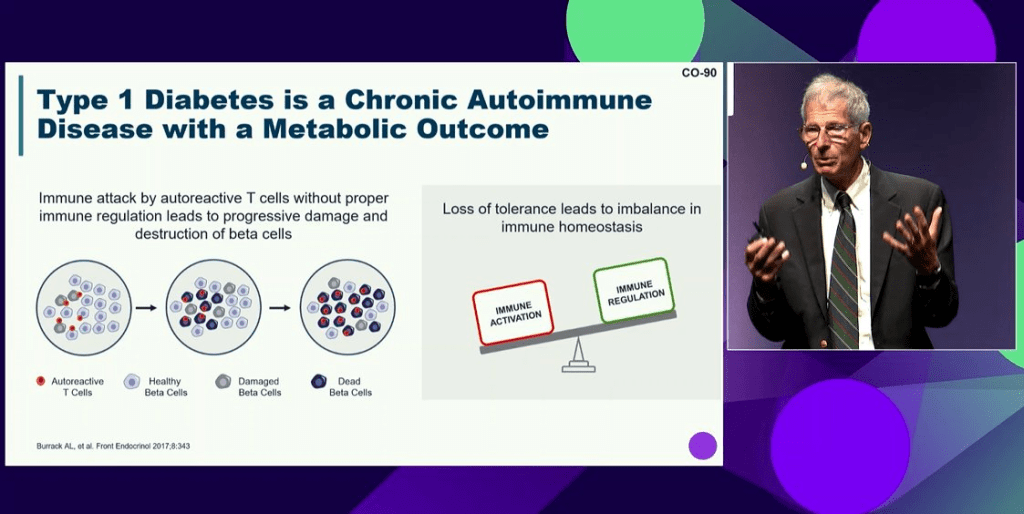
To shift this paradigm of type 1 diabetes being ‘insulin-dependent diabetes’, Kevan Herold described type 1 diabetes as an autoimmune disease with a metabolic outcome i.e. the beta cells stop working.

Flemming Pociot spoke of the limitations of just relying on auto-immune markers for early detection and how improved detection could be achieved by looking at genetic information and lipid profiles (FDR = First Degree Relative e.g. parent).

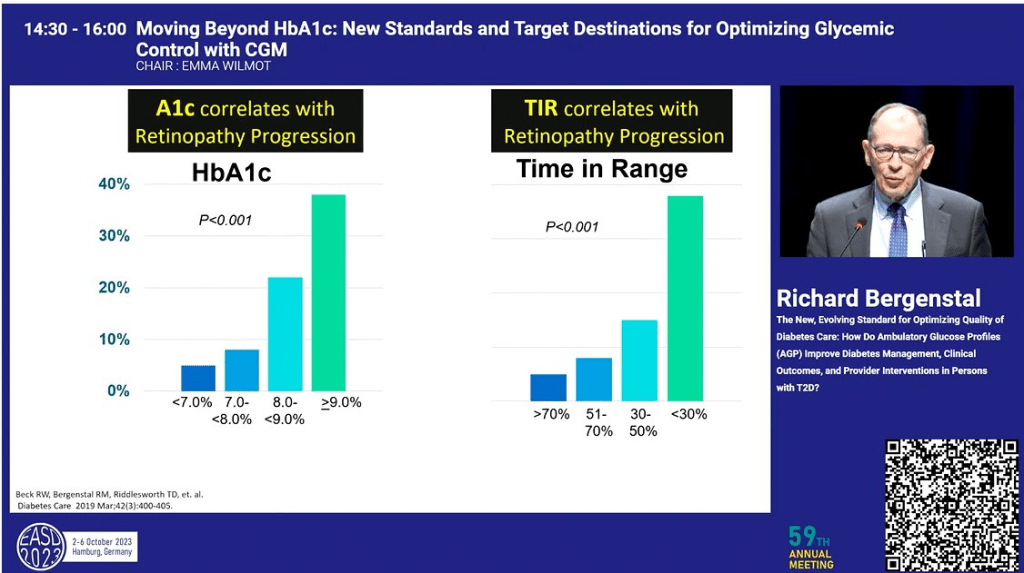
9. Time in Range is the New HbA1c

While there are plenty of people in the world without access to Continuous Glucose Monitors (CGMs), the people of Europe are generally not those people. So, it makes sense that the conferences focused a lot more on Time in Range (TIR) than on HbA1c.

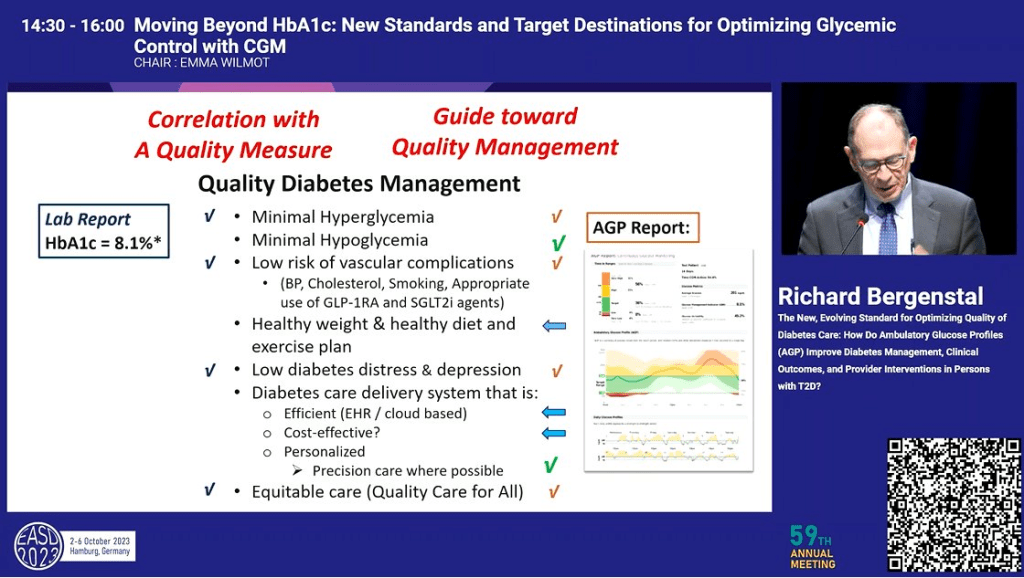
Richard Bergenstal showed that, from a research perspective, TIR is as predictive as HbA1c

and provides a wealth of information an HbA1c measure does not, providing better guidance for the management plan for the disease.

Throughout the two conferences, as touched on below, many of the outcomes were focussed on Time in Rage, Time Above/Below range rather than HbA1c.

8. Exercise and Diabetes

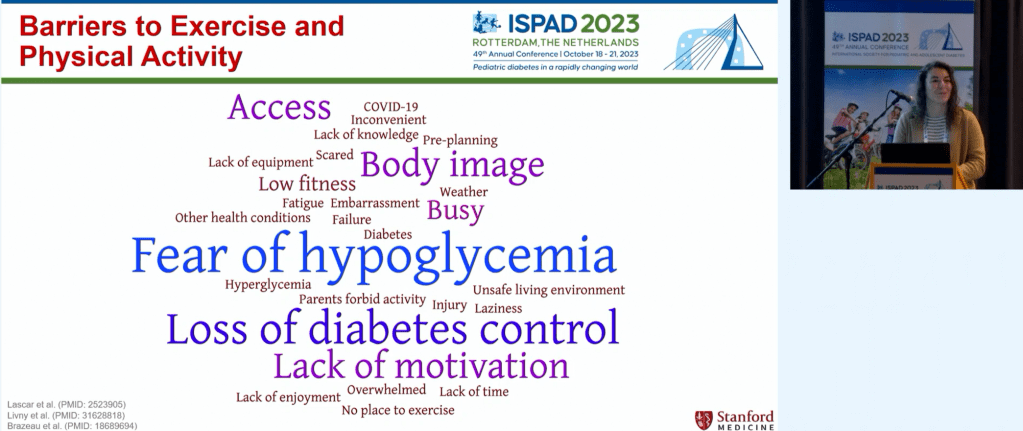
There was a lot of talk about exercise at the conferences. Dessi Zaharieva spoke of the known benefits of exercise for people with diabetes.

and the barriers people with type 1 diabetes often face when considering exercise.

John Pemberton showed a post-meal walk can have a significant, positive impact on glucose levels.

Jennifer Leohr showed Lyumjev (URLi) worked better with exercise than Humalog (Lispro) inducing less hypos.

7. Looping/Automated Insulin Delivery (AID)

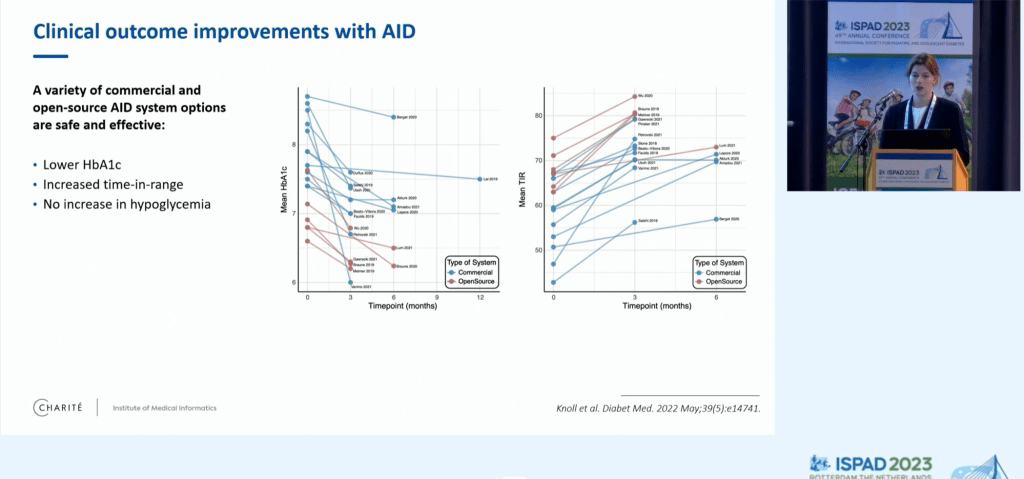
As we have seen in previous conferences, Looping systems (AID) showed superior performance to insulin pumps (IP) and multiple daily injections (MDI).

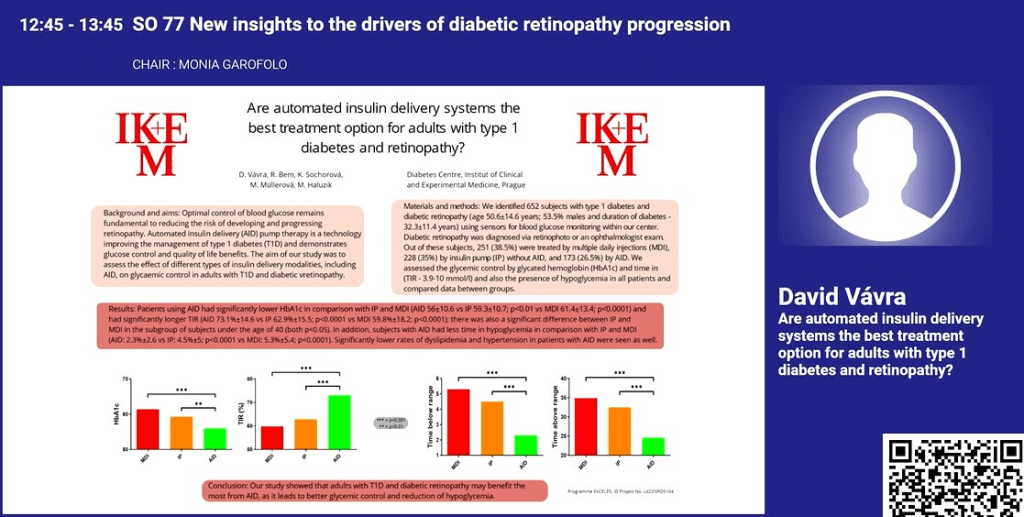
David Vavra showed similar results for HbA1c as well as other measures.

Javier Castaneda showed how 82% of those using the recommended settings on the commercial Minimed looping system achieve a Time in Tight Range (TITR) of over 50% which is, according to Thomas Danne, is sufficient to avoid long-term complications.

Comparing open-source looping systems to the commercial ones, Ludek Horvath found the open-source system yielded superior results but this could be a function of the people using them rather than any inherent advantage.

He also showed that looping systems achieve greater than 70% time in range which is significantly larger, and more consistent across countries, than the use of non-looping pumps or injections.

Katarina Braune also confirmed that open-source systems are at least as good as the commercial ones.

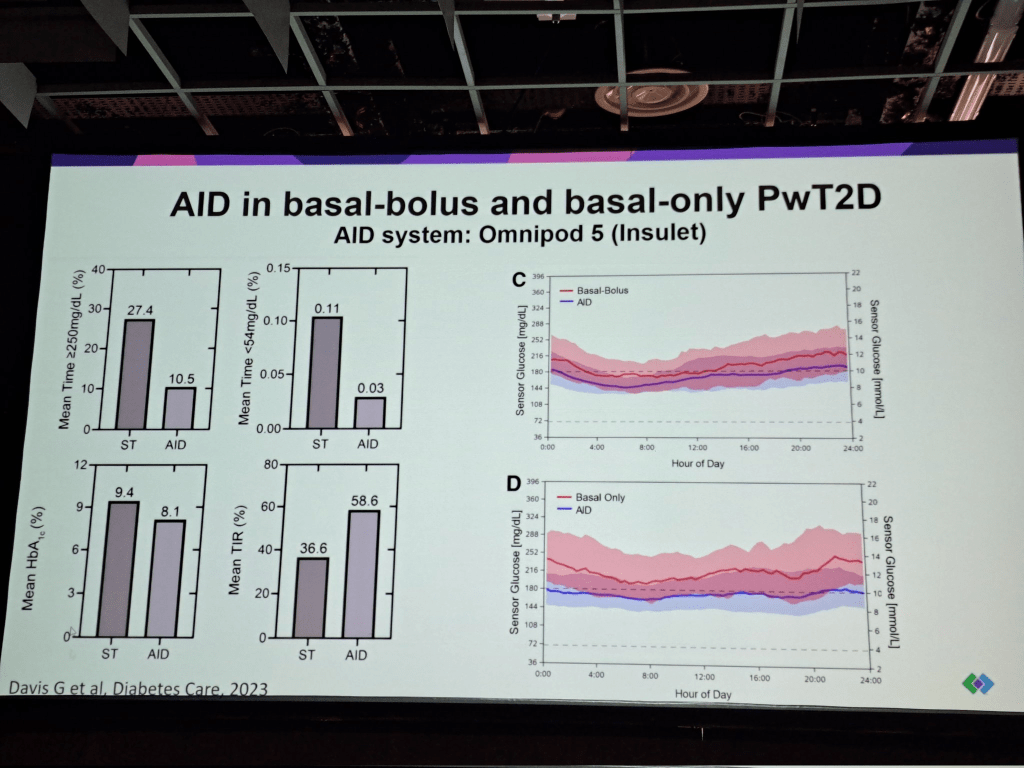
Yves Reznik talked about a study looking at people with type 2 diabetes, insulin dependent, but unable to give themselves injections. Moving to a looping system significantly improved their blood glucose levels.

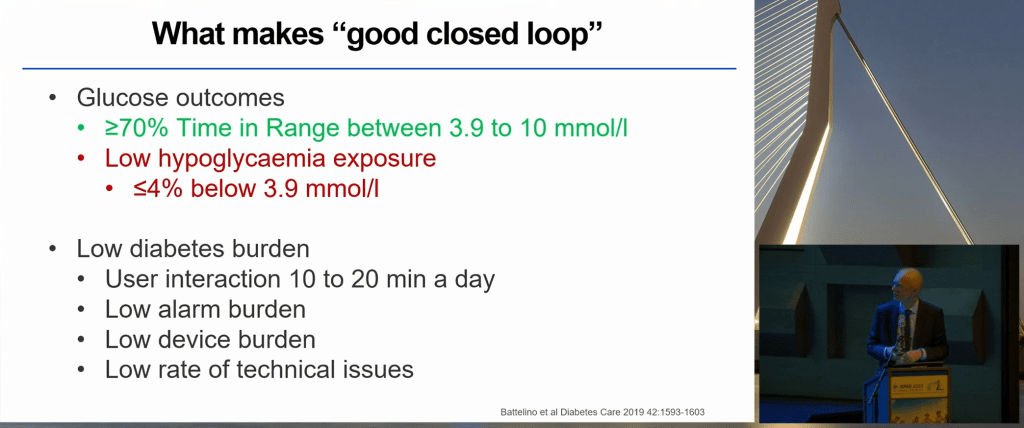
At ISPAD, Roman Hovorka spoke of what is desirable in a looping system and confirmed “The right system is the one people are willing to use”.

There was also increased talk of ‘fully closed looping’ i.e. no manual bolusing or declaration of meals which I had not seen much of in previous conferences. Sarah Koning looked at how many grams of carbohydrate a loop can tolerate in a meal without announcements. The answer is somewhere between 0-60 and at least 20g. While meals of 61-80g led to less Time in Range (TIR) and Time Above Range (TAR) with fully closed looping, there was no increase in hypos or DKAs.

Lenka Drnkova (Petruzelkova) showed that a fully closed open-source loop performs as well as the same system with manual boluses or no-bolus meal declarations. There are still some kinks to work out though e.g. exercise.

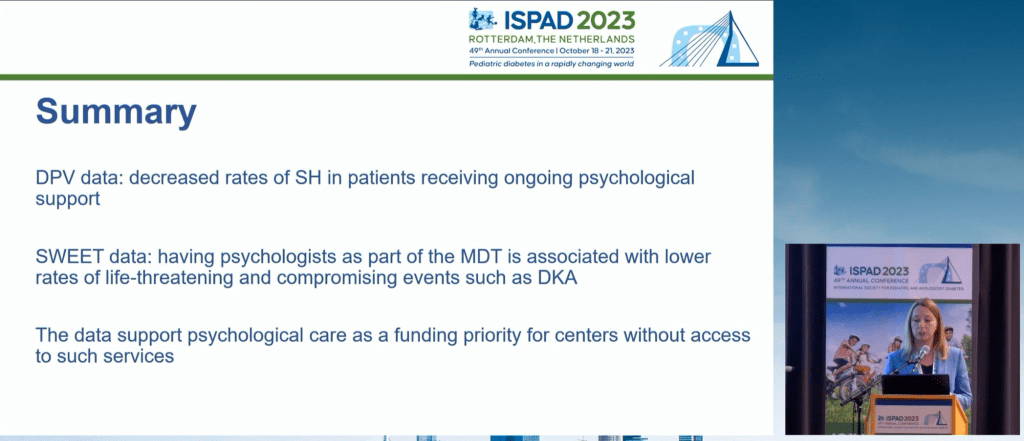
6. A Psychologist as Part of the Diabetes Health Care Team

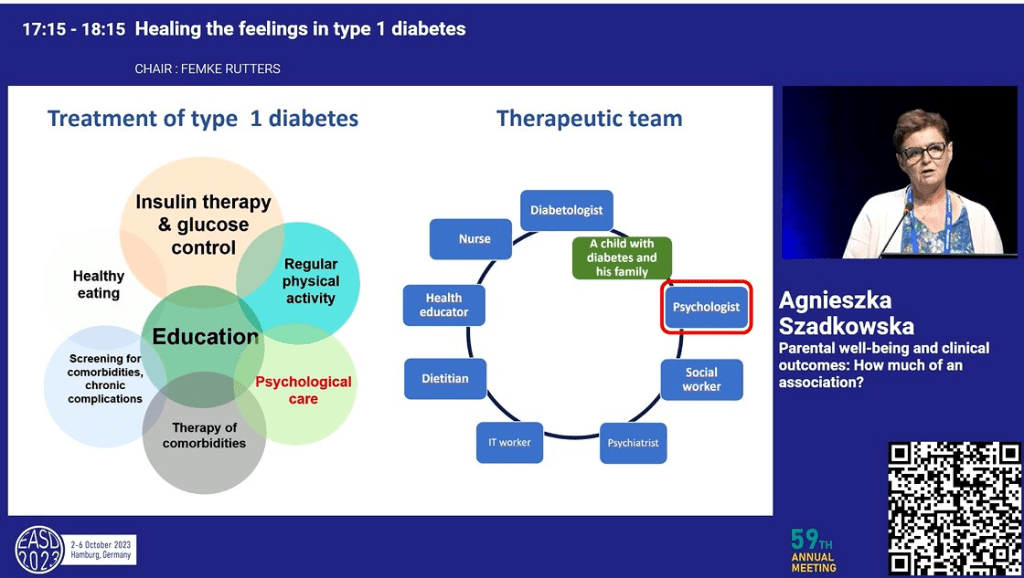
There was a lot of talk of a mental health specialist being part of the person with diabetes’ health care team. Agnieszka Szadkowska summed it up nicely in this slide where the psychologist is on equal footing with the rest of the therapeutic team.

Evelyn Cox presented preliminary findings linking mental health management with better clinical outcomes e.g. HbA1c and Time in Range.

Agata Chobot linked on-going psychological support for people with type 1 diabetes with improvement in severe hypoglycemia and DKA rates.

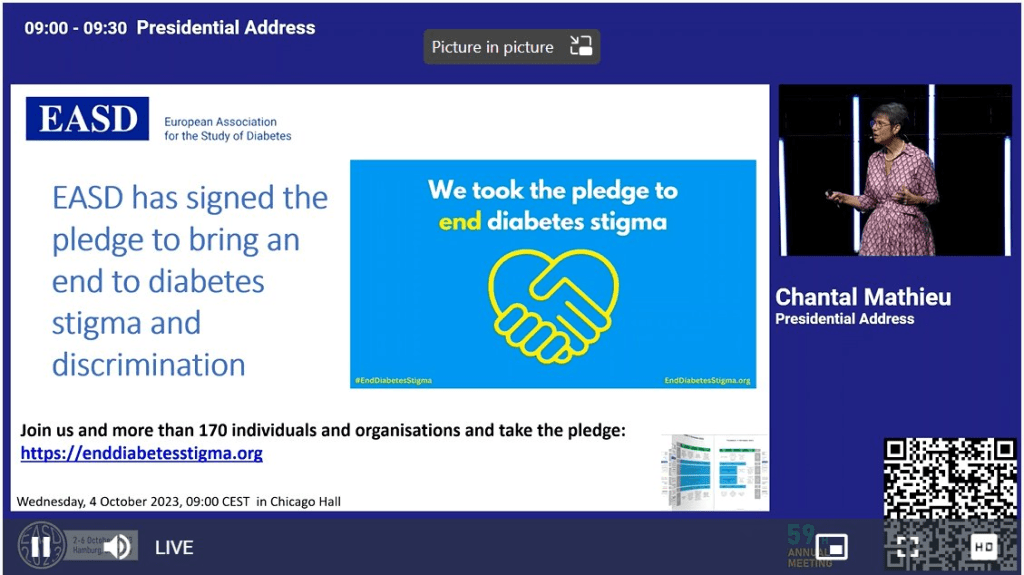
5. End Diabetes Stigma

The recognition of the end diabetes stigma campaign was throughout EASD 2023, starting out with the presidential address.

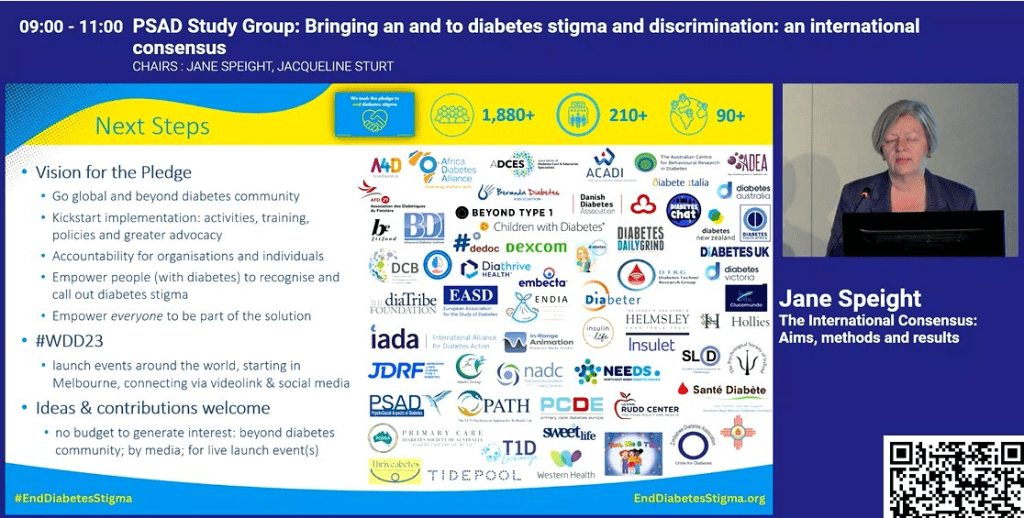
Jane Speight talked about those behind the campaign, how the pledge was created

and expanded on how many individuals and organisations had signed, and the reach of the campaign so far.

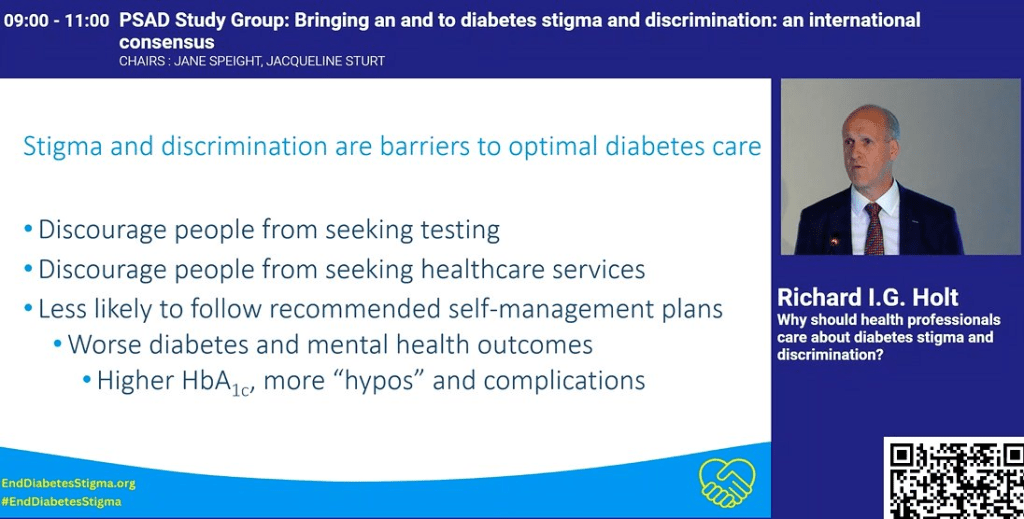
Richard I. G. Holt provided examples of how healthcare professional can be unwittingly part of the problem

and how stigma hinders optimal care.

4. Dual/Triple Agonists

Incretin Mimetics such as Ozempic/Wegovy have been big news for a while because, as well as being an excellent medication for type 2 diabetes, can result in weight loss. The next generation of these drugs are now coming to market and, while drugs like Ozempic target one type of receptor in the body, these new versions target 2 or more.

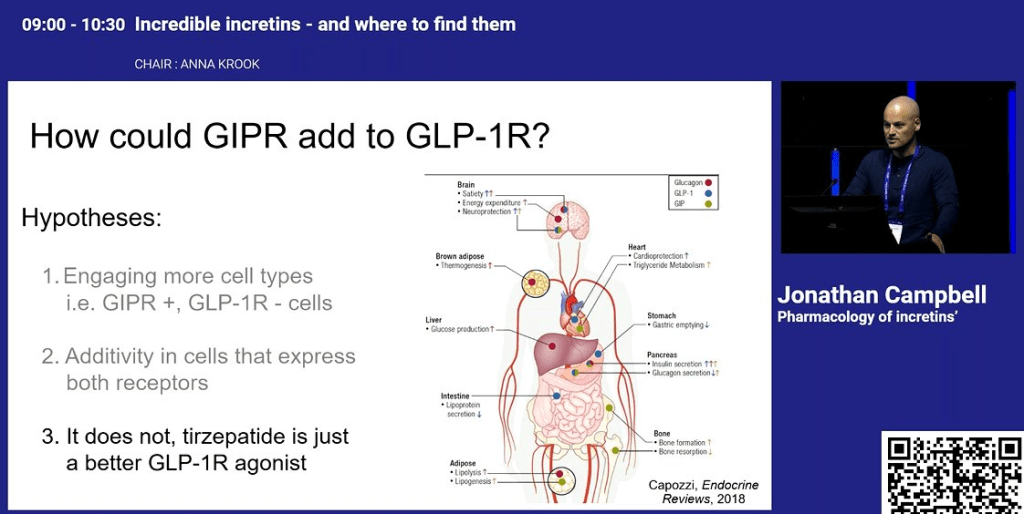
Jonathan Campbell talked about how dual agonists such as Tirzepatide work and, while they know what they do, how they do it is not as clear.

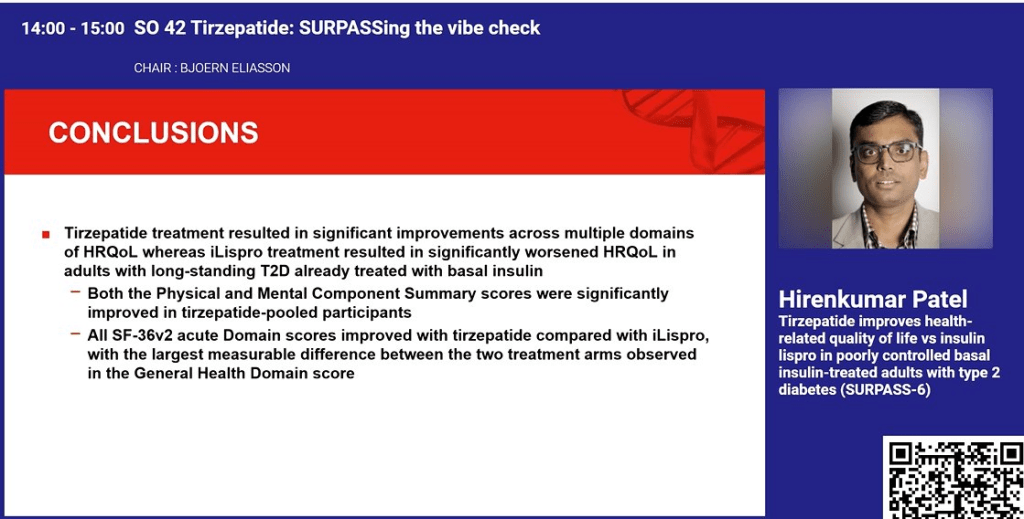
Hirenkumar Patel showed that, for people with type 2 diabetes, the use of Tirzepatide gave better results, both qualitatively and quantitatively, than basal insulin injections.

Eda Cengiz spoke of new research in a triple agonist which led to a 2% drop in HbA1c.

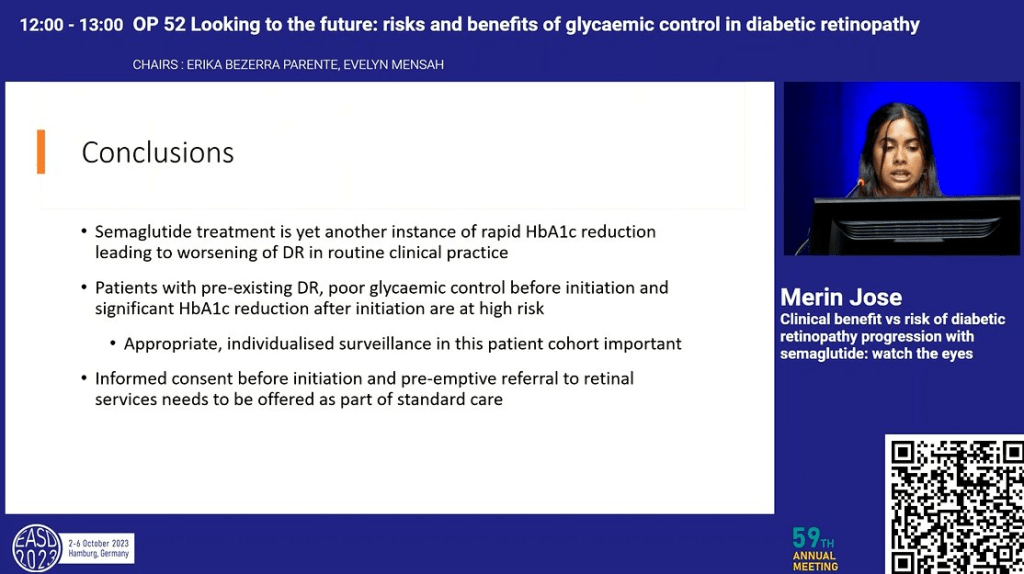
Merin Jose gave a word of warning that the rapid reduction in HbA1c resulting from these drugs can increase of the risk of diabetic retinopathy and this should be monitored closely.

3. Sleep and Diabetes

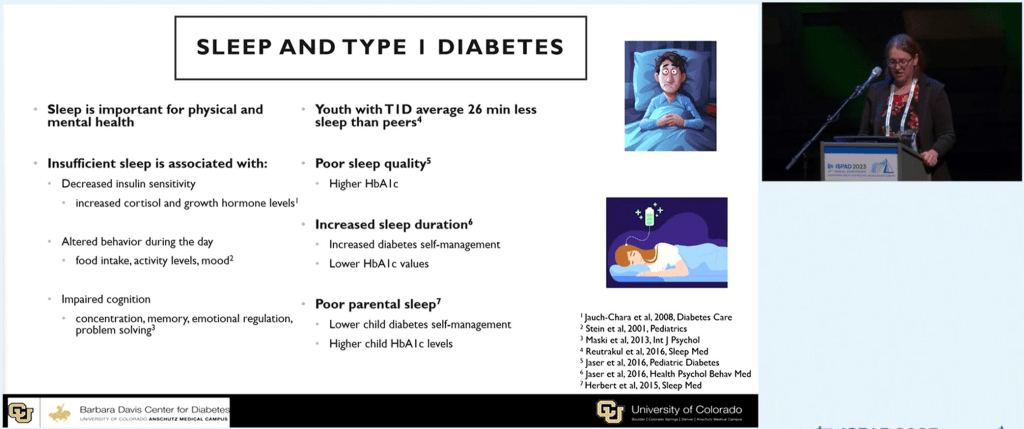
The benefits of sleep for people with diabetes came up during the conferences. Natalia Marhefkova showed how good sleep patterns directly affect outcomes e.g. a lower HbA1c. When asked by the audience what the ideal amount of sleep was, Natalia claimed it was 7-8 hours.

Erin Cobry also touched on the benefits of sleep for people with type 1 diabetes.

She also went on to talk about how Looping (AID) facilitates uninterrupted sleep and how even the interrupted sleep of carers can affect the clinical outcomes of the child they care for.

2. Diabetes and Diet

Jens Aberle talked about how if we plan to help manage the diet of people with diabetes, we need to better understand the reasons people are eating.

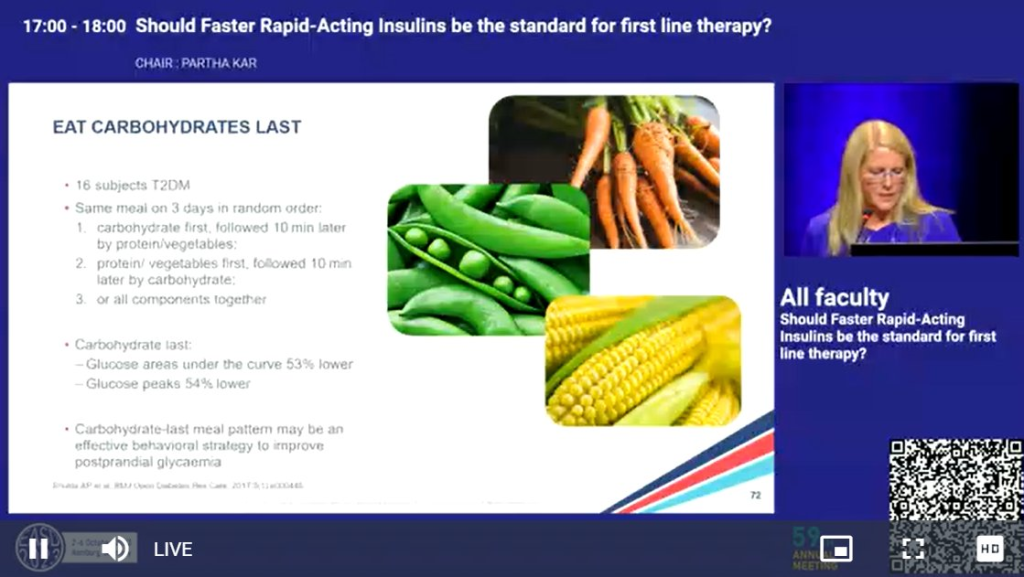
Emma Wilmot talked of a study which had confirmed that eating the carbohydrate foods last in a meal can have a significant impact on glucose peaks.

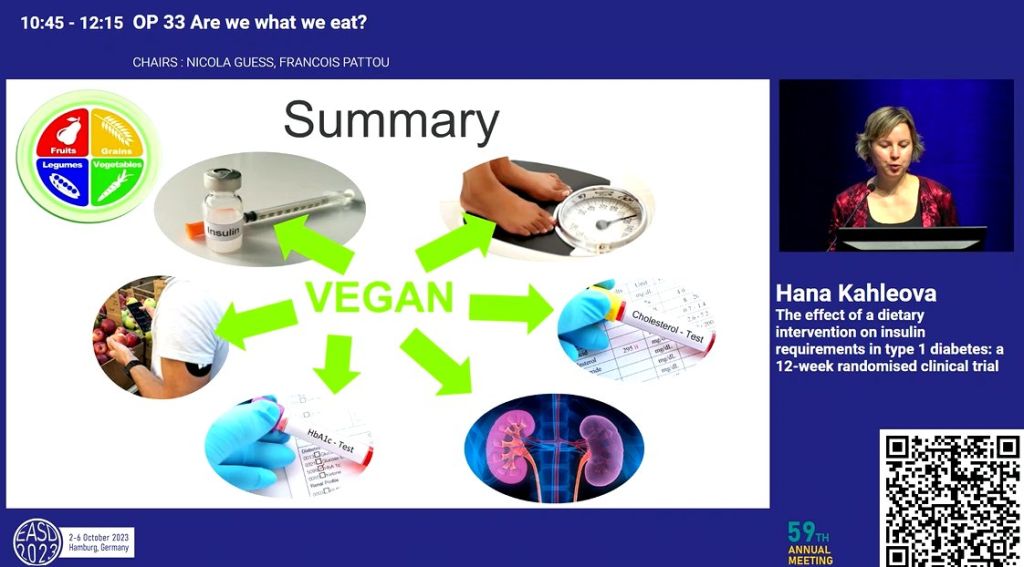
Hana Kahleova presented a study comparing a vegan diet to the ‘healthy plate’ and found while the healthy plate provided benefit in Hba1c and cholesterol, the vegan diet saw benefit in these and other measures such as daily insulin need, which was reduced, despite an increase in carbohydrate in-take.

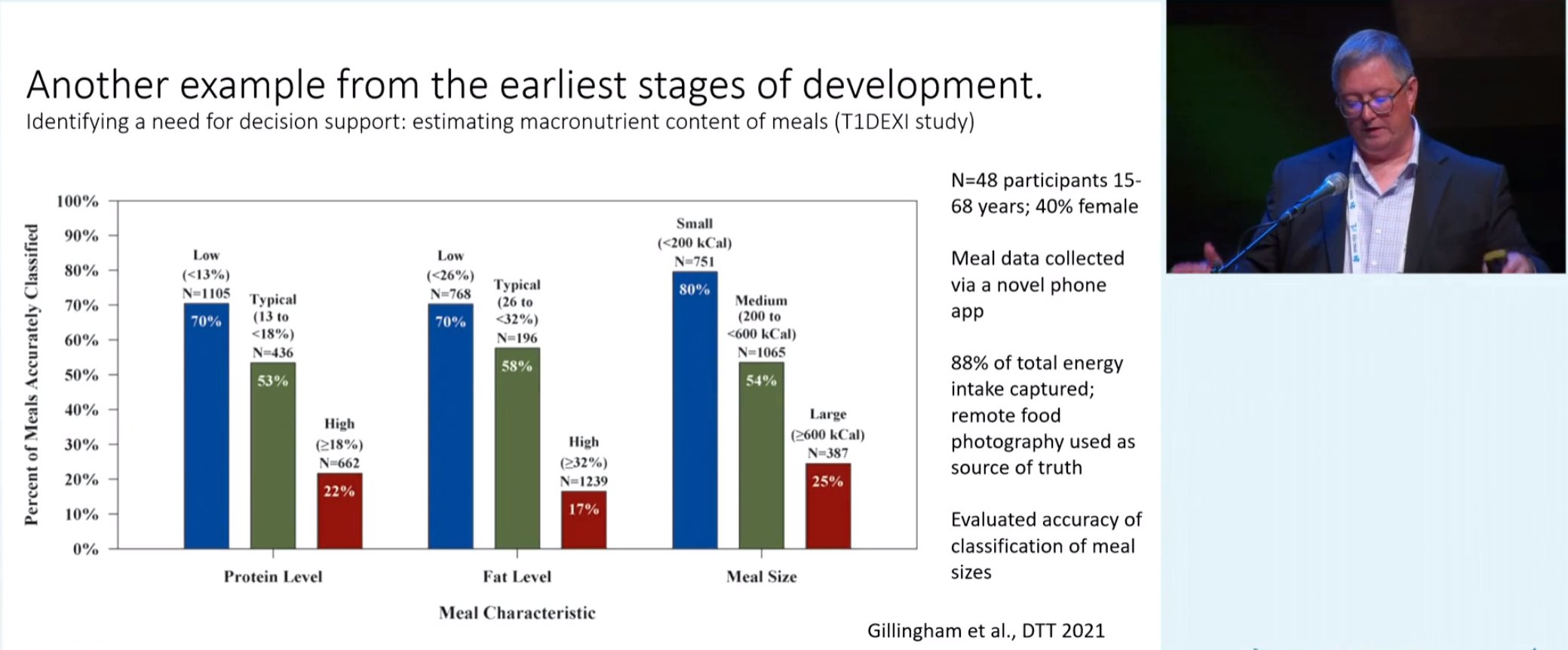
Mark Clements talked about how smaller meals are easier to estimate for their carbohydrate content than larger ones

Image

and how people with diabetes tend to underestimate the carbohydrate content of larger meals.

1. SGLT2is

This class of drugs lowers the threshold at which the body redirects blood glucose to the bladder. Aikaterini Eleftheriadou spoke of the benefits of SGLT2is compared to incretin mimetics in regard to long term complications.

Aino Latva-Rasku showed SGLT2is increase skeletal muscle and brain uptake in fatty acids in people with type 2 diabetes. One explanation is SGLT2is change the body’s preference for fuel source.

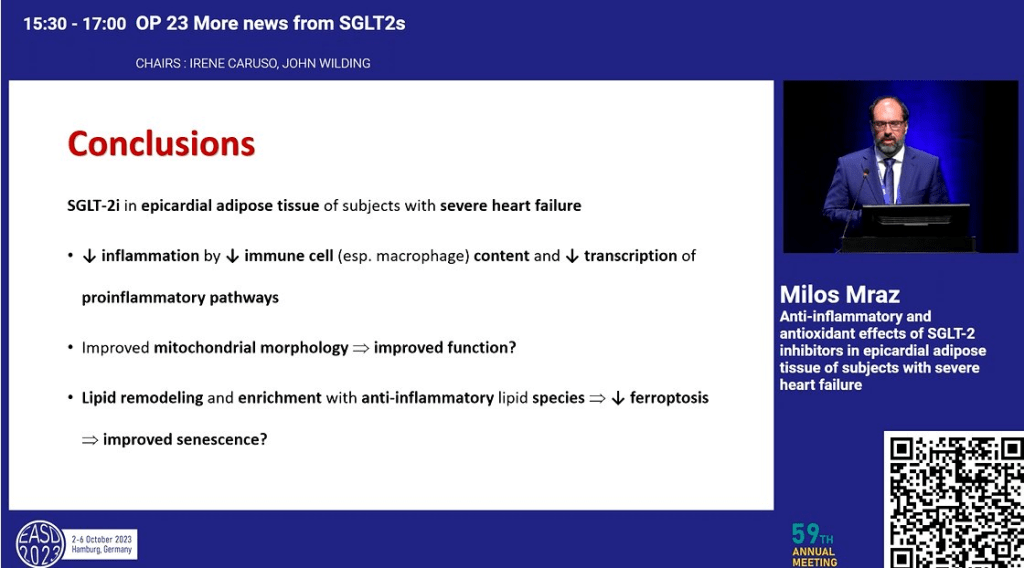
Milos Mraz spoke of the anti-inflammatory benefits for Type 1 Diabetes and while the blood glucose redirection mechanisms are understood, the other effects observed are not quite yet understood, similar to incretins.

Conclusions

My final thoughts (thanks Michelle) are:

(10) Type 1 Diabetes Before Insulin: The expansion of type 1 diabetes to consider the time ‘before insulin’ e.g. Stage 1 and 2 is really interesting. I wonder if this will lead to reclassification of LADA as simply a slow progressing form of Stage 2, Type 1 Diabetes.

The progress of early intervention type 1 drugs, such as Teplizumab, is really exciting and, hopefully will lead to a cure. One presentation spoke of using a combination of drugs whose effect for slowing progression will be additive and potentially ‘cure’ someone of type 1 diabetes, with the person taking pills rather than injections. While it has been promised for decades, with looping technology and immune system modifying drugs, we are genuinely getting closer to a practical cure.

(9) Time in Range is the New HbA1c: There is clearly an increased interest in using Time in Range (TIR) in academia, instead of the traditional HbA1c. My speculation as to “why?” is because it allows multiple secondary endpoints (additional measures) off of the same data whereas there is only so much you can do with an HbA1c measure. Unfortunately, bodies like the FDA who approve medications and diabetes technology still emphasize the value of HbA1c over TIR. This means for research to be useful to the manufacturers of the medications and technology, who also, in part, fund the research, HbA1c often needs to be the primary measure. Hopefully, in time, bodies like the FDA will see the value of TIR as a ‘primary endpoint’ in research.

(8) Exercise and Diabetes: There is increasing research into how to incorporate exercise into the lives of people with type 1 diabetes while allaying fears of hypoglycemia. This is great and can only be a good thing for diabetes management. For years I avoided exercise because of the concern of the effect it may have on short term blood glucose levels. Using the research, I am seeing at these conferences, I am now putting together a program for myself, and hopefully others with type 1 diabetes, which will help them introduce exercise into their lives safely.

(7) Looping/Automated Insulin Delivery (AID): Looping goes from strength to strength and there is a genuine belief in the looping research community that we are close to a fully closed loop. From my own experience I know of how looping reduces the burden of diabetes management significantly. While not a cure per se, looping makes mental room for other aspects of life and, for many, will bring precious relief from the constant harassment of management.

(6) A Psychologist as Part of the Diabetes Health Care Team: The rise in prominence of a psychologist on the health care team is well overdue and I look forward to this academic acknowledgement move to government policy and subsidised consults. While not disputed, the mental burden of diabetes management is rarely openly acknowledged. Access to psychological services, as a given for diabetes management, would be a huge step in this regard.

(5) End Diabetes Stigma: The rapid rise of the End Diabetes Stigma campaign is interesting. I have signed the petition and I hope it leads to something tangible for people with diabetes. People hide the fact they have diabetes and do not seek the help they need out of misplaced shame and embarrassment. This, in turn, leads to poor outcomes. In this sense ending diabetes stigma will save lives and improve the quality of life for many.

(4) Dual/Triple Agonists: This class of drugs is providing substantial benefit to people with diabetes, and I have spoken of these benefits in the past. In moving to double and triple agonists we are seeing an amplification of the effect and benefits and, while we do not completely understand the mechanisms in play, the promise of these drugs is significant.

(3) Sleep and Diabetes: For type 1 diabetes, interrupted sleep was often inevitable because of highs and lows, or because of split basal dosing. In the case of carers, the monitoring of the child with diabetes through the night also guaranteed broken sleep. Automated alarms and looping open the door for a complete night’s sleep for all. For myself, thanks to looping, a broken sleep because of diabetes may happen once a month but little more. Now I just need to work on getting the 7-8 hours sleep a night suggested to be optimal…

(2) Diabetes and Diet: While social media is awash in food hacks for people with diabetes, it is still good to have research-backed evidence on what is proven effective. Whether it is considering the psychological aspects of eating, or the practicality of estimating carbohydrates in a large meal, all of this informs people with diabetes on the best approach for them which has the best probability of success.

(1) SGLT2is: While there is still work to go on making these generally available for people with type 1 diabetes, due to factors such as the increased risk of DKA and eDKA, it is clear there are tremendous benefits in using them. I use a low dose SGLT2i at the moment, in combination with exercise once per week, and have seen a literally halving in my daily insulin needs and, without altering my diet, rarely see excursions beyond 8 mmol/L (144 mg/dL).

Thank you again to Dedoc for making it possible for me to attend these conferences and I strongly recommend, if you are an advocate who can #PayItForward to your community, applying for a Dedoc scholarship to attend a conference in 2024.

Applying Motivation Theory to Diabetes Management

Just after we got married, my wife and I embarked on an MBA (Masters of Business Administration). Along with teaching how the organs of business work, there were some interesting electives to choose from. One of the ones I chose was “Leadership and Motivation”. It provided guidance of how to lead people (as opposed to managing them), and how to motivate people. Obviously, in the context of an MBA, it was to help employees stay motivated to work on tasks deemed important to their employer, but I see parallels in the management of diabetes as well i.e. working on tasks deemed important for survival. For those not interested in the details, you can skip ahead to the tl;dr.

The 3C Model

The course was taught by Professor H.M. Kehr, formerly of UC Berkeley who created what is now called the “3C Model“; the Three Components Model.

I find it easier to remember it as the “Head, Hearts, and Hands” model. While relatively simple, the model brought together various motivational models of the time e.g. Csikszentmihalyi and Rheinberg. In this case the head, heart and hands are:

  • Head: Our logical thoughts regarding the task at hand
  • Heart: How we feel about the task at hand
  • Hands: Our ability to perform the task at hand

Other key concepts with the model are “volition” which, for the rest of us, is willpower and “flow”, a state of “effortless achievement”, which is sport is sometimes referred to as being “in the zone”. In short, when the head, heart, and hands are aligned, achievement is effortless.

Another key aspect of the model is the understanding that willpower is a finite resource which cannot be called upon indefinitely and, if pushed to its limit, leads to burnout. Burnout, of course, is a term familiar to many of us who manage diabetes meaning a complete abandonment of diabetes management.

Misalignment and Intervention

While alignment of the head, heart, and hands leads to a “flow state”, misalignment means willpower will be needed to achieve the task. For a task, such as diabetes management which is relentless, it is clear, without intervention, burnout is inevitable. Ideally, the intervention will either give the person a break from the task, allowing willpower to recharge, or make the amount of necessary willpower so small as to prolong burnout practically indefinitely.

Depending on which component is not aligned to the task, this dictates the kind of intervention to use.

When the head is the problem i.e. the person is emotionally aligned and has the skills, but there is a logical conflict, the person may need further convincing, have additional incentives put in place, or have the goals adjusted.

When the heart is the problem i.e. the task makes logical sense and they have the skills but it does not feel right, or they fear the task, emotional support, redesigning the approach, or focussing on the eventual outcome may help.

When the hands are the problem i.e. the person does not have the skills or knowledge to achieve the task, the answer may be education/training, coaching, or having others provide assistance.

Again, we start to see how this model could be overlay onto diabetes management and ensuring a specific approach is a good fit to the individual.

An Example of the Application of the Model

A classic example is the case of someone wanting to give up smoking. They know logically is makes sense (head), and may well have the skills to do it e.g. employing patches (hands), but their heart may not be in it or they fear failure. In this case we see suggested interventions which are often applied to help people give up smoking e.g. in New South Wales we have the ICanQuit web site and Quitline where people looking to give up smoking can call and get support and encouragement to help them on the path.

Application to Diabetes Management

The model provides insight into why intensive lifestyle interventions fail so often. While radical changes to diet or exercise in the management of diabetes frequently address the head and hands, the heart is almost always ignored and is the key point of failure. Very few of us deny the health benefits of exercise and most of us are capable of walking/running yet, like smoking, many of us fail to incorporate it into our lives. Simply put, our heart is not in it. Options to make exercise more palatable could be engaging a physical trainer to provide motivation (support), entering a charity fun run and then training towards the goal for the greater good (new motivators), or changing the type of exercise to something more enjoyable or aligned to the person’s lifestyle (redesigning the work).

In the case of Weight Watchers, the success rate is quoted at 11%. Even with intense coaching on top of lifestyle changes, one study showed remission for Type 2 was only achieved in 3.5% of participants. In the case of the Dr. Bernstein diet where the logic of the benefits of lowering dietary carbohydrates is sound (head), and there is no doubt, once the book is read, someone with Type 1 is equipped to undertake the program (hands), the majority of the strongest adherents, who literally commit to following the program to be part of the “international social group”, failed to meet the basic premise of sticking to 30g of carbohydrates per day. This is not the fault of any one program; the fact is changing habits and maintaining that change is hard and we need to consider the whole person to be successful. We must align the head, hearts, and hands for each person and provide the support that person needs. There is no “one size fits all”.

We also see this with diabetes technology. While the clinical studies speak at the benefits of, for instance, looping systems at improving outcomes (head), there may be a fear of using the technology due to a lack of skills/knowledge (hands) or the person simply does not like the idea of permanently wearing something on the body (heart). Professor Katharine Barnard-Kelly presents on this often at conferences and passionately believes “heart interventions” are effective at improving outcomes.

Professor Barnard-Kelly has also developed the Spotlight-AQ system which facilitates pre-clinic assessments to ascertain where interventions may be required e.g. the need for structured education (head/hands).

Putting the spotlight on my “Practical Diabetic Solution”, I think, if someone commits to replacing all meals, as I did, this would usually not be sustainable because the conflict with the heart e.g. no longer sharing food with family/friends would be simply too great. However, replacing non-social meals would not require the same level of willpower and the use of looping technology would greatly reduce the mental burden of daily management, assuming the person has the skills to use the loop (hands) and understand the benefits (head). To put it simply, the level of commitment and tool emphasis would be different for each individual, but a sustained improvement is better than one which fails to be maintained, however successful in the beginning.

How Can We Use This Model?

My vision is this could be used for self-assessment but also as a framework for the discussion between the health care team and the person with diabetes. For example, by considering why exercise may not work in the context of the three areas, a plan to address the disconnect can be intelligently devised. In the case of technology and medication, if one tool is not aligned, other tools can be considered instead with a closer fit, or other appropriate interventions considered.

tl;dr

The 3C Model of motivation, primarily used in the context of motivating employees, can also be applied to the management of diabetes and to frame conversations between health care professionals and their clients (people with diabetes).

The model focuses on three aspects of the individual, their:

  • Head: logical thoughts on a diabetes management approach
  • Heart: their emotional response to a diabetes management approach
  • Hands: their skills and knowledge regarding a diabetes management approach

When all three are aligned with the approach, its use as part of the diabetes management plan is effortless. When one or more are not aligned, interventions are required to reduce the excessive need of willpower to use the approach which could lead to burnout. Interventions may include:

  • Head: Education, adjustment to goals
  • Heart: Support, redesigning of the approach
  • Hands: Training, assistance

With a framework in place, it will be easier to identify appropriate interventions and optimise outcomes.

The Practical Diabetic Solution: The Modern Guide To Achieving Normal Blood Sugars (or Pretty Good Blood Sugars, You Decide)

This week I underwent an experiment to see what would happen if I combined a very low carbohydrate meal replacement, a commercial looping system, and snacking to cover hunger pangs. The results were better than I expected and, over the four days, I was seeing normal, non-diabetic blood sugars. Unlike other regimens, I did it with:

  • No exercise
  • No bolusing
  • No hypo treatments
  • No meal plans
  • With insulin resistance and a daily insulin requirement of over 70 units per day

You can see the details of the setup here but, in this post, I thought I would go through the results and, now I am on the other side, reiterate why I believe it is a superior approach to Dr. Bernstein’s.

Before and After

So, before the four days, I had:

  • Average Glucose of 7.2 mmol/L (130mg/dL) (over 14 days)
  • Average Glucose of 6.5 mmol/L (117mg/dL) (over 2 days)
  • Standard Deviation 1.9 mmol/L (34 mg/dL) (over 14 days)
  • Standard Deviation 2.3 mmol/L (42 mg/dL) (over 2 days)
  • Median 6.2 mmol/L (112 mg/dL) (over 24 hours)
  • Coefficient of Variation 35% of Mean (over 2 days)
  • Time in Tight Range (3.9 – 7.8 mmol/L aka 70 – 140 mg/dL): 65%
  • Highs: 7 Lows: 11 (over 2 days)
  • GMI of 6.1% (over 2 days)

Let us now look at the results at the end of each day (screenshots taken just after midnight each night)

Day 1
Day 2
Day 3
Day 4

For the totals above, as can be read with a keen eye, all graphs are for 24 hours. The range is the Time in Tight Range (TITR) (3.9 – 7.8 mmol/L aka 70 – 140 mg/dL).

Comparing we see every measure (except the Median, especially on Day 3) has significantly improved. Highlights include:

  • Halving the Standard Deviation and Coefficient of Variation.
  • Taking my TITR from the mid-60s to the high 90s
  • Eliminating my lows (although I suspect they were calibration errors from a new sensor) and significantly reducing my highs (these were real).

For completeness, my weight stayed about the same, and my daily insulin requirement stayed about the same (84-79 units) as well. This second result genuinely surprised me as I assumed the sudden drop in dietary carbohydrate would lead to a much lower insulin need. I assume the difference in carb was offset by the increased protein and further amplified by the increased consumption of animal fats, raising my insulin resistance.

Did You Really Achieve Normal Blood Sugars?

Let us consider a study of the blood sugars of non-diabetics I mentioned in another recent post.

Lots of numbers here, so let me translate the key points for the average participant:

  • They had a mean value of 99 +/- 7 mg/dL (5.5 +/- 0.4 mmol/L)
  • Their standard deviation was 17 +/- 3 mg/dL (0.9 +/- 0.2 mmol/L)
  • Coefficient of Variation was 17 +/- 3 %
  • TITR was 93-98 %
  • Time in Super Tight Range (TISTR) (70 – 120 mg/dL aka 3.9 – 6.7 mmol/L) was 82-92%
  • Time below range was about 1.3% of the time

I only measured TISTR once during the four days which looked like this:

Where I measured 92% TISTR, beating the non-diabetic value of 90% and hit every range on the non-diabetic normal blood ranges.

The only measure I did not consistently hit was Mean Glucose on days two and three due to my morning coffee throwing out my values. By day four I had adjusted the coffee not to spike me so I think it is fair to say that, with improved experience managing the snacks and setting my pump to a more aggressive target (it was set to 5.4 mmol/L aka 98 mg/dL for the experiment but can be set as low as 4.4 mmol/L aka 80 mg/dL), given I had zero lows during the four days, it would not be hard to consistently hit this range as well.

Why Do You Say It Is Superior To Dr. Bernstein’s Approach?

In terms of the results I expect it is possible to get similar results with Bernstein but where I see this approach having the edge is:

  • Food management is MUCH simpler: Aussielent takes care of the main meals and you simply choose snacks which you like and which work for you. Compare this to Bernstein where you have to craft meal plans (he literally wrote a nearly 300-page book just on this topic alone), have no snacking, have to consider “forbidden” and “allowed” foods; it is a lot more work
  • Insulin management is MUCH simpler: Getting the looping pump to do the heavy lifting means I literally go for hours a day, not thinking about diabetes and I never need to “sugar surf” my way down. For the above results I did not even declare carbs or bolus; the loop took care of it. In the case of Bernstein, from Dave Dikeman’s video which I mentioned in my preparation blog, we learn he treats lows with glucose 1-2 times a day and, if he goes above 110 mg/dL (6.1 mmol/L) he uses an intramuscular shot of rapid acting Novolog. This is not including any R-insulin injections he does to cover meals, plus injections for basal and dawn phenomenon management.
  • Hormone fluctuation management is MUCH simpler. A good example of this is dawn phenomenon. For someone who is looping, the pump manages it overnight with no human intervention required. Here, Dr. Bernstein admits he and most of his Type 1 patients go up overnight and his solution is getting up, every night around 4am and doing multiple injections of different insulins which, to me, is a recipe for disaster.

The fact is the most recent edition of Dr. Bernstein’s book was written over ten years ago and a LOT has changed since then. It make sense the innovations which have come over the last decade, such as looping systems, can help us manage diabetes better and remove some of the mental burden of managing the disease.

The other big advantage of the Practical Diabetic Solution is there are still plenty of levers to pull for even better results e.g. the inclusion of exercise, bolusing and declaring if required, flexibility in snack strictness to suit the individual, augmentation of pump delivery with needle delivery etc. whereas, with Bernstein, it is so strict, there is, in my opinion, little room to move or to be creative.

Will I Be Continuing The Practical Diabetic Solution?

My position has not changed. To explain my position, I will again quote Dr. Bernstein adherent, Dave Dikeman: “I want to be normal…Not normal in that I can eat a birthday cake with everybody else but normal in that I want to have the same blood sugars as everyone else”. I respect this position but I simply do not share it. I see no reason why I cannot have a small slice of cake at the occasional birthday party, estimate the bolus and have the loop soak up the rest and my Solution allows for that. My goal is to minimise maintenance and maintain blood sugars enough to minimise the risk of complications, helped by regular check-ups.

Similarly, if I go to a restaurant, I do not want to pull out a meal plan meal and eat it while my family orders; I want to share in the experience with my family and experience the food as the chef intended. Food is an integral part of human social interaction, it is even in our language; the word “companion” comes from “someone who you break bread with”, “mate” comes from “someone you share your food (meat) with”, and to nurture comes from the concept “to feed”. To shun this link is to shun who we are.

Where I am likely to embrace the Solution is at breakfast, lunch and while travelling. Morning is a rushed affair in our house so a quick meal shake which I do not need to think too hard about is perfect. As I mostly work from home, I usually eat lunch alone so, again, a shake which will not spike me and make me a zombie in the afternoon, which is perfect. Conversely, if I go into work and my colleagues go out for lunch I will join them and leave the shake in the locker. Dinner is around a dinner table and shared with the family. This is sacrosanct for us and the Solution will not be part of it.

For travelling, the Solution is perfect. At conferences or, for example, all day workshops, there is often limited eating options and the options provided are often carby. A meal replacement shake is easy to carry with me and removes the issue.

What About You?

For someone looking for some stability in their numbers and piece of mind, consider the Solution. As mentioned here, the latest clinical thinking is an HbA1c below 6.5% or a TITR of greater than 50% is sufficient to avoid the risk of long term complications. Even if you just replace breakfast, you will likely be gluco-normal through the night (thanks to the loop) and up to lunchtime, which is already more than half the day i.e. more than 50% TITR. Anything above and beyond this is a bonus.

For the person aiming for normal blood sugars, the plan, as I followed it, is worth considering and the barrier to entry and exit are quite low as it does not require exercise, food plans, and kitchen overhauls (other than waiting a few days for the Aussielent or equivalent to turn up). If, like me, family dinner is important, you can “snack” on the elements which will not spike you which they are eating, while drinking your meal replacement (which is what I did this week). I literally saw stunning results by the first day so try it and, if you do not see improvement, move on.

Roadtesting An Approach “Better Than Bernstein”: The Preparation

For the final results, go here.

Let me start by making it clear I am quite the fan of Dr. Bernstein. I have his books and have watched all of the Diabetes University videos on YouTube. If you are new to diabetes and want a foundation on the disease and how it works, his videos are a great place to begin. Dr. Bernstein took responsibility for his disease and came up with a solution which worked really well for him. He then published his method and a lot of people have success with it. However, the last version of his book published was over 10 years ago. A lot has happened in regards to technology, medications, and food options in that time so I thought it was worth exploring how to improve on his work for my own personal benefit and that of the diabetes community.

What Is Dr. Bernstein’s Diabetes Solution?

I had a quick browse through my copies of “Dr. Bernstein’s Diabetes Solution” and “The Diabetes Diet” but could not find a good summary of his approach. Diabetes Daily give some good context on the man and the solution which may be worth a read. In short, Dr. Bernstein’s goal is for people with diabetes to have “normal” blood sugars i.e. blood sugar levels indistinguishable from non-diabetics. His approach involves:

  • Low Carbohydrate (less than 30g/day) and high protein/moderate fats
  • Three meals per day, no/limited snacking, with each meal having effectively the same macronutrient profile each day
  • His starting suggesting is a breakfast with 6g carbohydrate, lunch with 12g carbohydrate, and dinner with 12g carbohydrate
  • He advocates regular exercise which promotes muscle growth, weight loss, and improves insulin sensitivity
  • “Insulin Hacking” i.e. intramuscular injections using rapid insulin
  • He is generally against the use of technology in his book, preferring multiple daily injections although concedes Continuous Glucose Monitors (CGMs) may have their uses (“If I were living alone, I’d use a CGM to protect from nighttime hypoglycemic episodes” – Diabetes Solution, p357). For pumps, Bernstein lists a range of advantages and problems on pages 330-332. Quotes include:
    • “Corrective injections are elegantly simple” – Diabetes Solution, p331
    • “Pumps can be set to automatically increase the basal delivery rate shortly before arising in the morning, thereby circumventing problems associated with the dawn phenomenon” – Diabetes Solution, p331
    • “Insulin pumps cannot be used to give intramuscular injections for more rapid lowering of elevated blood sugars” – Diabetes Solution, p331
    • “Contrary to a common misconception, they do not measure what your blood sugar is and correct it automatically” – Diabetes Solution, p332
    • If you have the book, check them out. For me, many of the criticisms of pumps equally apply to multiple daily injections over a prolonged period but decide for yourself

To see Dr. Bernstein’s Diabetes Solution in action, Dave Dikeman is a great example. He has been living with type 1 diabetes since the age of nine (he is now around 18 years old) and has worked closely with Dr. Bernstein, (I believe assisting with his YouTube channel) for many years. He presented his approach to Low Carb Down Under about a year ago. It is a great summary of how the solution works and shows someone achieving great success with it.

What Results Can We Expect From Dr. Bernstein’s Diabetes Solution?

Fortunately, Dr. Bernstein published the results of people dedicated to his approach five years ago. Key results were:

  • A survey was conducted on members of the Facebook “Typeonegrit” group with 316 respondents, a group of “type 1’s and parents who follow Dr. Bernstein”
  • Average time following Dr. Bernstein’s Diabetes Solution was 2.2 ± 3.9 years
  • Mean daily carbohydrate intake was 36 ± 15 g
  • Average HbA1c was 5.67% ± 0.66%
  • 2% of respondents reported diabetes-related hospitalizations in the past year

My Current Approach And How It Compares

Using the Bernstein summary as a prompt, here is my current approach:

  • “Low-ish” carbohydrate: I do not count carbs but estimate I eat maybe 100-150g per day
  • I generally have a white coffee for breakfast, nothing regular for lunch (sometimes food, sometimes snacks, sometimes nothing), and dinner with the family which usually has no more than 50g per serving, but this is not a hard rule
  • Snacking happens when I want. It is small and I do not give it too much consideration
  • Little to no exercise
  • I use a commercial looping pump/cgm. No injections, no finger pricks
  • I do not declare any carbohydrates, do not bolus or boost; the loop takes care of it

In terms of the results I am getting, I have been looping for close to 12 months and my last HbA1c was 5.5%. Given I am not following Dr. Bernstein’s Diabetes Solution at all and getting superior results to the average participant in the Typeonegrit survey, over a shorter period of time, perhaps there is value in assessing a hybrid approach for even better results.

Simplifying Food

A big part of any summary of Dr. Bernstein’s Diabetes Solution involves the listing of forbidden and allowed foods. In the Diabetes Daily summary mentioned above, of the 5,700 words, 4,500 describe which foods can and cannot be eaten. That is over 3/4 of the description. In Dr. Bernstein’s Diabetes Solution, chapters 9, 10, 11, and 25 (roughly 120 pages out of 460 pages or a quarter of the book) cover food and its management. I think it is fair to say food management is a big part of Dr. Bernstein’s Diabetes Solution.

Two years after the last version of Dr. Bernstein’s Diabetes Solution came out, a company called Soylent appeared offering nutritionally complete meal replacements for time-poor people who do not like cooking. Other companies offer similar products, including Aussielent which also offer a low carbohydrate alternative (shown below).

A serving provides about a quarter of the body’s micro-nutrients. For macro-nutrients a serving provides:

  • 1700kJ (406 Cal)
  • 30.4g Protein
  • 26.9g Fat
  • 7.1g Carbohydrate (excluding fibre)
  • 5.4g Fibre

So, in theory, four servings a day will provide all the micro-nutrients the body needs. It passes the “less than 30g of carb per day” test of Bernstein and gives a total energy of 6,800kJ (1,624 Cal). The average adult requires between 8,700kJ – 10,500 kJ (2,000 – 2,500 Cal) per day to maintain a healthy weight (https://www.healthdirect.gov.au/kilojoules, https://www.nhs.uk/common-health-questions/food-and-diet/what-should-my-daily-intake-of-calories-be/) so we have a deficit of at least 2,100 kJ (500 Cal). Also, the packet is clear in saying “Not to be used as a sole source of nutrition”. So, we can embrace the energy deficit and lose some weight or use it for snacking. As long as the snacks do not spike us we are good to go. There are plenty of foods which, as people with diabetes, we know we can eat without spiking. For me, I will be eating things like:

  • Home made protein balls (about 735 kJ/175 Cal each)
  • Cheese and crackers (516 kJ/125 Cal)
  • Water Chestnuts and Soy Sauce (about 190 kJ/45 Cal)

Drinks will be sugar free so it will be diet soft drinks, mineral water (soda water), sugar free cordial, and tea/coffee.

I also only have enough Aussielent for four days so this will be the length of the experiment.

Exercise

There is no doubt exercise is good for anyone. I will not be changing my routine for the next four days though. Clearly, if there was a desire to make this a long-term venture, introducing exercise would be good. Keeping this as=is also removes it as a confounding variable in the results.

Measuring and Administering Insulin

I have no doubt the use of a CGM and a Pump, with looping, have been a big part of my success to date. The pump is watching my blood sugars every five minutes and making adjustments to move my levels towards my target (currently 5.4 mmol/L or 97 mg/dL). Unlike Dr. Bernstein’s Diabetes Solution, which relies on basal insulin (sometimes delivered in the middle of the night to counter dawn phenomenon), and injecting insulin into muscles, my loop has no reliance on me being awake, or “insulin hacking”.

Looping was not available when the last edition of Dr. Bernstein’s Diabetes Solution came out which is why he says “they do not measure what your blood sugar is and correct it automatically”. Today, they can, and are very, very effective at managing overnight and hormonal fluctuations.

How Will I Measure Success?

My plan is to document my baseline in this blog and then review afterwards and see what has changed.

Current weight: 112kgs (246 lbs)

Last Daily Insulin Amount: 84 Units

Diasend (https://diasend.com/)

  • Average glucose: 7.2 mmol/L (130 mg/dL)
  • Standard Deviation 1.9 mmol/L (34 mg/dL)
  • Time in Tight Range (3.9 – 7.8 mmol/L aka 70 – 140 mg/dL): 65%

Sugarmate (https://sugarmate.io/home)

  • % in Range (daily TIR 3.9 – 10 mmol/L aka 70 – 180 mg/dL): 69%
  • Time Below Range: 7% / Time In Range: 67% / Time Above Range 26% (TIR)
  • Average 6.5 mmol/L (117 mg/dL)
  • Standard Deviation 2.3 mmol/L (41 mg/dL)
  • Median 6.2 mmol/L (112 mg/dL)
  • Coefficient of Variation 35% of mean
  • Highs: 7 Lows: 11
  • GMI: 6.1%

Tidepool (https://app.tidepool.org/)

1 week values

  • Time In Range (4.0 – 10.0 mmol/L aka 72 – 180 mg/dL): 88%
  • Time Above Range: 9.3%
  • Time Below Range: 3%
  • Average Glucose: 7.2%
  • Standard Deviation: 1.9 mmol/L aka 34 mg/dL

Notes:

  • The lows are due to poor readings of the CGM on insertion, as confirmed by finger pricks (the only time I do them). For me, the G6 sensor reads low for the first few days after insertion
  • Variation between the reports is generally due to differing periods of review. For Diasend it was the last week of data, for Sugarmate it is written on the measure (some say 2 days even though I specified 3, I am not sure why this is the case), and Tidepool was one week.

Are You Planning To Continue With This Approach?

Only so much can be demonstrated over four days. My primary reason for doing this is to see if Aussielent meals are a viable option when I am travelling for work as I have less control over what I eat when at conferences or onsite with clients. Carrying some powder and olive oil while travelling is a relatively simple solution. However, if I can also develop some preliminary data combining looping technology and a very-low carbohydrate diet, this may be worth more analysis later either by me or other people curious to try different approaches.

I actually have no interest in pursuing a very-low carbohydrate regimen long term. The primary goal of Dr. Bernstein’s Diabetes Solution is normal blood sugars. My goal is to minimise maintenance as much as possible to reduce the risk of burnout i.e. a sustainable approach, and to minimise the risk of long term complications (which is not quite the same as normal blood sugars). What I mean by this is maintaining a sufficiently low HbA1c that clinical evidence suggests I am close to the same risk of long term complications as a non-diabetic and getting regular check-ups is enough for me; I do not need to obsess about every spike or deviation.

Also, I like going out to restaurants and eating meals as the chef intended; I enjoy eating in moderation, rather than fixating on forbidden and approved foods; I enjoy spending literally hours a day not thinking about diabetes management. I see no compelling reason to change any of this.

Where To From Here?

For the next four days, I will be following the “Improved Solution” and writing about it next weekend. I will also be getting blood work done towards the end of this week as I am seeing my endocrinologist soon. This will give me additional results which I will publish later.