Literary Review: Low Carb Diets and Type 1 Diabetes

My first review was on Very Low Carbohydrate Diets (<50g carbohydrate/day) so if you are interested in ketogenic diets that is the literary (literature?) review for you. This review looks at academic papers researching Low Carbohydrate Diets (LCD, 50-130g carbohydrate/day). This is the area I generally aim for and, with looping, I have had success, bringing my HbA1c down to 5.6% i.e. within the non-diabetic reference range.

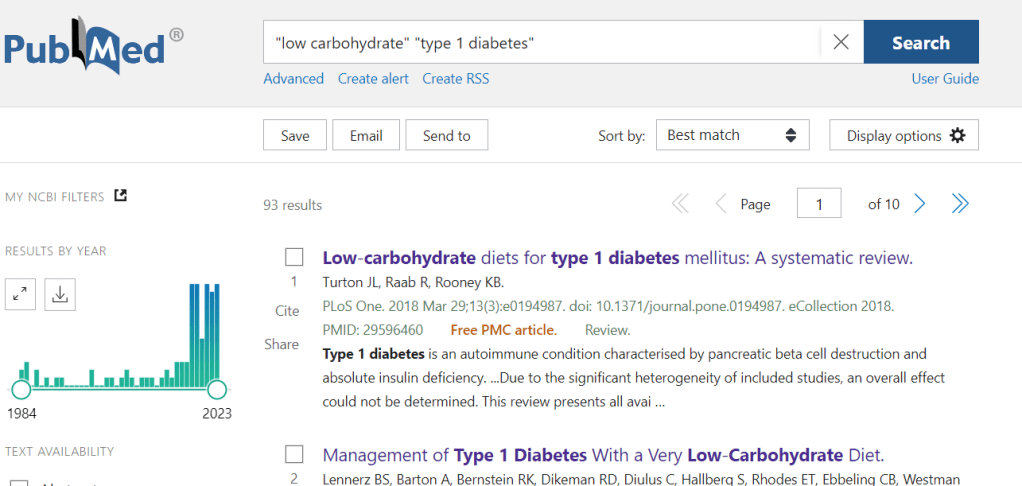
As before, I used PubMed and exactly the same search string as before. The difference was, in this case, I reviewed the 93 returned results, looking specifically for Low Carbohydrate Diets, not Very Low Carbohydrate Diets. As before, I only selected papers where the full publication was available and a quantitative group study of some kind was involved. The subjects also had to be human, not rodents etc.
Want to cut to the chase? Go straight to the tl;dr section at the end.

I plan to do a third review of plant-based diets for managing type 1 as well after this one. If there is a specific diet you would like me to trawl the literature for, let me know in the comments.

Brief Recap: Very Low Carbohydrate Diets (VLCDs)

In the previous review, there was no doubt that a VLCD can bring an average person’s HbA1c below 7% and, in some cases in the low 5% range. Whether going significantly below 7% was of benefit was not clear in the data provided by the search but, previously, I have shown that, if the occurrence of hypoglycemia can be controlled, getting below 6.4% will reduce the risk of long term complications.

To counter the clearly positive reduction in HbA1c, a few consequences/risks were also shown in the data which may need to be mitigated/monitored:

  • “Oxidative stress” leading to possible organ damage and heart disease
  • Glucagon response impairment
  • Increased risk of eDKA (euglycemic diabetic ketoacidosis)

and the following table was also provided in one paper in regard to a ketogenic diet (KD).

As mentioned at the time, these aspects do not necessarily outweigh the benefits of a lower HbA1c and many of them can be monitored through regular checks and managed very effectively through the use of things like multivitamins, laxatives, and cholesterol medications.

The question I hope to address in this article is whether an LCD can provide a comparable benefit and whether it still incurs the same risks.

What HbA1c can we expect from an LCD?

For the VLCD, the HbA1c range from the studies was between 5.3% through to 6.8%. The best result I found for an LCD was 6.0% in “Low carbohydrate diet in type 1 diabetes, long-term improvement and adherence: A clinical audit”. This trial looked at 48 people with type 1 diabetes over four years. The average HbA1c change was from 7.6% down to 6.9% but strong ‘adherence’ to the <75g/day (participant decided exactly how much below this level) led to the 6.0% outcome.

Contrary to the VLCD results, this paper reported that cholesterol levels improved on this regimen. However, similar to what we saw in the VLCD diets, after 2 years, half had stopped adhering to the carbohydrate levels specified.

The study also suggested on-going education was vital to keep people on the plan and estimated the LCD was only applicable to about 20% of people with type 1 diabetes, presumably based on the drop-out rate.

The study with the highest HbA1c end point was “A randomised trial of the feasibility of a low carbohydrate diet vs standard carbohydrate counting in adults with type 1 diabetes taking body weight into account”. This study kept the carbohydrates to a strict 75g/day and went over 12 weeks with 10 people with type 1 diabetes. Insulin use went down (which I saw in other LCDs and VLCDs) and HbA1c went from 8.9% to 8.2%, which puts it on a level where the mortality rate is similar to the general population’s but well above the 7.0% and 6.4% targets mentioned earlier. There were no changes to the lipid profile over this time.

Other papers fell between these two extremes. In “A low carbohydrate diet in type 1 diabetes: clinical experience–a brief report”, 24 people with type 1 diabetes were given a diet with 70-90g of carbohydrate/day for 12 months and taught how to bolus for the meals. Hypoglycemia episodes went from around 3 per week to once per fortnight, their HbA1c went down from 7.5% to 6.4%, and cholesterol was mostly unchanged, except for an improvement in triglycerides.

One patient was reported with a final Hba1c of 4.7%, which is extraordinary and, given this is below even what the most dedicated VLCD folks got in the studies reviewed, I am not convinced this was representative of what can be achieved with an LCD.

One other paper reported an improved cholesterol profile on an LCD, specifically, “Changes in the lipidome in type 1 diabetes following low carbohydrate diet: Post‐hoc analysis of a randomized crossover trial”. In this study 10 adults with type 1 diabetes went through either an LCD of <100g of carbohydrates per day or a diet of >250g of carbohydrates per day over 12 weeks. In this case they reported “total cholesterol, LDL and triglycerides had not changed significantly in this trial and only HDL cholesterol was significantly elevated in the LCD arm”

In “The Impact of a Low-Carbohydrate Diet on Micronutrient Intake and Status in Adolescents with Type 1 Diabetes”, 20 adolescents with type 1 diabetes were given 50-80g of carbohydrate per day for 6 months. HbA1c averages went from 8.1% to 7.7%. Not a huge drop and, again, above our mentioned targets of 7% and 6.4%. The paper also recognised the issue of nutrition in adopting a reduced carbohydrate diet saying “The dietician should plan a diet enriched with foods containing soluble vitamins (in particular folate and thiamin), selenium, magnesium, calcium, and iron. Furthermore, we recommend supplementation in a specific quantity, such as yeast extract, Brazil nuts, and Wolffia globose daily. Finally, we advise checking vitamin and mineral blood levels every six months and, if necessary, supplementing daily intake with vitamins and minerals.”

Corroborating this was a paper mentioned in the VLCD review, “The Impact of a Low-Carbohydrate Diet on Micronutrient Intake and Status in Adolescents with Type 1 Diabetes”, which looked at the micronutrient impact of a diet with 50-80g of carbohydrate per day and concluded the diet had the risk of not being nutritionally complete. As suggested before, this could be easily mitigated with a multi-vitamin, supplements, and regular reviews.

Have There Been Studies Directly Comparing VLCDs and LCDs?

It could be argued that, while a list of risks have been identified in VLCDs, a lack of studies looking at these same factors in LCDs does not mean they are not applicable e.g. we do not know if there is an impaired glucagon response on an LCD. There have been some studies directly comparing VLCDs and LCDs to see where the differences are.

In “Low-Carbohydrate Diet among Children with Type 1 Diabetes: A Multi-Center Study”, carers of 624 children completed surveys about the carbohydrate intake of their children with type 1 diabetes. Of these, 36 were following an LCD, and, of these, 5 were following a VLCD. No significant differences were found in the HbA1c levels of the two groups but, again, the VLCD group showed abnormal lipid profiles, specifically, higher total cholesterol and lower HDLs.

In “Physical Activity, Dietary Patterns, and Glycemic Management in Active Individuals with Type 1 Diabetes: An Online Survey”, they deviated from the American Diabetes Association definitions we have been using so far and came up with their own,

  • Normal (unrestricted): >200 g/day;
  • Moderate: 100-200 g/day;
  • Low-carbohydrate: 40–99 g/day;
  • Very low-carbohydrate: <40 g/day.

The Low-carbohydrate and Very low-carbohydrate ranges are similar to our LCD and VLCD ranges so I have kept used these for broad comparison. In this case the survey was of 220 people with type 1 diabetes and, of these, around 41 were on a Low-carbohydrate diet and around 27 were on a Very low-carbohydrate diet. As with the previous study, there was no significant difference in HcA1c between participants engaging in Low and Very low-carbohydrate diets. However, of the diets, the Very low-carbohydrate diet was the most predicative of achieving an HbA1c below 7%.

tl;dr

In the literature, LCDs deliver a reduction in HbA1c to somewhere between 6.0% and 8.2%. This compares to around 5.3% to 6.8% for the VLCD. The spread within the range appears to relate to how strictly the diet is followed. In the original review, one paper suggested HbA1c increases by 0.1% for every additional 10g of carbohydrate consumed daily. If we assume a VLCD is roughly 40g/day and an LCD is 100g/day this predicts a range difference of 0.6%. While this roughly matches the results for the lower end i.e. “highly motivated individuals”, it is less predictive for the average participant.

In contrast to VLCDs, lipid profiles (cholesterol) either remained the same or improved under an LCD. However, like the VLCDs, there is a risk that micronutrient needs are not being met with the diet.

When studies directly compared VLCDs and LCDs, there was no significant difference in the achieved HbA1c but, on balance, the evidence suggests, a VLCD has the potential to result in a lower HbA1c than an LCD.

One study suggested on-going education/coaching was important for participants to stay with the diet and I think this applies equally to LCDs and VLCDs.

As we can see there is a mixed bag here. Depending on the HbA1c targets we are pursuing, our concern for our cholesterol levels, and the level of carbohydrate restriction we are willing to tolerate, one approach may be preferable to the other. As mentioned in the introduction I have found success which compares favourably to the VLCD studies with an LCD and technology (looping). I do not see the need to restrict my diet further but, if I saw my HbA1c beginning to rise, a VLCD would certainly be an option. To mitigate the risks of a VLCD/LCD diet I also take supplements and get myself checked to mitigate the risks identified for these kinds of diets e.g. vitamin levels checked regularly.

To this end, my conclusion is, probably unsurprisingly, to follow a similar approach to me. Determine the HbA1c you are looking to achieve and, if you are not achieving it, consider reducing carbohydrate intake as part of your management plan. Small changes can bring you easily into the LCD range and, with the risks identified in this and the previous review, steps put in place to manage them. If you achieve your goals you will, hopefully, have a sustainable plan. If you do not achieve your goals, you can always consider moving to a VLCD although, as identified above, building a supportive team around you to keep you on plan is key because of the high dropout rates for both LCDs and VLCDs.

Literary Review: Very Low Carb Diets and Type 1 Diabetes

As this is quite a long article, for those who prefer the destination than the journey, we have a tl;dr section at the end which summarises the findings.
For a review of Low Carbohydrate Diets (50-130g carbs/day) go here.

Questions covered in this review are:

Why Do a Review?

There are a lot of suggestions on social media about how to live well with type 1 diabetes. Some of them directly contradict each other. At one end of the dietary spectrum we have the ‘Mastering Diabetes‘ folks who promote a plant-based diet with minimal animal products, reducing insulin resistance (which even type 1s have) and, therefore, the amount of daily insulin required (bolus and basal).

At the other end of the spectrum, we have the folks like the Type 1 Gritters. They strictly follow the teachings of Doctor Richard Bernstein who promotes a very low carbohydrate diet (30g/day) with intense exercise to manage diabetes. The thinking here is that while insulin resistance may temporarily rise with the additional fats in the blood (possibly offset by the exercise), the sheer lack of carbohydrate in the diet means bolus insulin requirements are significantly reduced. Doctor Bernstein, who has lived with type 1 diabetes most of his life, has had tremendous success with his approach and is now coming up to 90 years old.

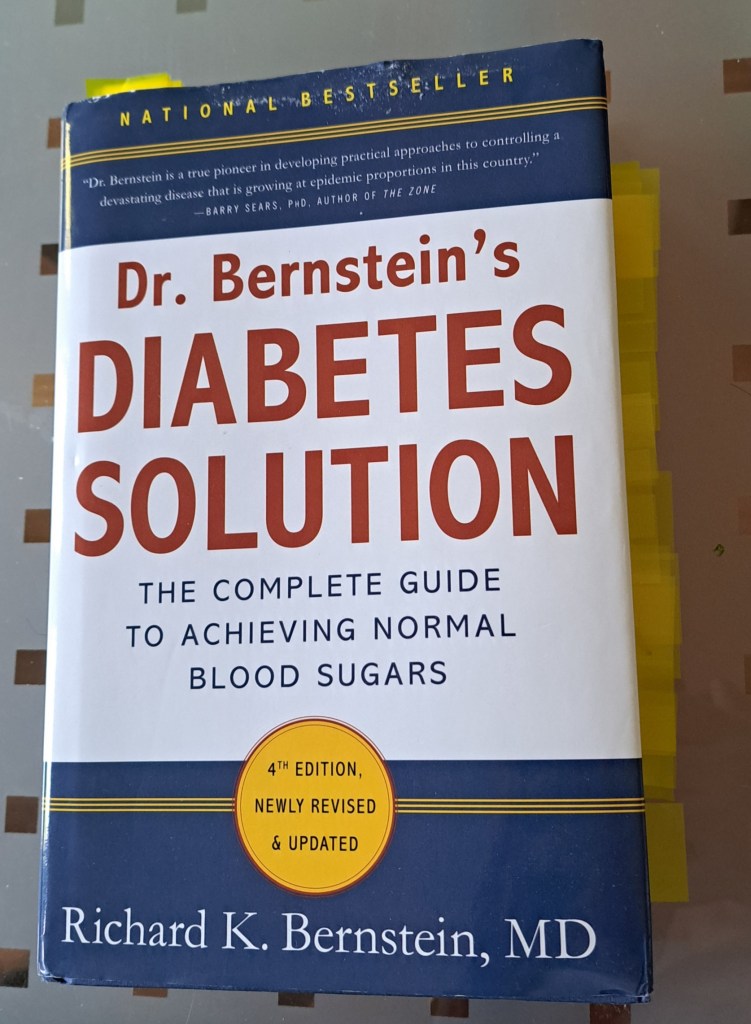
Doctor Bernstein documented his approach in a book called Dr. Bernstein’s Diabetes Solution. While excellent at describing the fundamentals of what type 1 diabetes is, unfortunately the book is now over ten years old and, in regard to technology, is quite out of date. The book dismisses continuous glucose monitors (although Dr. Bernstein now verbally supports them), insulin pumps, and flatly denies the existence of looping technology. For more contemporary wisdom from Dr. Bernstein, he has his YouTube channel, Dr. Bernstein’s Diabetes University. When I was first diagnosed, I watched practically every video on the channel and read the book (except the chapters on using insulin which, at the time, were not relevant to me). I took from it what made sense and parked the rest. It was an excellent foundation.

In the case of Dr. Bernstein, his diabetes management, informed by his health care team, was not working for him. Rather than be a passenger in his diabetes care, he started monitoring his blood glucose levels, determining what foods worked for him (low carb ones) and found a path which gave him success; the path he documented in his book so others could learn from his knowledge and experience. He ignored the zealots, did his own research, and adopted what worked for him. Every person with type 1 diabetes should be their own advocate, ignore the zealots, take control, determine the goals they wish to pursue, and find their path, just like Dr. Bernstein did.

Sadly, as if often the way with old texts, they are interpreted differently by different people. For me, the book was informative and gave me an approach to find my own diabetes management plan. It gave me permission to give critical thought to the advice of outsiders (including Dr. Bernstein) and make my own mind up. For others, like the Type 1 Gritters, it is a text which should be followed to the letter. I often bump my head against folk on Twitter who believe their goal (normal blood sugars) is the only goal which should be pursued and their approach (Dr. Bernstein’s Diabetes Solution) is the only approach to follow. Even when I have shown you can achieve superior results by embracing technology and NOT following Bernstein’s strict dietary plan, they continue with their dogmatism, the same kind of zealotry Dr. Bernstein fought all those years ago.

I am happy to give them the benefit of the doubt though as part of having critical thought is to listen to your detractors, consider their position and examine the evidence. This is what this article seeks to address. What evidence in the literature is there supporting a very low carbohydrate diet?

What is a Very Low Carbohydrate Diet?

In researching for this article I found academic literature, to allow for comparison, has broadly settled on the following definitions:

  • Very Low Carbohydrate Diet (VLCD): <50g/day carbohydrate
  • Low Carbohydrate Diet (LCD): 50-130g/day carbohydrate

Dr. Bernstein’s Diabetes Solution sits within the VLCD camp. I generally aim for LCD augmented with closed looping, which works for me in achieving my goals of having a sustainable/manageable approach and reducing my risk of long-term complications.

The Search Criteria

To find the articles, I used PubMed. PubMed is an online database for peer-reviewed medical articles and an excellent source for the latest research in diabetes. I try to review the latest findings once a month, collate questions, and discuss them with my endo when we meet.

My search was for the key phrases: “low carbohydrate” and “type 1 diabetes”. I had no interest in individual cases; if I wanted to hear about one person who got amazing results, I would go to Twitter and listen to the grifters selling their ‘services’. Group studies which show how the average person with type 1 achieves success with a VLCD was my target. I also wanted the full text of the paper to be available, so it could be debated openly, and a focus on quantitative information, not qualitative. The regimen being studied had to be VLCD with a focus on 30g or less/day diets, if available.

All up, the search returned a little over 90 papers. Where a paper made reference to another paper which could be of interest, I also followed the link and applied the same rules as above.

Does a VLCD lead to a lower HbA1c?

Yes it does! We have a few proof points of this. The first is “The glycaemic benefits of a very-low-carbohydrate ketogenic diet in adults with Type 1 diabetes mellitus may be opposed by increased hypoglycaemia risk and dyslipidaemia“. In this study 11 adults, who had been on a ketogenic diet (<55g/day) for an average of 2.6 years were studied and the following results found:

  • Average HbA1c was 5.3%
  • 0.9 hypoglycemia episodes per day
  • “Total cholesterol, LDL cholesterol, total cholesterol/HDL cholesterol ratio, and triglycerides were above the recommended range in 82%, 82%, 64% and 27% of participants, respectively”

The second study which talked at the average HbA1c I have mentioned in previous blogs: “Management of Type 1 Diabetes With a Very Low-Carbohydrate Diet“. This was a survey of the Type 1 Grit Facebook group. Of the 1,900 members of the group at the time, 316 responded with around half of these providing medical data. The following results were found:

  • Average time following a VLCD: 2.2 years
  • Average HbA1c was 5.67%
  • Average daily carbohydrate intake was 36g/day
  • 1 in 50 reported being hospitalised for hypoglycemia
  • Noted a correlation between HbA1c and carbohydrate consumed i.e. an increase in HbA1c of 0.1% for every additional 10g of carbohydrate consumed daily
  • Majority of respondents had dyslipidemia (abnormal cholesterol)

The two studies confirm that it is possible to get into the low 5% range with a VLCD. However, if someone is trying to convince you that a VLCD can consistently generate sub-5% HbA1c’s the odds are they are trying to sell you something because the evidence is simply not in PubMed.

There are two other commonalities between the studies. The first is dyslipidemia (abnormal cholesterol). If we believe these two studies are typical of VLCDs then it is reasonable to expect cholesterol results which will make your doctor frown. If cholesterol levels are important to you then a VLCD may work against you or will need to be managed.

The second commonality is the groups studied were not necessarily a random sample. In the case of the first paper, it is simply not stated where the participants came from; all we know is they were on a ketogenic diet for a number of years. In the case of the second, they came from a group dedicated to strictly following Dr. Bernstein’s approach. To join the group, participants have to pledge they follow Bernstein to the letter and have done for a “long period of time”. Here is an image of the application form to join the group.

Of those who make this commitment we have those who took the time to respond to the survey. In my mind this will also be a biased sample of those willing to share their success. It makes no sense to me that a group so committed to the cause would admit significant failure. Therefore, I see these results as the best an average person could hope for in adopting a VLCD, rather than an average or below-average measure.

A third study, “Safety and Efficacy of Eucaloric Very Low-Carb Diet (EVLCD) in Type 1 Diabetes: A One-Year Real-Life Retrospective Experience“v took 33 people with type 1 diabetes from an Italian clinic and switched them to a VLCD (<50g/day) for 12 months. Not surprisingly, in this case, the results were not as spectacular. The average HbA1c went from 8.3% at the start to 6.8% at the end.

Comparing to my own results, my HbA1c was last measured at 5.6%. This is better than the Type 1 Grit average without the need for a strict diet OR the exercise. However, for someone struggling to get their HbA1c below 7%, choosing a lower HbA1c as a goal to pursue, and indifferent to abnormal cholesterol levels, the VLCD may make sense.

Is the Lowest Possible HbA1c a Good Thing for Type 1 Diabetes?

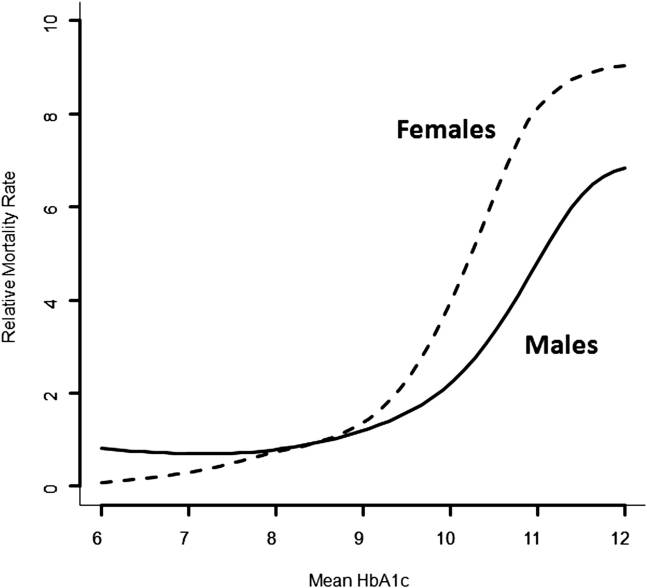
Of the papers found through this process, some talked at the correlation between mortality rates and HbA1c. The first: “Mortality in Type 1 Diabetes in the DCCT/EDIC Versus the General Population” took a group of just over 1,400 people with type 1 diabetes and compared them to the general US population. They found that an HbA1c below 8.5% meant a lower mortality rate than the general population and, as can be seen on the graph below, below 7% the mortality rate was almost flat.

When the results were split by gender, a slightly different result emerged.

For males, while still quite flat, the mortality rate actually increased below 7% and started to be higher than the general population around 6%. This was not the case for women where an HbA1c continued to drop as the HbA1c went lower and become effectively unmeasurable at 6%.

Why would males have a higher mortality rate below an HbA1c of 7%? The speculation is the increase of hypos leads to an increased risk of death.

Backing up this surprising result was a second study: “Glycemic control and all-cause mortality risk in type 1 diabetes patients: the EURODIAB prospective complications study” Examining a little over 2,700 European people with type 1 diabetes it was found the all-cause mortality rate at an HbA1c of 11.8% and 5.6% was higher than at 8.1%.

The dotted lines are for a 95% confidence interval (think of these as error bars). Again, we see a crossover point with the general population between 8-9% and a more pronounced rising of mortality risk below 7%. In the discussion, the proposed reason for the increased mortality rate at lower HbA1cs was the increased risk of severe hypoglcemia.

Given the reference range for the HbA1c in a person without diabetes tops out at 5.6%, people with type 1 diabetes face a dilemma. If they chase normal blood sugars this means, on average, an increased risk of severe hypoglycemia and an increased risk of death. Thankfully, like many complications of diabetes, they are preventable if monitored closely. In the case of hypos, a continuous glucose monitor (CGM) would help keep track of lows before they become a problem. Similarly, a looping system would automatically intervene to prevent the hypo. It is possible, as these technologies become more widespread, the HbA1c to mortality rate curve will change allowing people with type 1 diabetes to safely pursue a normal range HbA1c without concerns of a hypo. Given the data behind these curves is over 30 years old, it is possible that modern insulins have already addressed the increased hypo risk and the curve, as HbA1c goes down, is flattened today. It will be good to get new data to confirm this is the case at some point.

What are the Complications Associated With a VLCD?

We mentioned the abnormal cholesterol results earlier but some papers did mention other complications as well. “Hyperketonemia and ketosis increase the risk of complications in type 1 diabetes” speaks at the health complications of a ketogenic diet (KD) which, arguably, a VLCD is. The main focus of the paper was “oxidative stress” leading to organ damage and heart disease but it also mentioned a raft of papers discussing other complications with a KD.

Again, how important these aspects are will depend on the individual and the goals they are pursuing. Also, some of these, such as constipation, can be addressed through medicinal interventions (laxatives).

Another paper, “Low-Carbohydrate Diet Impairs the Effect of Glucagon in the Treatment of Insulin-Induced Mild Hypoglycemia: A Randomized Crossover Study” sought to compare how a person responds to glucagon, based on whether they were on a VLCD (<50g/day) or a high carbohydrate diet (>250g/day). Presumably, due to the glycogen depletion in the liver, the response to glucagon in the VLCD cohort was impaired. Again, armed with this knowledge, a person pursuing a VLCD, who intends to use glucagon to manage severe hypos, can approach the situation prepared and perhaps change their plan to manage hypos with carbohydrates instead. Another consequence, mentioned in a few papers, was the risk of eDKA because of the significantly lower insulin requirements affecting basal control of the liver, and depleted glycogen stores.

Does a VLCD Give Me All the Vitamins and Minerals I Need?

Unless appropriately managed, the evidence suggests it does not. In “Prevalence of micronutrient deficiency in popular diet plans“, a VLCD, the “Atkins for Life” diet was examined in terms of its delivery of micronutrients (vitamins and minerals). It was significantly short in providing Vitamin B7 and Vitamin E.

Similarly, in “The Impact of a Low-Carbohydrate Diet on Micronutrient Intake and Status in Adolescents with Type 1 Diabetes” which considered a LCD of 50-80g/day it stated “LCD may result in nutritional deficiencies, as decreased carbohydrate consumption was positively correlated with decreases in vitamin and mineral intake that were not due to calorie reduction. Thus, these decreases resulted from the LCD content rather than from reduction in calories.”

This suggests that for both a VLCD and an LCD, a multivitamin may be needed to ensure micronutrient requirements are covered, with the possible consultation of a nutritionist.

Is a VLCD Sustainable?

I am sure there are individuals who have successfully maintained a VLCD for a very long time. However, if we are talking in general terms, the evidence is not strong that this is easy to do. Even in the Type 1 Grit study, after an average of 2.2 years, the majority of the participants were failing to meet the Bernstein guideline of no more than 30g/day of carbohydrate. Other studies also believed a VLCD had troubles being maintained. “Low-Carb and Ketogenic Diets in Type 1 and Type 2 Diabetes” states “An issue about the use of LCD (less than 100g/day) can be the long-term tolerability. In many cases LCD was stopped before 1–2 years for a variety of reasons, often because intolerable and with a limited choice of foods” and “A clinical audit performed to assess the long-term adherence to LCD in people with T1D showed that after two years about half of the people ceased adhering…”

Even in our HbA1c studies at the start of this review the average time spent on a VLCD was no more than three years. This suggests if a person’s plan is to adopt a VLCD beyond a couple of years, they will need to ensure it is aligned to their lifestyle and has sufficient variety of food to keep it interesting. The food variety may also help address the nutritional deficiencies mentioned earlier.

tl;dr

Given the claims often made about very low carbohydrate diets (VLCDs) and the contradictory messaging about the best way to live with type 1 diabetes, it is worth examining the available evidence to see what an average person with type 1 diabetes can expect. To do this a review of the PubMed literature was performed.

While there is no doubt that a VLCD can reduce the HbA1c of a person with type 1 diabetes to below 7%, there is a need to manage the resulting risks/complications. If the person adopting the diet is experiencing an increase in hypos, these will need to be managed, mindful that glucagon is often not as effective for people on a VLCD. Cholesterol levels are often out of the recommended ranges on a VLCD and this should be managed, ideally in consultation with the person’s health care team. If it is a concern then, in the case of LDL, cholesterol-lowering medications may be recommended. Other complications, such as constipation, diarrhea, kidney stones and the more serious organ damage and heart disease, should also be monitored for and, if they arise, addressed through other interventions e.g. medication and/or diet. To ensure the diet being adhered to is nutritionally complete, either a multivitamin should be taken and/or the advice of a nutritionist should be sought. Finally, the shift to a VLCD will be, for most people a significant change in lifestyle. With many people not sticking with a VLCD beyond 2-3 years, steps should be taken to make the diet both interesting (a variety of food) and practical for one’s life to maximise the chances of success.

Based on the above evidence, I can see why healthcare professionals are often cautious to recommend a VLCD for their clients as the picture painted above is not completely glowing and, given I am already achieving better management of type 1 diabetes without adopting a VLCD, I will stick to what works for me. My next step will be to assess the literature for an LCD (50-130g/day) to see if this can achieve similar results without the severity of impact or the same complications.

Is LADA the same as Stage 2 Type 1 Diabetes?

This subject has been bouncing around in my head for a while and came about from an interaction with one of the giants of diabetes research: Professor Chantal Mathieu.

As a textbook LADA, I was constantly frustrated, prior to becoming insulin dependent, that I fell through the gaps on most research. Either the research wanted people recently diagnosed as type 1 or people who were insulin-dependent. Having a 5 year honeymoon insulin-independent honeymoon excluded me from both. In discussions with researchers, a practical limitation of researching LADAs is we progress so slowly meaning to bubble up statistically significant results takes timespans of years, instead of months, which is expensive from a grant perspective.

Perhaps the difficulty is our definitions. If we accept LADA is a form of stage 2 type 1 diabetes, it could be included in research studying the transition from stage 2 to stage 3 which can occupy a time period similar to the LADA honeymoon.

Type 1 Diabetes Stages

A bit of Googling brought up Milk and Honey Nutrition‘s excellent summary of the stages of type 1 diabetes.

In theory, LADA could fit into stage 1 but, usually, it is high blood sugars which leads to a diagnosis of LADA as proactive auto-antibody screening is still rare in most countries.

I fell somewhere between stages 2 and 3 at diagnosis. I tested positive for three auto-antibodies and showed symptoms typical of stage 3 but, with dietary control, I could keep reasonably normal blood sugars and a healthy HbA1c. After five years, my HbA1c began to rise and I moved to insulin before the typical symptoms of DKA showed themselves.

So Why Is LADA Distinct From Stage 2?

According to Wikipedia, LADA as a term was introduced in 1993 and a formal model of the stages came around 2015. So, there was plenty of time for LADA to establish itself as a conceptual sub-type before the stages became part of the academic diabetes zeitgeist.

There have been dissenting voices as to the need for a distinct LADA classification. This particular link makes a statistical argument, rather than one based on observational evidence and, given I tested positive for three auto-antibodies on four separate occasions and yet still had a honeymoon of years, not months, in my opinion, debunks this particular paper. I mention it simply to show there is continued debate on the subject.

Professor Mathieu’s Twitter response at the start of this article, also confirms the distinction between LADA and ‘classic’ type 1 is far from having consensus.

Where To From Here?

To settle the debate needs a few elements. The first would be a large cohort of people with stage 2 type 1 and LADA. Reviewing their characteristics and defining distinct sub-groups based on measurable parameters could tease apart the groups. As mentioned, systematic screening is still not widespread so studies of stage 2 are still relatively limited and studies of LADA are even more so. Until that changes, the distinction between LADA and stage 2 will be conjecture, more than fact.

It is accepted that type 1 is a heterogeneous disease i.e. there is no ‘true’ type 1 but, rather, many, many diseases which exhibit similar broad behaviours so LADA could well be a distinct classification. At this stage we come back to the response I got at ATTD 2023, we simply do not have the data to know and must consider it in a way which suits our purposes.

A Free AGP Reader, Driven By AI

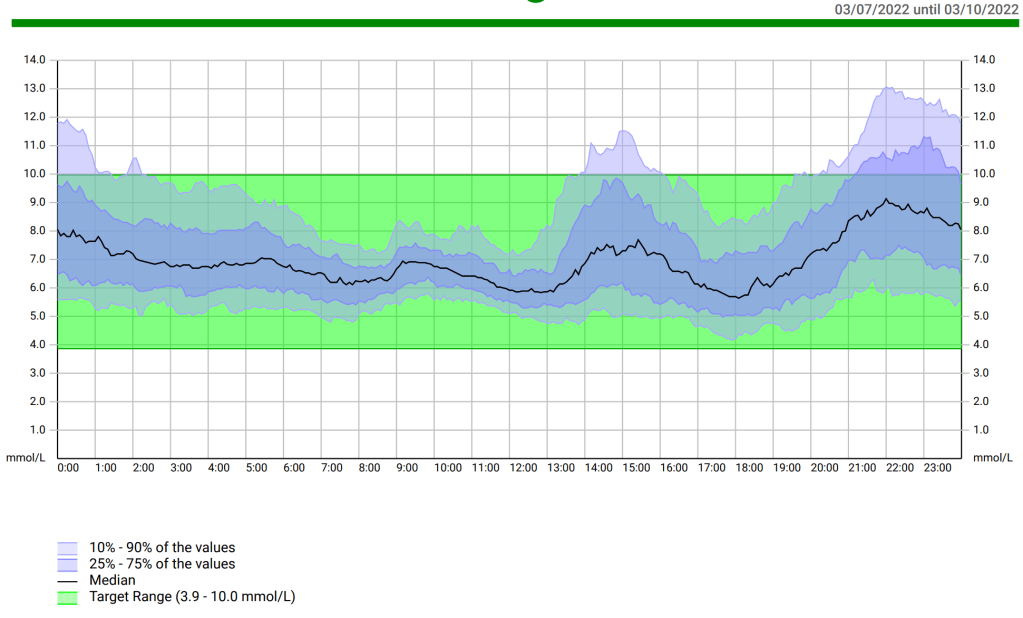
One of the common reports generated by people with diabetes who use Continuous Glucose Monitors is the Ambulatory Glucose Profile (AGP) graph.

If you are unfamiliar with this graph, it is a “heat map” of your blood glucose level (BGL) sampled from multiple days and put over a 24 hour period. So, for example, in the above which is one of my AGPs from last year, the data were over three months (03/07/22 – 03/10/22) and there are clear spikes around 14:30 and 21:30. These, of course, related to meals (lunch and dinner). Why no breakfast spike? Because, generally, I do not eat breakfast.

What I set out to do (and achieved) is create a bot which can be fed an image like the one above and reply with observations to discuss with your health care team. It works via email and generates replies like this.

If you are interested in trying it out, send an email with a screenshot of an AGP (in JPG, PNG, or BMP format) to AGPReader@hotmail.com and you should get back a response in a minute or two. Do not worry if your AGP does not look exactly like mine, I have trained the bot to review graphs from a variety of software sources.

If you are interested in seeing how I put it together, check out my post on my technical blog here.

Next Steps

While reasonably reliable, I am keen to refine and improve it. To this extent, I am talking to medical academics and professionals to get their input on both the training and the analysis the bot generates. I expect, with their assistance, the bot will continue to improve.

What To Pack When Travelling (Interstate/International)

Back in April, I wrote about what I pack on a day trip and promised at the time to follow up with a packing list for longer trips e.g. interstate and international travel for work and pleasure, using my recent trips to Germany and the US as my guide. As before, I will be referring to my reference spreadsheet, which has received some minor adjustments since the last article.

This list is not exclusively for people with diabetes; it covers all aspects of hotel-based travel. As you can see, I break the inventory down into:

  • Luggage Items
  • Carry On
  • Diabetes/Medical
  • Clothing

While the focus will be on the Diabetes/Medical list, there are a few tips/tricks relevant in the other sections. Let us dive in.

My Diabetes Bag

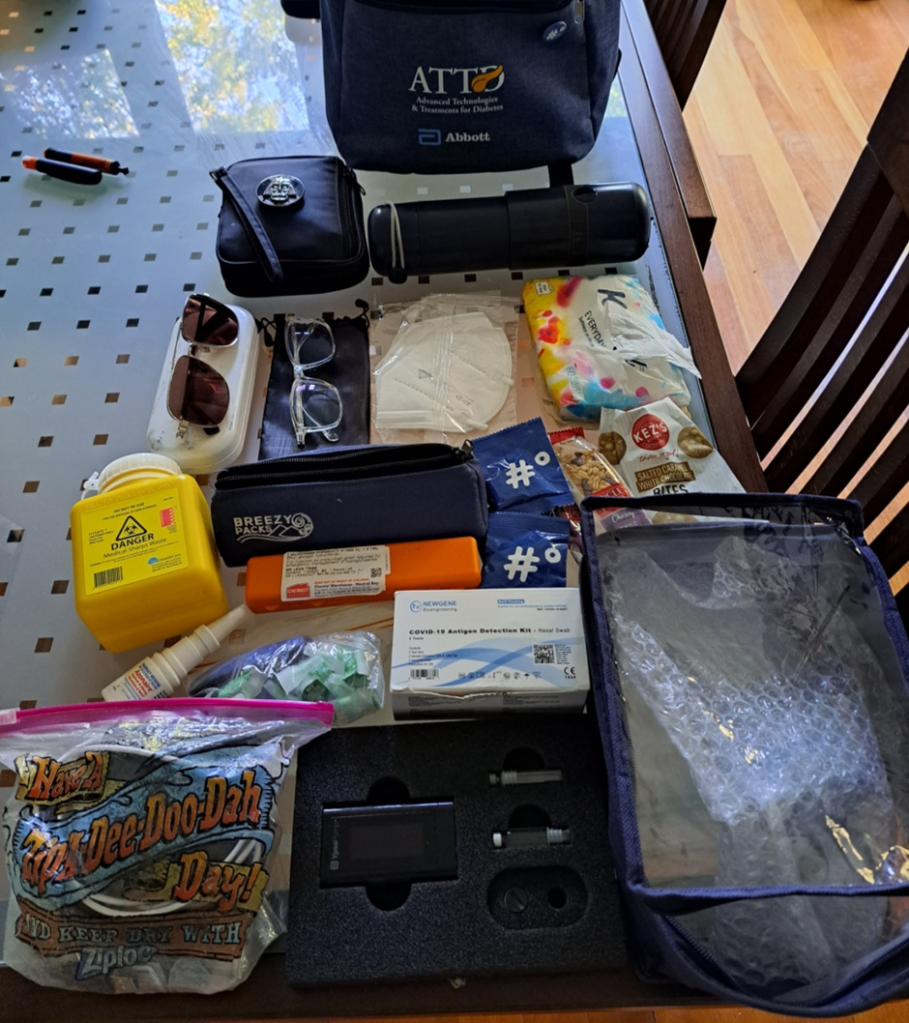
Thanks to the US trip, I now have a new diabetes bag. This one is much larger and has lots of pockets and sections for the various things I carry. While often unnecessary with modern security scanning equipment, it also folds out to display the more noteworthy diabetes items e.g. needles, insulin etc.

Luggage Items

Here are some tips for both the check-in and carry-on luggage.

Carry-On Quotas

For most airlines these days, medical supplies, such as those needed for diabetes do NOT count towards carry-on quotas. For Australian interstate travel this is handy for Jetstar who are meticulous about carry-on weight quotas, literally weighing carry-on luggage as you board the plane. Having a separate diabetes bag makes that experience so much easier.

It also came up on one of my QANTAS flights: one of the flight legs was particularly full and I had with me a backpack with my laptop and other bits and pieces in it and my diabetes bag.

I put the backpack in the overhead locker and kept the diabetes bag with me under the seat. The flight attendant informed if there was not enough room I may need to put BOTH bags under the seat in front of me and, actually, I was only permitted to bring one piece of carry-on. I replied, curtly, one was with medical supplies. She begrudgingly accepted the response and suggested I consider checking in one of bags in the future (given one had insulin and power banks and the other a laptop this was not possible). I refrained from informing her what I thought she should consider doing. Check your airline to be sure, but the moral of the story is being stressed about carry-on quotas because of diabetes supplies is generally unnecessary.

Storage Cubes/Ziplocks

Storage cubes are great as a general packing tool but the smaller ones are fantastic for managing the various supplies. I use storage cubes and ziplocks for:

  • The stuff customs may want to see when going to the gates (needles, insulin etc.)
  • Items which need to be hand inspected, rather than going through the scanning machine
  • Surplus supplies for set changes
  • The stuff I use every time I do a set change/sensor change/reservoir change
  • Power banks and cables

Having things in well organised categories/containers makes them easy to retrieve when the moments arise.

Travel Insurance

If you are travelling overseas, always have travel insurance. If you are travelling for business, confirm your workplace’s corporate policy covers diabetes. Do not take HR’s word for it that you are covered, get a copy of the policy and the contact numbers for when you are overseas.

Tourist Books

More for international travel, having a travel guide can be helpful for saying key phrases (“Where is the nearest pharmacy/hospital/doctor?”, “I am diabetic”, “Do you speak English?”), providing maps of the locale, and for understanding how transportation works.

You may also want to research if the country you are going to has reciprocal health arrangements with your home country, how insulin is obtained etc.

Portable Fridge

While on the list, I have started comparing a well-made vacuum flask to a portable fridge with a decent power pack and finding the vacuum flask, under the right conditions, has superior performance. I will likely write about the findings and comparison in a future blog. It is to be confirmed formally but my belief is a vacuum flask, filled with water just above freezing, will give excellent performance on long haul flights (I managed to keep my insulin between 2-15C/36-59F for 48 hours doing this). If filled with water it will need to be checked in which is a risk but, again, the vacuum flask should protect the insulin if things get too cold in the luggage hold. The alternative is to not fill the flask with water and then it is permitted to be part of carry-on although I expect this will affect performance.

Diabetes/Medical Items

Where I covered an item in the previous day pack post, I will leave it out but here are my tips for extended travel.

Disposable Diabetes Supplies (Pump Stuff, CGM Stuff, Insulin)

The best advice here is take more than you need. In the spreadsheet I have a formulae, based on how long I am going for, to tell me what I need to take plus one or two extras. This is very much a work in progress and quite individual, depending on things like how often sensors fail to insert/work for you. On the trip to the US I actually miscalculated the insulin and cruised on the plane back home on my last reservoir of insulin after being very, very careful on what I ate in the last couple of days to ensure I did not spike and require too much additional insulin. You do not want that. Take more than you need rather than having to use your tourist book to ask for more insulin or pump supplies which may not be available/approved in the country you are visiting.

BreezyPacks

I have written a few blog articles about BreezyPacks in the past and I am a big fan. BreezyPacks have never sponsored or sent me freebies (I am open to it though for ‘review purposes’, hint hint). The fact is their product works and works well. Like a Frio, they work by absorbing heat through changing the phase of a material (changing between solid/liquid/gas). Frio uses water going from liquid to gas while BreezyPacks uses their own material going from solid to liquid. The big advantage of BreezyPacks is there is no soaking required and does not need exposure to the air to work. It works as it is.

If my insulin is outside of a vacuum flask while travelling, I always keep it in a BreezyPack.

Insulin Contingencies and my Diabetes Notebook

Like the airplane you may be flying in on the trip, all aspects of your diabetes management should have a backup system which can take over in case of total failure. While I use a CGM and pump, looped with CamAPS to manage type 1, I also take:

  • A spare pump
  • Injectable pens
  • Needles
  • A finger pricking device and test strips

I also have a notebook with my basal settings and a bunch of other notes, tips and tricks. If the pump fails, I have the choice of booting up the spare pump or, if towards the end of the trip, doing multiple daily injections until my return.

I also make a point of identifying other people with type 1 diabetes, who I know, where I am going. This way even if I lose all my luggage, I can hit up a local for assistance.

Glucagon Pen

While I rarely hypo, if ever (looping means I never over-correct), I do carry a glucagon pen on me. I have never needed to use it and it is largely there at my endocrinologist’s behest but, if you tend to go low, having one may bring peace of mind.

Charged Power Banks, Cables, and Power Adaptors

If you have a mobile phone or receiving device for your diabetes technology, you will want it powered up at all times. Therefore, you need to have backup power supplies in case that long plane flight does not have power in the seat. In my case, my mobile phone is the brains of my looping system so if the phone goes dead, the pump will default to its basal profile and rely on me for bolusing. Clearly my non-looping pump has more faith in me than I do. To ensure my mobile phone lasts for the longest of flights, my carry-on always has power banks and charging cables. Many airlines have strict rules which prevent putting power banks in check-in luggage so these usually have to be in your carry-on and, as they are a medical necessity, they should be in your diabetes bag not counting towards your carry-on quota.

Assuming you will also want to charge up your technology at the hotel, you will also probably need to bring plug adaptors and ensure your chargers are compatible with the local voltage. Most devices these days work between 100-250 volts which covers you for the world but check so you do not fry your charger or the receiver.

Prescriptions for all of your Medications

There appears to be an unwritten rule with chemists/pharmacists around the world that if you use a life-saving medication such as insulin, as long as you have a prescription from your country of origin, you can get it over the counter while overseas. Therefore it is necessary to always have prescriptions for your insulin and whatever other medications you need to manage the disease. For Germany, as my prescription was on file at my local pharmacy, I needed an extra prescription for the trip which I got from a local general practice doctor before I left. My experience has been that, if you explain the situation, most doctors will give you a script, even if they have not had you as a client before.

As well as a letter from someone in your medical team explaining you need to carry insulin, needles, hypo treatments etc. for airport security, a prescription can also help in convincing overzealous security officials you are a person with diabetes.

Needle Clipper and Sharps Container

If you need to inject or do a set change on the plane (more likely for longer trips), it is responsible to carry a sharps container with you or, if you are only disposing injection needles, a needle clipper. The BD Safe-Clip is the one I carry. This allows you to clip off the sharp part of the needle, which is then held securely in the body of the clipper, and throw away the rest of the pen in normal garbage. If you are also disposing of things like pump supplies, a sharps container may be a better option. I have a little one you can see in the diabetes fold out picture above which I use when on the plane.

Carrying the sharps container did raise questions when I went to the Seattle Space Needle but, after I declared I was a person with type 1 diabetes (annoying that I needed to declare my medical status to let through a sharps container!), they let it though.

Aussielent (QOTA) Power and Olive Oil

As mentioned in this other article, I saw potential in taking individual ziplocks of AussieLent and a bottle of olive oil on the trip for when I was hungry but food options were limited. In the case of the trip to the US, this was usually due to jetlag meaning I was hungry at a time when most food outlets were closed. The AussieLent was invaluable at covering the hunger pangs in a controlled, non-spiking way.

Conclusions

So far the above scheme has worked for the two overseas trips to Germany and the US, as well as multiple work trips interstate. As with the day pack, I expect it will get adjusted over time but, for now, it serves me pretty well. If you have items you do not travel without, feel free to add them to the comments.

What To Pack When Travelling (Day Pack)

I have written before about taking insulin through customs but, with a trip to the US happening tomorrow and a trip to Germany completed two months ago, I thought I would pass some thoughts on about travelling as a pumping and CGMing type 1. This is part one (Day Pack) with part two (interstate and overseas travel) coming after my trip and with the wisdom gained.

The Spreadsheet

This spreadsheet removes a lot of the thinking when it comes to packing. The Day Pack list is in the top right.

Day Pack

My Diabetes Bag

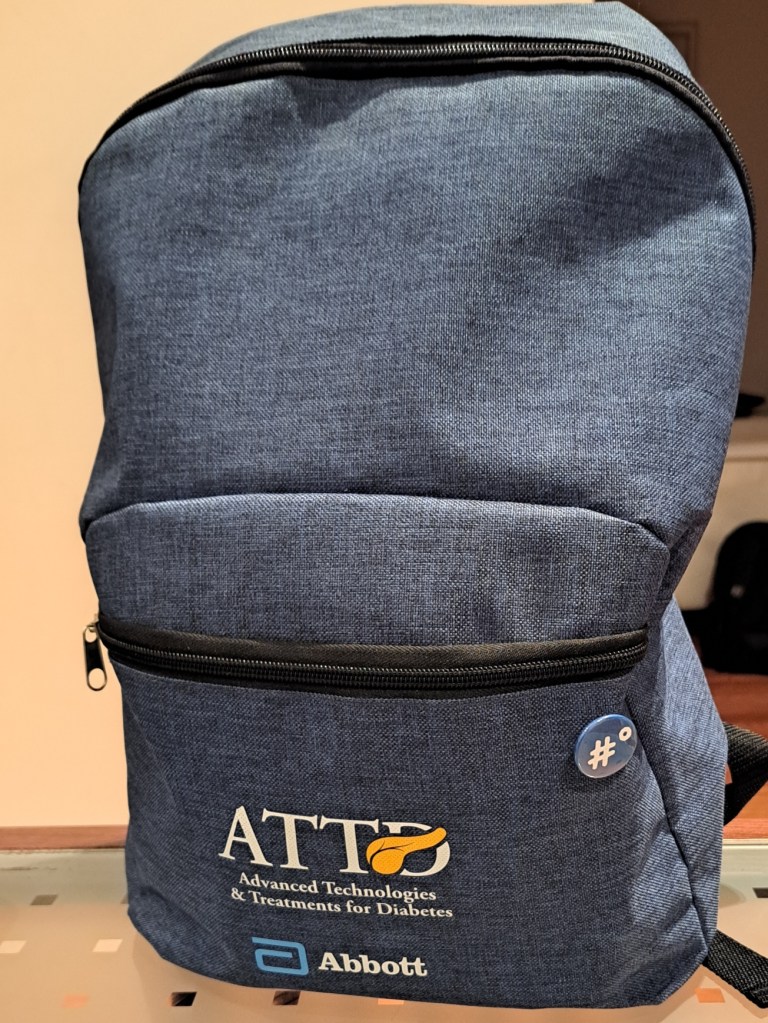
My Day Pack is the conference bag from the Berlin trip. I also use this as a bag for all my carry on medical supplies when travelling interstate or overseas. Why a bag just for medical supplies? Because most airlines these days do not count medical supplies towards carry on quotas so it is easier to show them what is being excluded if it is all together. For the local Jetstar airline, who weigh carry-on luggage, this makes the process slightly less excruciating. The bag is also easy to locate when I need to do a set change mid-flight. This also means less bag swaps whenever I travel for the day/interstate/overseas as the core set of stuff in this bag never change.

Here are the contents of the bag:

Going from the top we have:

  • Diabetes kit with finger pricker, glucose tabs, lip balm, Splenda tabs, lancets, batteries, prescriptions, business cards of my health care team, and blood/organ donor cards
  • A USB fridge (a new addition yet to be tested in the wild)
  • Spare prescription glasses
  • N95 mask
  • Tissues
  • Sharps container (for those mid-flight set changes etc.)
  • Hayfever/cold nasal spray
  • BreezyPack with MedAngel inside (NB: I could not find a reliable link for buying MedAngels but it is a great Bluetooth temperature monitor)
  • Glucagon pen
  • Needles for emergency
  • COVID testing kit (just in case)
  • Hypo snacks
  • Power banks and cables (when you rely on technology to keep you alive 24-7, you want backup power sources and the ability to charge devices)
  • A spare pump
  • A transparent packing cube for needles and insulin so it can be easily pulled out at security

FlexPen(s)

I use Novorapid FlexPens cartridges to refill my pump and this also means I have the FlexPens on hand if the pump has a catastrophic failure so, for day trips, I carry 1-2 NovoRapid pens in the BreezyPack in case I need a refill or if I need to fall back to multiple daily injections.

Diabetes-Compatible Watch

My watch is a cheap TicWatch but, with xDrip+ as a companion app to CamAPS FX, I get access to my CGM data and have it appear on my watch. Very useful when you want to quickly check your BGLs but you are in a tiny economy class seat and your phone is in your pocket or when you are in a business meeting and it might be considered a step too far to pull out the phone and start swiping.

Medi/Emergency bracelet

A medi/emergency bracelet is a must for me, especially if I am travelling solo.

Mobile Phone

Being the brain of my CamAPS looping application, my phone comes with me everywhere.

Pump Consumables

In terms of pump consumables, for day trips, I generally carry a spare infusion set and cartridge set in case I am caught unawares while out and about. In a pinch, I can make a full set change without drama.

While I could also carry a spare CGM sensor, the applicator for the Dexcom G6 is so large, I generally do not bother as, at worse, it will mean a few hours with looping off and no CGM data (for the pump the default basal settings will take over and, for me, they are well tuned so it will keep me going until I get home.) I also have the finger pricker in the diabetes kit if I want to double-check.

Snacks and Water

While my bag has snacks inside for hypos, this entry is a good reminder to put in a water bottle and check expiry dates.

Masks

Not strictly needed for diabetes management but good to carry in case you go to crowded places with people coughing or if you are travelling and mask wearing is required. I generally carry N95 or equivalents and, as mentioned above, normally have a spare in the bag.

Diabetes Book

This contains a wealth of information including, as can be seen above, step-by-step instructions for essential tasks like set changes and cartridge swaps. Some of the veteran type 1 folk laugh at the fact I rely on a book for, what is to them, second nature but, frankly, if I am jetlagged, half-asleep, half-drunk, and/or in some other compromised state, I would much prefer to trust the book than my foggy head.

Other information it contains are my profile settings, an on-going list of foods I discover I can snack on without spikes, support numbers for equipment, and miscellaneous diabetes thoughts or ideas jotted down on the run.

Set Change Ziplock

This is a bag of “stuff” I need to do set changes (cartridges and infusion sets). This does not sit permanently in the diabetes bag as I use it all the time.

We have:

  • Emergency antiseptic gel (in case I run out of wipes)
  • Ypso cartridge box (which I also use to store the Ypso coin, batteries, and other Ypso-related set change stuff)
  • Ypso cannula inserter
  • Safety razor (for shaving a spot for the cannula to go)
  • Jar grips for pulling FlexPens apart to get to the insulin

Conclusions

That is my current kit. It does evolve over time but is relatively stable at the moment. If you have other items you carry with you on day trips, feel free to add a comment.

The Practical Diabetic Solution: The Modern Guide To Achieving Normal Blood Sugars (or Pretty Good Blood Sugars, You Decide)

This week I underwent an experiment to see what would happen if I combined a very low carbohydrate meal replacement, a commercial looping system, and snacking to cover hunger pangs. The results were better than I expected and, over the four days, I was seeing normal, non-diabetic blood sugars. Unlike other regimens, I did it with:

  • No exercise
  • No bolusing
  • No hypo treatments
  • No meal plans
  • With insulin resistance and a daily insulin requirement of over 70 units per day

You can see the details of the setup here but, in this post, I thought I would go through the results and, now I am on the other side, reiterate why I believe it is a superior approach to Dr. Bernstein’s.

Before and After

So, before the four days, I had:

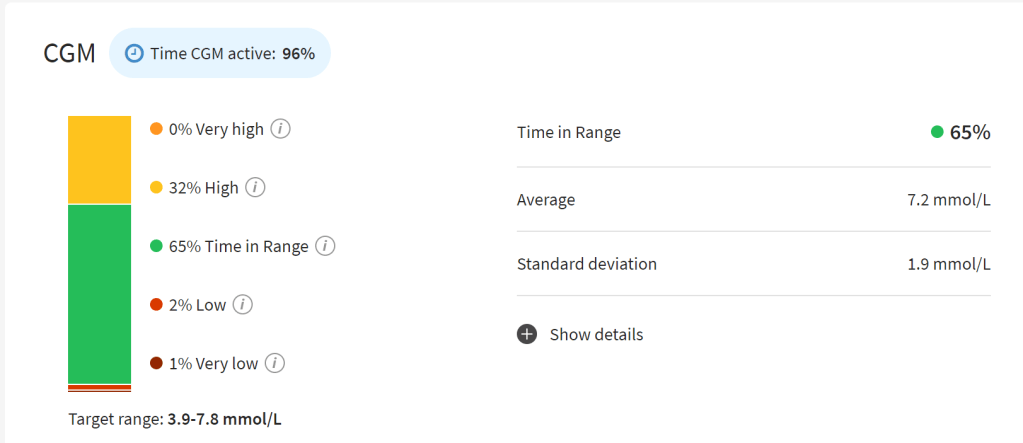
  • Average Glucose of 7.2 mmol/L (130mg/dL) (over 14 days)
  • Average Glucose of 6.5 mmol/L (117mg/dL) (over 2 days)
  • Standard Deviation 1.9 mmol/L (34 mg/dL) (over 14 days)
  • Standard Deviation 2.3 mmol/L (42 mg/dL) (over 2 days)
  • Median 6.2 mmol/L (112 mg/dL) (over 24 hours)
  • Coefficient of Variation 35% of Mean (over 2 days)
  • Time in Tight Range (3.9 – 7.8 mmol/L aka 70 – 140 mg/dL): 65%
  • Highs: 7 Lows: 11 (over 2 days)
  • GMI of 6.1% (over 2 days)

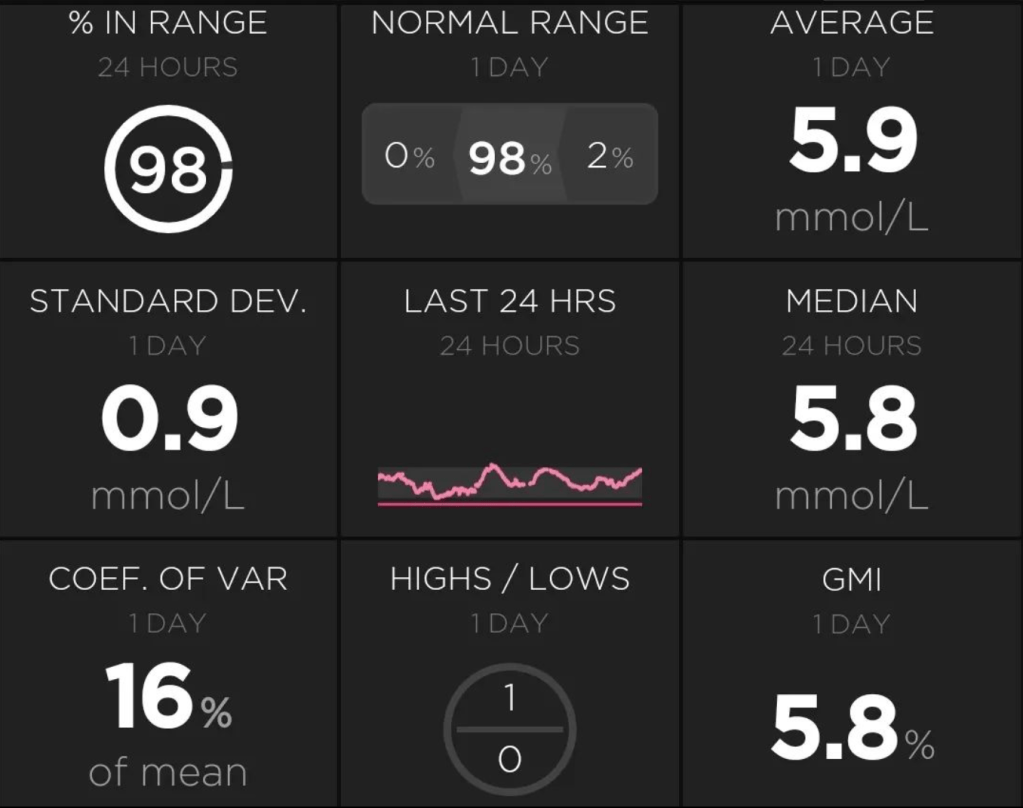
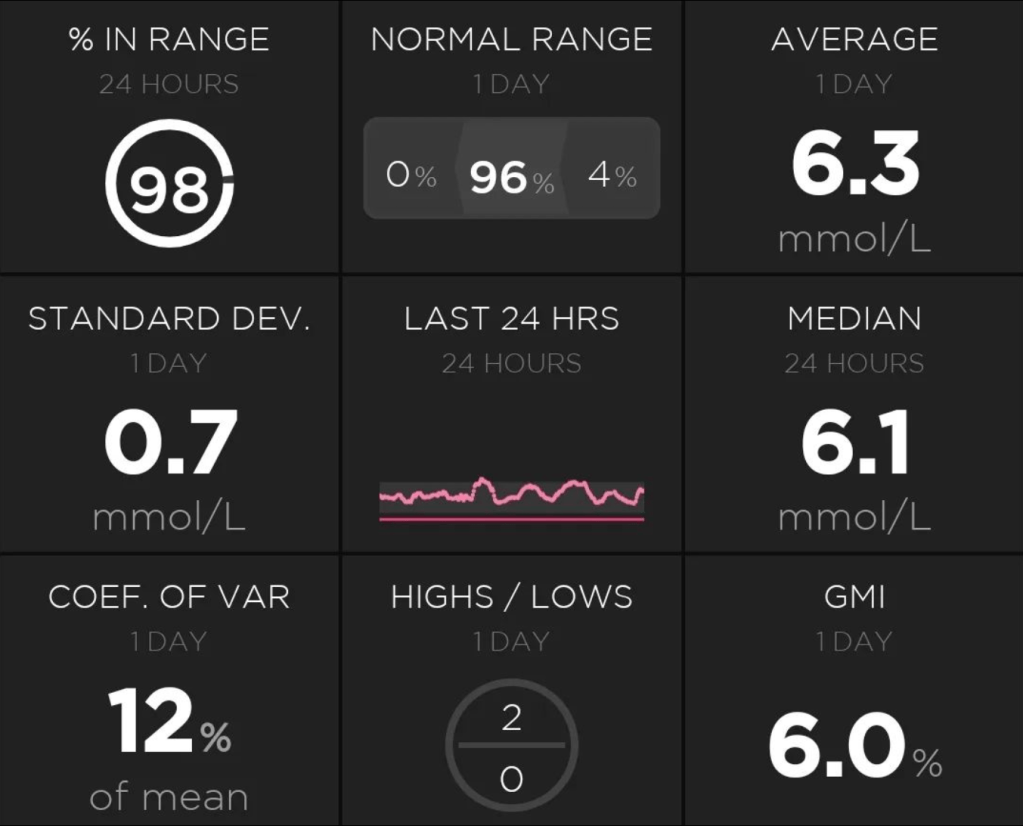
Let us now look at the results at the end of each day (screenshots taken just after midnight each night)

Day 1
Day 2
Day 3
Day 4

For the totals above, as can be read with a keen eye, all graphs are for 24 hours. The range is the Time in Tight Range (TITR) (3.9 – 7.8 mmol/L aka 70 – 140 mg/dL).

Comparing we see every measure (except the Median, especially on Day 3) has significantly improved. Highlights include:

  • Halving the Standard Deviation and Coefficient of Variation.
  • Taking my TITR from the mid-60s to the high 90s
  • Eliminating my lows (although I suspect they were calibration errors from a new sensor) and significantly reducing my highs (these were real).

For completeness, my weight stayed about the same, and my daily insulin requirement stayed about the same (84-79 units) as well. This second result genuinely surprised me as I assumed the sudden drop in dietary carbohydrate would lead to a much lower insulin need. I assume the difference in carb was offset by the increased protein and further amplified by the increased consumption of animal fats, raising my insulin resistance.

Did You Really Achieve Normal Blood Sugars?

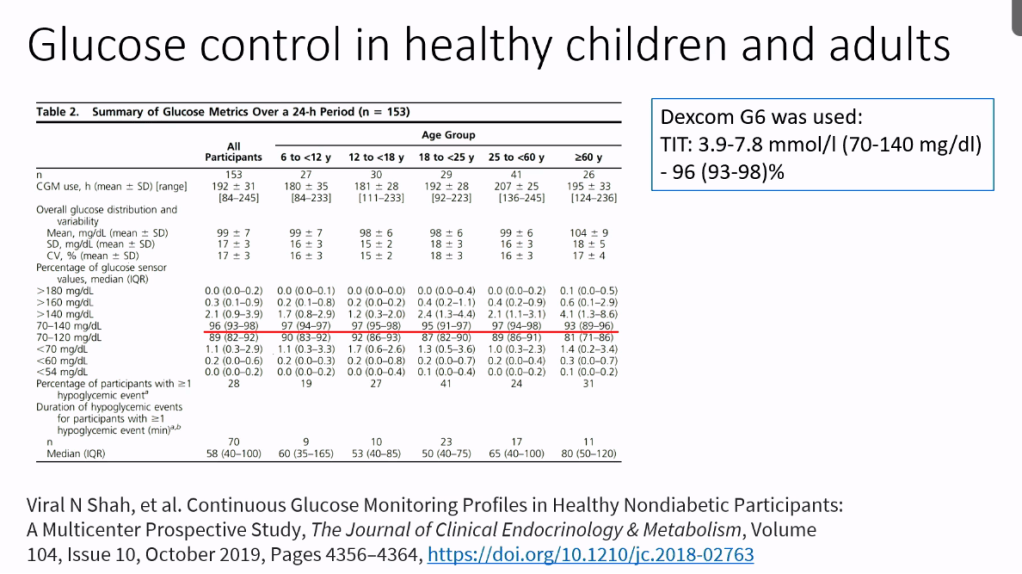
Let us consider a study of the blood sugars of non-diabetics I mentioned in another recent post.

Lots of numbers here, so let me translate the key points for the average participant:

  • They had a mean value of 99 +/- 7 mg/dL (5.5 +/- 0.4 mmol/L)
  • Their standard deviation was 17 +/- 3 mg/dL (0.9 +/- 0.2 mmol/L)
  • Coefficient of Variation was 17 +/- 3 %
  • TITR was 93-98 %
  • Time in Super Tight Range (TISTR) (70 – 120 mg/dL aka 3.9 – 6.7 mmol/L) was 82-92%
  • Time below range was about 1.3% of the time

I only measured TISTR once during the four days which looked like this:

Where I measured 92% TISTR, beating the non-diabetic value of 90% and hit every range on the non-diabetic normal blood ranges.

The only measure I did not consistently hit was Mean Glucose on days two and three due to my morning coffee throwing out my values. By day four I had adjusted the coffee not to spike me so I think it is fair to say that, with improved experience managing the snacks and setting my pump to a more aggressive target (it was set to 5.4 mmol/L aka 98 mg/dL for the experiment but can be set as low as 4.4 mmol/L aka 80 mg/dL), given I had zero lows during the four days, it would not be hard to consistently hit this range as well.

Why Do You Say It Is Superior To Dr. Bernstein’s Approach?

In terms of the results I expect it is possible to get similar results with Bernstein but where I see this approach having the edge is:

  • Food management is MUCH simpler: Aussielent takes care of the main meals and you simply choose snacks which you like and which work for you. Compare this to Bernstein where you have to craft meal plans (he literally wrote a nearly 300-page book just on this topic alone), have no snacking, have to consider “forbidden” and “allowed” foods; it is a lot more work
  • Insulin management is MUCH simpler: Getting the looping pump to do the heavy lifting means I literally go for hours a day, not thinking about diabetes and I never need to “sugar surf” my way down. For the above results I did not even declare carbs or bolus; the loop took care of it. In the case of Bernstein, from Dave Dikeman’s video which I mentioned in my preparation blog, we learn he treats lows with glucose 1-2 times a day and, if he goes above 110 mg/dL (6.1 mmol/L) he uses an intramuscular shot of rapid acting Novolog. This is not including any R-insulin injections he does to cover meals, plus injections for basal and dawn phenomenon management.
  • Hormone fluctuation management is MUCH simpler. A good example of this is dawn phenomenon. For someone who is looping, the pump manages it overnight with no human intervention required. Here, Dr. Bernstein admits he and most of his Type 1 patients go up overnight and his solution is getting up, every night around 4am and doing multiple injections of different insulins which, to me, is a recipe for disaster.

The fact is the most recent edition of Dr. Bernstein’s book was written over ten years ago and a LOT has changed since then. It make sense the innovations which have come over the last decade, such as looping systems, can help us manage diabetes better and remove some of the mental burden of managing the disease.

The other big advantage of the Practical Diabetic Solution is there are still plenty of levers to pull for even better results e.g. the inclusion of exercise, bolusing and declaring if required, flexibility in snack strictness to suit the individual, augmentation of pump delivery with needle delivery etc. whereas, with Bernstein, it is so strict, there is, in my opinion, little room to move or to be creative.

Will I Be Continuing The Practical Diabetic Solution?

My position has not changed. To explain my position, I will again quote Dr. Bernstein adherent, Dave Dikeman: “I want to be normal…Not normal in that I can eat a birthday cake with everybody else but normal in that I want to have the same blood sugars as everyone else”. I respect this position but I simply do not share it. I see no reason why I cannot have a small slice of cake at the occasional birthday party, estimate the bolus and have the loop soak up the rest and my Solution allows for that. My goal is to minimise maintenance and maintain blood sugars enough to minimise the risk of complications, helped by regular check-ups.

Similarly, if I go to a restaurant, I do not want to pull out a meal plan meal and eat it while my family orders; I want to share in the experience with my family and experience the food as the chef intended. Food is an integral part of human social interaction, it is even in our language; the word “companion” comes from “someone who you break bread with”, “mate” comes from “someone you share your food (meat) with”, and to nurture comes from the concept “to feed”. To shun this link is to shun who we are.

Where I am likely to embrace the Solution is at breakfast, lunch and while travelling. Morning is a rushed affair in our house so a quick meal shake which I do not need to think too hard about is perfect. As I mostly work from home, I usually eat lunch alone so, again, a shake which will not spike me and make me a zombie in the afternoon, which is perfect. Conversely, if I go into work and my colleagues go out for lunch I will join them and leave the shake in the locker. Dinner is around a dinner table and shared with the family. This is sacrosanct for us and the Solution will not be part of it.

For travelling, the Solution is perfect. At conferences or, for example, all day workshops, there is often limited eating options and the options provided are often carby. A meal replacement shake is easy to carry with me and removes the issue.

What About You?

For someone looking for some stability in their numbers and piece of mind, consider the Solution. As mentioned here, the latest clinical thinking is an HbA1c below 6.5% or a TITR of greater than 50% is sufficient to avoid the risk of long term complications. Even if you just replace breakfast, you will likely be gluco-normal through the night (thanks to the loop) and up to lunchtime, which is already more than half the day i.e. more than 50% TITR. Anything above and beyond this is a bonus.

For the person aiming for normal blood sugars, the plan, as I followed it, is worth considering and the barrier to entry and exit are quite low as it does not require exercise, food plans, and kitchen overhauls (other than waiting a few days for the Aussielent or equivalent to turn up). If, like me, family dinner is important, you can “snack” on the elements which will not spike you which they are eating, while drinking your meal replacement (which is what I did this week). I literally saw stunning results by the first day so try it and, if you do not see improvement, move on.

Roadtesting An Approach “Better Than Bernstein”: The Preparation

For the final results, go here.

Let me start by making it clear I am quite the fan of Dr. Bernstein. I have his books and have watched all of the Diabetes University videos on YouTube. If you are new to diabetes and want a foundation on the disease and how it works, his videos are a great place to begin. Dr. Bernstein took responsibility for his disease and came up with a solution which worked really well for him. He then published his method and a lot of people have success with it. However, the last version of his book published was over 10 years ago. A lot has happened in regards to technology, medications, and food options in that time so I thought it was worth exploring how to improve on his work for my own personal benefit and that of the diabetes community.

What Is Dr. Bernstein’s Diabetes Solution?

I had a quick browse through my copies of “Dr. Bernstein’s Diabetes Solution” and “The Diabetes Diet” but could not find a good summary of his approach. Diabetes Daily give some good context on the man and the solution which may be worth a read. In short, Dr. Bernstein’s goal is for people with diabetes to have “normal” blood sugars i.e. blood sugar levels indistinguishable from non-diabetics. His approach involves:

  • Low Carbohydrate (less than 30g/day) and high protein/moderate fats
  • Three meals per day, no/limited snacking, with each meal having effectively the same macronutrient profile each day
  • His starting suggesting is a breakfast with 6g carbohydrate, lunch with 12g carbohydrate, and dinner with 12g carbohydrate
  • He advocates regular exercise which promotes muscle growth, weight loss, and improves insulin sensitivity
  • “Insulin Hacking” i.e. intramuscular injections using rapid insulin
  • He is generally against the use of technology in his book, preferring multiple daily injections although concedes Continuous Glucose Monitors (CGMs) may have their uses (“If I were living alone, I’d use a CGM to protect from nighttime hypoglycemic episodes” – Diabetes Solution, p357). For pumps, Bernstein lists a range of advantages and problems on pages 330-332. Quotes include:
    • “Corrective injections are elegantly simple” – Diabetes Solution, p331
    • “Pumps can be set to automatically increase the basal delivery rate shortly before arising in the morning, thereby circumventing problems associated with the dawn phenomenon” – Diabetes Solution, p331
    • “Insulin pumps cannot be used to give intramuscular injections for more rapid lowering of elevated blood sugars” – Diabetes Solution, p331
    • “Contrary to a common misconception, they do not measure what your blood sugar is and correct it automatically” – Diabetes Solution, p332
    • If you have the book, check them out. For me, many of the criticisms of pumps equally apply to multiple daily injections over a prolonged period but decide for yourself

To see Dr. Bernstein’s Diabetes Solution in action, Dave Dikeman is a great example. He has been living with type 1 diabetes since the age of nine (he is now around 18 years old) and has worked closely with Dr. Bernstein, (I believe assisting with his YouTube channel) for many years. He presented his approach to Low Carb Down Under about a year ago. It is a great summary of how the solution works and shows someone achieving great success with it.

What Results Can We Expect From Dr. Bernstein’s Diabetes Solution?

Fortunately, Dr. Bernstein published the results of people dedicated to his approach five years ago. Key results were:

  • A survey was conducted on members of the Facebook “Typeonegrit” group with 316 respondents, a group of “type 1’s and parents who follow Dr. Bernstein”
  • Average time following Dr. Bernstein’s Diabetes Solution was 2.2 ± 3.9 years
  • Mean daily carbohydrate intake was 36 ± 15 g
  • Average HbA1c was 5.67% ± 0.66%
  • 2% of respondents reported diabetes-related hospitalizations in the past year

My Current Approach And How It Compares

Using the Bernstein summary as a prompt, here is my current approach:

  • “Low-ish” carbohydrate: I do not count carbs but estimate I eat maybe 100-150g per day
  • I generally have a white coffee for breakfast, nothing regular for lunch (sometimes food, sometimes snacks, sometimes nothing), and dinner with the family which usually has no more than 50g per serving, but this is not a hard rule
  • Snacking happens when I want. It is small and I do not give it too much consideration
  • Little to no exercise
  • I use a commercial looping pump/cgm. No injections, no finger pricks
  • I do not declare any carbohydrates, do not bolus or boost; the loop takes care of it

In terms of the results I am getting, I have been looping for close to 12 months and my last HbA1c was 5.5%. Given I am not following Dr. Bernstein’s Diabetes Solution at all and getting superior results to the average participant in the Typeonegrit survey, over a shorter period of time, perhaps there is value in assessing a hybrid approach for even better results.

Simplifying Food

A big part of any summary of Dr. Bernstein’s Diabetes Solution involves the listing of forbidden and allowed foods. In the Diabetes Daily summary mentioned above, of the 5,700 words, 4,500 describe which foods can and cannot be eaten. That is over 3/4 of the description. In Dr. Bernstein’s Diabetes Solution, chapters 9, 10, 11, and 25 (roughly 120 pages out of 460 pages or a quarter of the book) cover food and its management. I think it is fair to say food management is a big part of Dr. Bernstein’s Diabetes Solution.

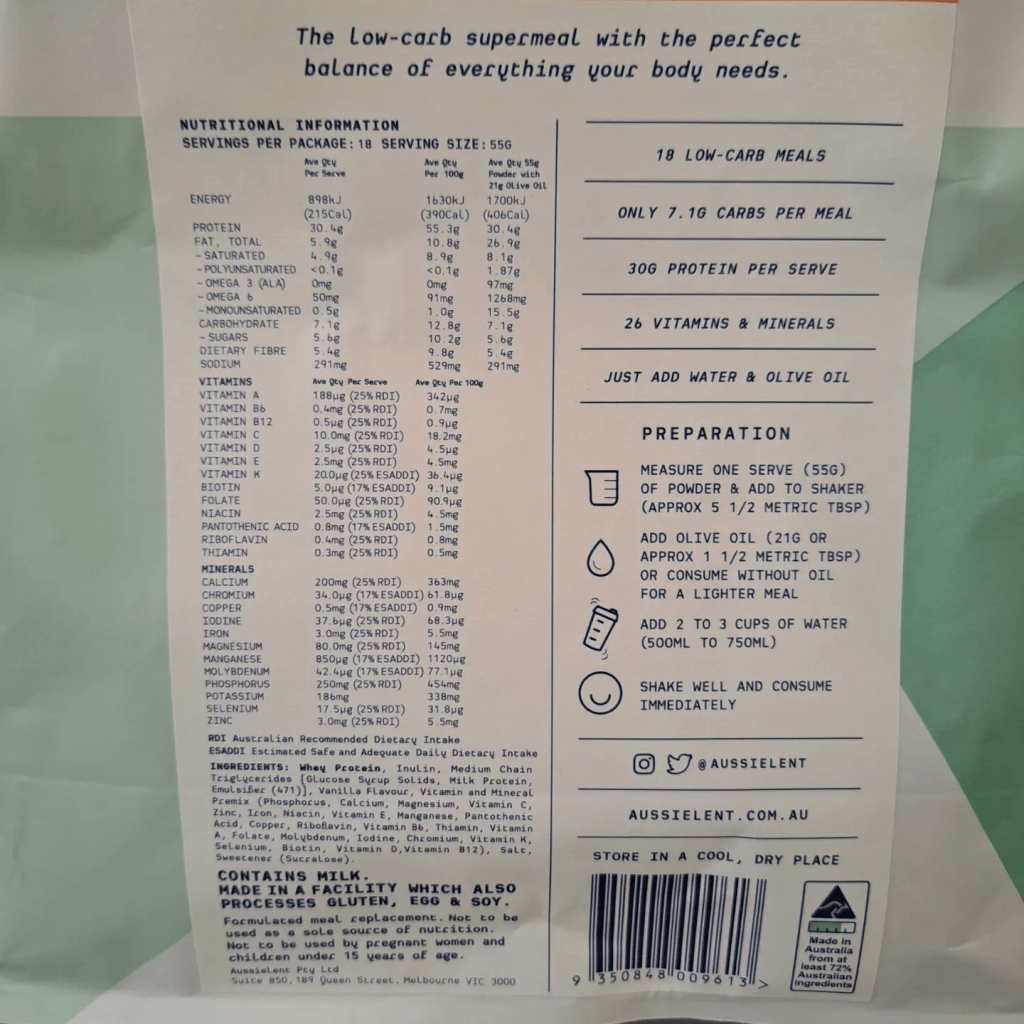
Two years after the last version of Dr. Bernstein’s Diabetes Solution came out, a company called Soylent appeared offering nutritionally complete meal replacements for time-poor people who do not like cooking. Other companies offer similar products, including Aussielent which also offer a low carbohydrate alternative (shown below).

A serving provides about a quarter of the body’s micro-nutrients. For macro-nutrients a serving provides:

  • 1700kJ (406 Cal)
  • 30.4g Protein
  • 26.9g Fat
  • 7.1g Carbohydrate (excluding fibre)
  • 5.4g Fibre

So, in theory, four servings a day will provide all the micro-nutrients the body needs. It passes the “less than 30g of carb per day” test of Bernstein and gives a total energy of 6,800kJ (1,624 Cal). The average adult requires between 8,700kJ – 10,500 kJ (2,000 – 2,500 Cal) per day to maintain a healthy weight (https://www.healthdirect.gov.au/kilojoules, https://www.nhs.uk/common-health-questions/food-and-diet/what-should-my-daily-intake-of-calories-be/) so we have a deficit of at least 2,100 kJ (500 Cal). Also, the packet is clear in saying “Not to be used as a sole source of nutrition”. So, we can embrace the energy deficit and lose some weight or use it for snacking. As long as the snacks do not spike us we are good to go. There are plenty of foods which, as people with diabetes, we know we can eat without spiking. For me, I will be eating things like:

  • Home made protein balls (about 735 kJ/175 Cal each)
  • Cheese and crackers (516 kJ/125 Cal)
  • Water Chestnuts and Soy Sauce (about 190 kJ/45 Cal)

Drinks will be sugar free so it will be diet soft drinks, mineral water (soda water), sugar free cordial, and tea/coffee.

I also only have enough Aussielent for four days so this will be the length of the experiment.

Exercise

There is no doubt exercise is good for anyone. I will not be changing my routine for the next four days though. Clearly, if there was a desire to make this a long-term venture, introducing exercise would be good. Keeping this as=is also removes it as a confounding variable in the results.

Measuring and Administering Insulin

I have no doubt the use of a CGM and a Pump, with looping, have been a big part of my success to date. The pump is watching my blood sugars every five minutes and making adjustments to move my levels towards my target (currently 5.4 mmol/L or 97 mg/dL). Unlike Dr. Bernstein’s Diabetes Solution, which relies on basal insulin (sometimes delivered in the middle of the night to counter dawn phenomenon), and injecting insulin into muscles, my loop has no reliance on me being awake, or “insulin hacking”.

Looping was not available when the last edition of Dr. Bernstein’s Diabetes Solution came out which is why he says “they do not measure what your blood sugar is and correct it automatically”. Today, they can, and are very, very effective at managing overnight and hormonal fluctuations.

How Will I Measure Success?

My plan is to document my baseline in this blog and then review afterwards and see what has changed.

Current weight: 112kgs (246 lbs)

Last Daily Insulin Amount: 84 Units

Diasend (https://diasend.com/)

  • Average glucose: 7.2 mmol/L (130 mg/dL)
  • Standard Deviation 1.9 mmol/L (34 mg/dL)
  • Time in Tight Range (3.9 – 7.8 mmol/L aka 70 – 140 mg/dL): 65%

Sugarmate (https://sugarmate.io/home)

  • % in Range (daily TIR 3.9 – 10 mmol/L aka 70 – 180 mg/dL): 69%
  • Time Below Range: 7% / Time In Range: 67% / Time Above Range 26% (TIR)
  • Average 6.5 mmol/L (117 mg/dL)
  • Standard Deviation 2.3 mmol/L (41 mg/dL)
  • Median 6.2 mmol/L (112 mg/dL)
  • Coefficient of Variation 35% of mean
  • Highs: 7 Lows: 11
  • GMI: 6.1%

Tidepool (https://app.tidepool.org/)

1 week values

  • Time In Range (4.0 – 10.0 mmol/L aka 72 – 180 mg/dL): 88%
  • Time Above Range: 9.3%
  • Time Below Range: 3%
  • Average Glucose: 7.2%
  • Standard Deviation: 1.9 mmol/L aka 34 mg/dL

Notes:

  • The lows are due to poor readings of the CGM on insertion, as confirmed by finger pricks (the only time I do them). For me, the G6 sensor reads low for the first few days after insertion
  • Variation between the reports is generally due to differing periods of review. For Diasend it was the last week of data, for Sugarmate it is written on the measure (some say 2 days even though I specified 3, I am not sure why this is the case), and Tidepool was one week.

Are You Planning To Continue With This Approach?

Only so much can be demonstrated over four days. My primary reason for doing this is to see if Aussielent meals are a viable option when I am travelling for work as I have less control over what I eat when at conferences or onsite with clients. Carrying some powder and olive oil while travelling is a relatively simple solution. However, if I can also develop some preliminary data combining looping technology and a very-low carbohydrate diet, this may be worth more analysis later either by me or other people curious to try different approaches.

I actually have no interest in pursuing a very-low carbohydrate regimen long term. The primary goal of Dr. Bernstein’s Diabetes Solution is normal blood sugars. My goal is to minimise maintenance as much as possible to reduce the risk of burnout i.e. a sustainable approach, and to minimise the risk of long term complications (which is not quite the same as normal blood sugars). What I mean by this is maintaining a sufficiently low HbA1c that clinical evidence suggests I am close to the same risk of long term complications as a non-diabetic and getting regular check-ups is enough for me; I do not need to obsess about every spike or deviation.

Also, I like going out to restaurants and eating meals as the chef intended; I enjoy eating in moderation, rather than fixating on forbidden and approved foods; I enjoy spending literally hours a day not thinking about diabetes management. I see no compelling reason to change any of this.

Where To From Here?

For the next four days, I will be following the “Improved Solution” and writing about it next weekend. I will also be getting blood work done towards the end of this week as I am seeing my endocrinologist soon. This will give me additional results which I will publish later.

ATTD 2023: What Is The Right Time In Range?

I had the privilege of being a Dedoc Voice in Berlin at ATTD 2023 this year. While there were many fascinating discussions (many of which I Tweeted about at PracticalDeeb) there was one in particular that really stood out and that was a frank and open discussion on the clinical relevance of Time in Range and whether it needs revising.

For those who want to cut to the chase, there is a tl;dr at the end.

What is Time In Range (TIR)?

Before launching into the presentations at ATTD, it is probably best to explain the term Time In Range. Thankfully, I have already written a piece explaining it, using a presentation from EASD 2020 by Professor Pratik Choudhary (who was my t-shirt hall of fame recipient for the conference).

In short, the default standard is the range 70-180 mg/dL (3.9-10 mmol/L) and the traditional target was to reside within this range for more than 70% of the time, as measured by a Continuous Glucose Monitor (CGM).

This presentation at ATTD 2023 put the target under the microscope to see if it needed revising.

Time in Tight Range: The New Standard?

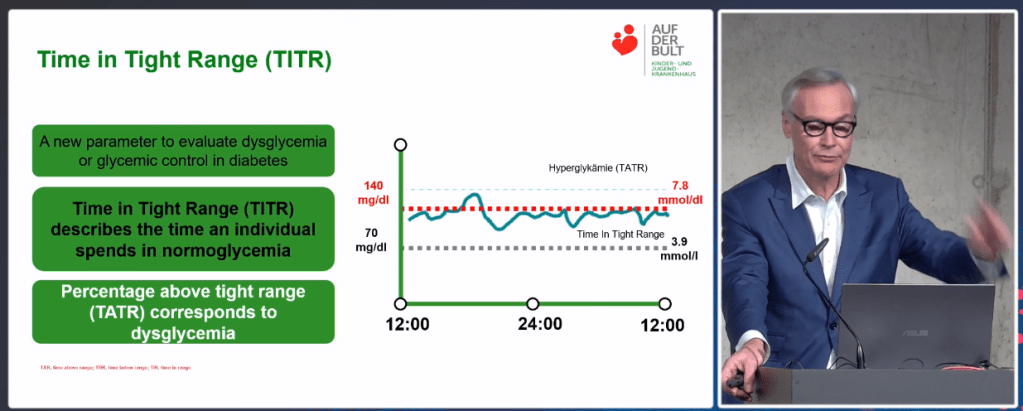
Professor Thomas Danne introduced a concept of a Time in Tight Range (TITR) which reduces the range to 70-140 mg/dL (3.9-7.8 mmol/L). Why a new range? Because Professor Danne literally said “I don’t want to lie any longer”.

The suggestion was, to live a normal, healthy life, 70% TIR was not enough but to give truth to what needs to be achieved would discourage when encouragement was needed so a “soft target” was given instead. This admission will vindicate many online pundits who rail against TIR as insufficient to avoid complications. In essence, this has now been confirmed.

An advantage of considering TITR is spikes, which may remain within TIR but not TITR, can be identified and worked on, assuming managing levels within TIR has been achieved.

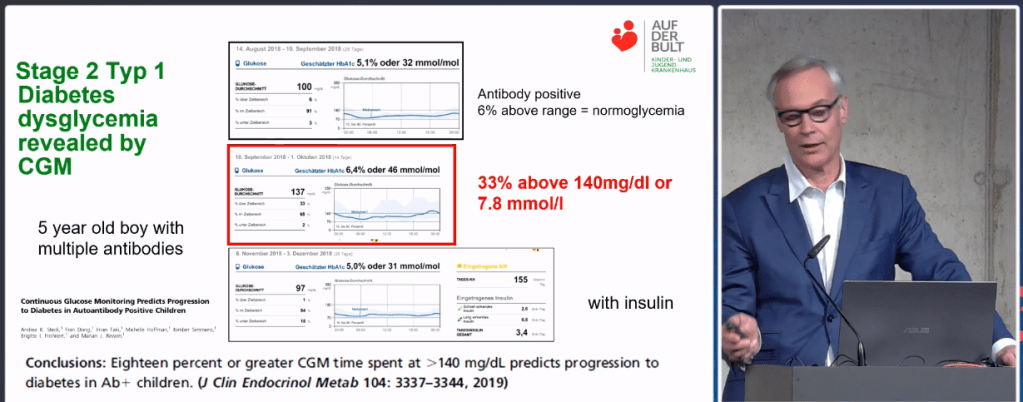
It is interesting to note that Professor Danne considered 70-140 as “normoglycemia” i.e. normal blood sugars and above 140 as “dysglycemia” (not normal blood sugars) and therefore concluded TITR can also be used as a range for early detection i.e. Stage 2 Type 1 Diabetes (when blood glucose levels are not normal but insulin is not yet being used). Professor Danne also cited a paper that concluded that time above the tight range predicted the progression to Stage 3 Type 1 Diabetes i.e. when insulin is required.

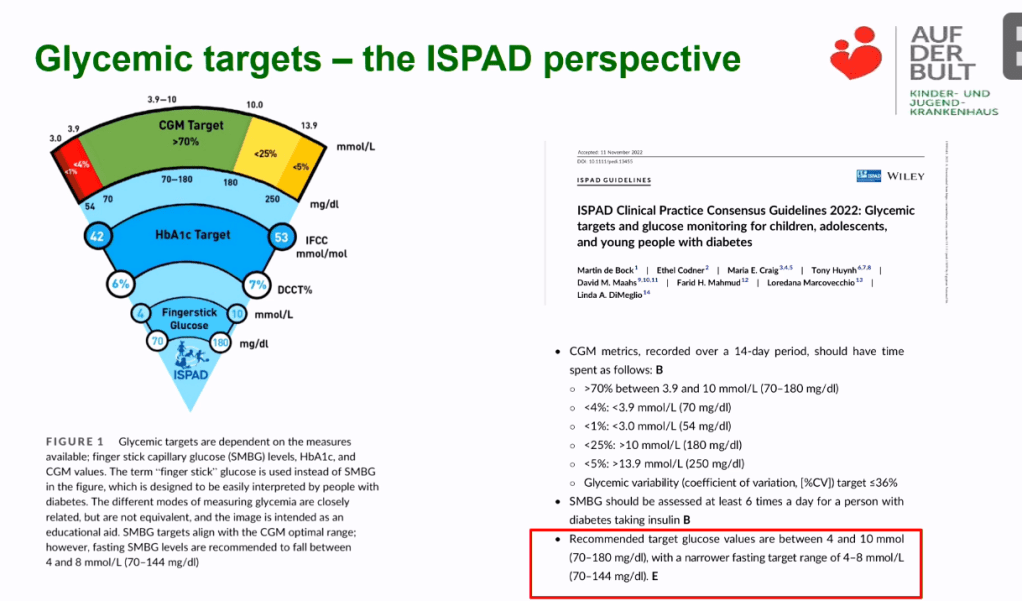
Professor Danne went further and stated he felt the latest ISPAD Time in Range guidelines do not go far enough, claiming the life expectancy of a child with type 1 diabetes will not be the same as a child without type 1 diabetes using these targets.

His preferred goal? An ambulatory glucose profile characterised as “Flat, Narrow, and In Range” (FNIR).

The Gritters can raise a glass of alcohol-free, non-fizzy coconut milk and celebrate that academia is beginning to align to their strict goals. So did Professor Danne go on to talk about all people with type 1 diabetes adopting an ultra-low carbohydrate diet, and eating a strict three meals a day? Well, no.

As alluded to earlier, his goal is to provide guidance to people with diabetes and their carers which is considered achievable and sustainable, even if this means historically softening the targets. Also, Professor Danne made it clear a qualitative daily target was insufficient but a SMART (Specific, Measurable, Achievable, Relevant, and Time-Bound) goal was also needed i.e. quantitative as well as qualitative. His solution? Automated Insulin Delivery i.e. Looping.

His evidence that AID leads to improved results? A comparison across countries of HbA1c pursued through various means compared to Time in Range pursued through AID. Even in the best performing country (Sweden) people with type 1 diabetes struggled to get an HbA1c below 7% (50 on the scale). However, all countries consistently achieved a TIR above 70% which is broadly equivalent to an HbA1c of 7% using AID.

But are we not considering TITR, not TIR? Alas reporting on TITR is still quite limited but Professor Danne is hopeful. On top of using AID, he also mentioned the results being achieved with SGLT2i drugs (which basically redirect glucose in the blood to the bladder, keeping blood glucose levels low).

The jury is still out on the use of SGLT2i’s in people with type 1 diabetes because of the increased risk of eDKA but Professor Danne is hopeful, the rise of continuous ketone sensors will address this. For someone like me who still has residual pancreatic function, the use of an SGLT2i is more compelling because the residual insulin means any form of DKA is extremely unlikely.

More evidence of the superiority of AID over other methods came from a Cambridge study which showed improved sustainable performance over two years.

Doctor Peter Adolfsson continued the story by presenting on the specifics of what those SMART goals should be.

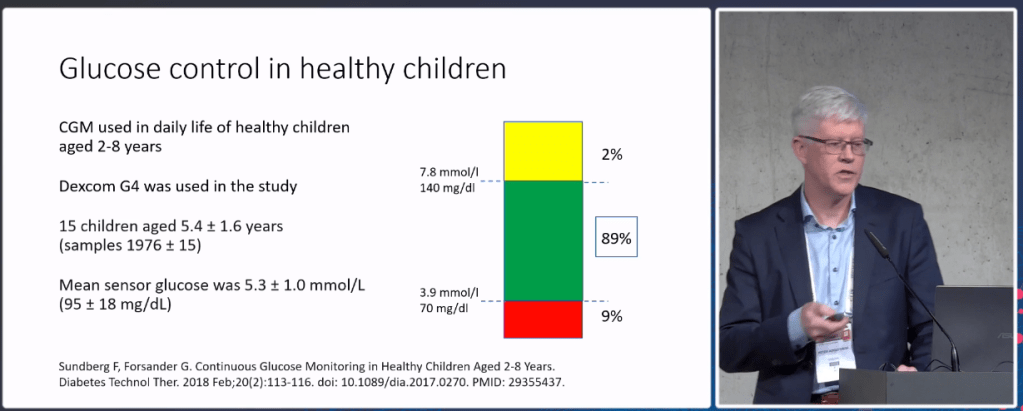
First he talked at what normal blood sugars in children look like where the TITR is close to 90%

A more recent study with more accurate CGMs puts the number at 96% TITR

Doctor Adolfsson then moved the discussion to what target do we need to achieve, not to match people without diabetes, but to reduce the risk of complications to match the non-diabetic population and suggested an HbA1c of 6.5% was sufficient for this which corresponded to a TITR of 50%. This comes close to the conclusions I came to a while ago that an HbA1c under 7.0% is good but, if it can be achieved without severe hypo risk, an HbA1c of 6.4% is better.

tl;dr

Professor Danne acknowledged that, historically, advice to people with type 1 diabetes had been targets which still exposed them to long term complications because it was simply too hard and arduous for the client to achieve tighter targets i.e. the goal was harm minimisation rather than elimination. However, the advent of Automated Insulin Delivery (AID) / Looping has meant it is much easier to achieve superior results with minimal additional effort.

This has led to the consideration of the Tight Time in Range (TITR) which puts the goal for glucose levels to be between 70-140 mg/dL (3.9-7.8 mmol/L). This new range has the potential to be diagnostic of the stages of type 1 diabetes as well as provide improved guidance for glucose control.

In terms of the percentage of time to aim for in the new range, for truly normal blood sugars, the target is 96% of the time. However, there is no evidence that can be achieved through AID. The compromise target is to aim for a percentage which reduces the risk of complication to that similar to the non-diabetic population. Research suggests this lowers the target percentage to 50% TITR which corresponds to an HbA1c of 6.5%.

In other words, rather than pursue the goal of “normal blood sugars”, the goal is “free of long term complications”. What I personally like about this approach is TITR can be measured, at home, by anyone with a CGM (unlike HbA1c). Also, the individual can choose how strict they want to be in pursuing “normalcy” i.e. sit at 50% TITR and minimise the risk of complications or go harder to achieve the blood glucose levels of a person without diabetes. This latitude in the percentage allows flexibility in terms of the individual’s personal circumstances which, in turn, minimises the risk of burnout.

ISPAD 2022: What We Know About Type 1 Diabetes May Be Upside Down

Last year, when I attended ATTD 2021, I wrote about Dr. Walter Pories and his observations in people with type 2 diabetes undergoing gastric bypass surgery. You can read that article here but, in short, obese people with type 2 diabetes, immediately after gastric bypass surgery, begin seeing significant improvements in insulin resistance/requirements. Literally in the days following surgery insulin requirement drops by a factor of 10 and, within a month, remission often occurs. Now the surgery does not remove the fat, visceral or otherwise, and yet there is such a dramatic improvement in insulin needs.

Dr. Pories concluded type 2 diabetes was not caused by “lifestyle” or visceral fat deposits but by a faulty gut which processed food poorly generating excess fat and little energy. The net result is increased weight, low energy levels, and overeating to compensate generating a vicious cycle. This subsequently strains the pancreas in certain individuals whose pancreas cannot keep up and we have type 2 diabetes.

Rather than being a disease of the lazy or a disease of the gluttonous, if Dr Pories is right, type 2 diabetes is a disease of the gut.

This month I was fortunate enough to attend ISPAD 2022 as a dedoc Voice and it turns out there is a controversy with type 1 diabetes which also challenges the cause.

Conventional Wisdom On The Cause Of Type 1 Diabetes.

The conventional thinking on the cause of type 1 diabetes begins with what we can observe and that is the immune system. Generally speaking, in people with type 1 diabetes, we see auto-antibody markers. In other words, the body’s immune system is attacking the pancreas and, specifically, the beta cells.

The idea often put forward is an “environmental factor” interacts with the body somehow, and the immune system responds to what it believes is a threat. As the immune system is a learning system, it remembers the threat and is prepared to attack it in the future. The theory is that the threat looks similar to the beta cells in the body and so the immune system begins attacking them, leading to depletion and type 1 diabetes.

That environmental factor might be a virus, or it could be gluten causing a “leaky gut”, exposing the immune system to food particles and confusing it. Professor Bart Roep is suggesting pinning it on the “environmental factor” is missing the mark.

What If The Beta Cells Were The Problem?

Professor Roep gave his talk in the first session of the first day and set quite the benchmark.

He is looking at how we are approaching cancer treatment and whether the lessons learned there can be used for the treatment of type 1 diabetes. Rather than seeing type 1 diabetes as caused by a confused immune system, he suggests it is caused by stressed beta cells.

To explain this he cited the late Gian Franco Bottazzo who promoted a radical idea; rather than the immune system causing indiscriminate destruction of beta cells (homicide), the beta cells are literally asking to be killed (as also happens with cancer cells) and the immune system is obliging.

Rebalancing The Immune System

When I was first diagnosed with type 1 diabetes, and told it was a problem of the immune system, my first thought was to turn to immune suppression drugs, as we do with organ transplants to prevent the immune system from attacking the new organ. So why do we not use immune suppressions drugs to slow the destruction of the pancreas? Because, in this case, the treatment is considered worse than the disease.

There are significant side effects from immune suppression drugs not the least of which is an increased risk of cancer. It turns out the body’s cells know they are cancerous or infected by a virus and literally put their hand up to be killed by the immune system. When we suppress the immune system this goes unchecked; infections and cancers are left unhindered and compromise the host.

On the other side of the coin, if we boost the immune system, this can trigger a disease very similar to type 1 diabetes.

The idea being that the immune system becomes much more sensitive to stressed cells and attacks cells with less discrimination. Great for cancer but not so great for beta cells.

Beta Cells Are Stressed

So why are beta cells the outlier in being attacked? Why does the immune system focus here and not on the entire body? It turns out beta cells are some of the hardest working cells in the human body producing literally a million copies of insulin every minute.

It therefore makes sense that it would not take a lot to tip a beta cell over the stress threshold and be targeted by the immune system.

Evidence That Stress Is The Problem

LADA forums frequently advise that to prolong the honeymoon (time when beta cells are still producing substantial amounts of insulin), you must reduce the stress on the beta cells. Often recommendations include dietary adjustments, such as eating low carbohydrate, supplements to reduce inflammation, and early-intervention insulin to reduce the requirement of the beta cells.

Even in the medical literature there is evidence (or, at least, consistency) that beta cell stress accelerates the destruction of beta cells. In “Latent Autoimmune Diabetes in Adults: A Review on Clinical Implications and Management”, a summary of findings from other studies included:

  • Insulin sensitizers plus insulin therapy preserve beta cells function better than insulin alone
  • Progression to insulin dependence was slower when insulin therapy was used compared to the use of sulfonylureas (a class of drugs which force beta cells to produce more insulin)

“Beta-Cell Preservation…Is Weight Loss the Answer?” presents evidence that weight loss can lower insulin resistance and preserve beta cell function.

All of the above findings are consistent with this stress model for Type 1 diabetes.

Similarly, this model does not exclude things like viruses as being involved, it simply recasts their role as stressors of the beta cells rather than antagonists of the immune system.

The Opportunity For New Treatments

Looking at cancer treatment breakthroughs and applying an inverse approach we get a novel set of approaches for curing/managing type 1 diabetes.

CAR T cells

In cancer, the immune cells (T cells) are reengineered to attack cancer cells. For type 1 diabetes, the reengineering would be with the cells that regulate the T cells (Regulatory T cells) to supress the immune response specifically for beta cell destruction.

Bionic: therapeutic Ab conjugated with toxin

In cancer, antibodies are engineered to carry a toxin so when they attack the cancer cell they deliver a toxic payload to wipe out the cancel cell. This same technique would be used but to deliver a growth factor to revitalise the beta cell.

Reduce hypo inflammatory tumor environment

Cancer cells actively reduce inflammation to limit the immune response. Treatments often seek to reverse this. In the case of type 1 diabetes, treatments would look to enhance the low inflammatory state.

DC vaccination (Dendreon)

In cancer, a company called Dendreon has a vaccine which selectively activates the immune system. For type 1 diabetes, we can selectively suppress the immune system through the use of vitamin D3.

In the case of this last approach Professor Roep’s team has tested it with excellent results; the general immune system was preserved but the immune component responsible for attacking the pancreas was suppressed.

Professor Roep also made the point that having a variety of treatments means they can be tailored to individuals, just as cancer drugs provide a set of tools in the toolkit of the oncologist with patients responding to different ones.

Conclusions

While I enjoyed the entirety of ISPAD 2022, this was, for me, the stand out presentation. Challenging the type 1 origin story, presenting a model which is consistent with a broad range of observations, and pioneering resulting therapies is, for me, what these conferences are all about and I look forward to seeing the progress of Professor Roep’s work at conferences in the future.